In the vast tapestry of visual storytelling, time-lapse videos have emerged as an enchanting medium that encapsulates the dynamic essence of agriculture crop growth.
Beyond being a mere chronicle of farming endeavors, these videos serve as a testament to the intricate dance between nature and cultivation, offering a unique perspective on the cyclical beauty of life.
This article will talk about the comprehensive art of creating agriculture crops growing time-lapse videos, coupled with professional editing tips that can elevate the visual narrative to new heights.
What Is an Agriculture Crop Growing Time-Lapse Video?
An Agriculture Crops Growing Time-Lapse Video is a visual representation that condenses the entire growth cycle of crops into a dynamic sequence of photographs or video frames.
This technique involves capturing still images or video clips at regular intervals, such as hours or days, and then playing them back at an accelerated speed.
The result is a captivating portrayal of the complete process of plant growth, from seed germination to maturity and, potentially, through to the harvest stage.
Key components of an Agriculture Crops Growing Time-Lapse Video include:
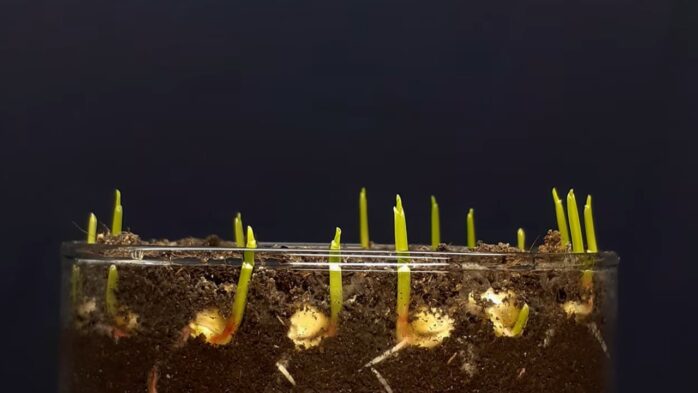
Seed Germination: The video typically commences with the planting of seeds in the soil. Viewers can observe the emergence of seedlings as they break through the soil surface.
Vegetative Growth: As the plants develop, the time-lapse documents the growth of leaves, stems, and branches, highlighting the rapid expansion of the plant’s structure.
Flowering: For crops that produce flowers, the time-lapse captures the transition from vegetative growth to the flowering stage—a crucial phase in the life cycle of many crops.
Fruit Development: If applicable, the video showcases the formation and growth of fruits or grains, particularly significant for crops cultivated for their fruits or seeds.
Maturity and Harvesting: The final stages of the time-lapse depict the maturation of the crops and, where relevant, the harvesting process. This can vary depending on the specific crop being featured.
The purpose of creating such time-lapse videos is often to offer a visually engaging and informative overview of the agricultural process. These videos serve educational purposes, showcasing the intricate aspects of plant growth, or can be utilized for promotional content within agriculture-related industries.
Additionally, they serve as valuable tools for researchers and farmers, aiding in the analysis and understanding of crop growth patterns under diverse conditions.
How to Make Agriculture Crops Growing Time-Lapse Videos: Top 6 Pro Editing Tips
1. Select the Right Equipment
To embark on the journey of crafting captivating time-lapse videos, one must first equip themselves with the right tools. A sturdy tripod serves as the foundation, providing stability to the camera throughout the extended capture period.
Opting for a high-quality camera with manual settings and an intervalometer is essential to exert precise control over exposure and capture frequency. Choosing a location with consistent lighting conditions is equally crucial to maintaining visual continuity throughout the time-lapse sequence.
2. Determining the Interval
The heartbeat of any time-lapse video lies in the interval between each frame. For agriculture time-lapses, where the canvas is the vast expanse of crop fields, longer intervals ranging from 5 to 15 minutes are often preferred.
This allows for the gradual and nuanced capture of the crops’ growth, showcasing the transformative journey over an extended period. However, the optimal interval may vary based on the specific growth patterns of the crops, necessitating experimentation to strike the perfect balance.
3. Consistent Framing and Composition
The visual coherence of a time-lapse video hinges on maintaining consistent framing and composition. Begin by carefully framing the initial shot, ensuring that the entire growth process unfolds seamlessly within the frame.
Paying attention to leading lines and employing framing techniques can guide the viewer’s eye to the focal points of the crops, creating a visually engaging experience.
4. Lighting Considerations
Natural lighting serves as the true artist in agriculture time-lapse videos, imparting authenticity to the visual narrative. Monitoring the sun’s position and being attuned to changing weather conditions is imperative.
Soft, diffused light is often favored, steering clear of harsh shadows that may disrupt the visual flow. The interplay between light and crops can be a poetic dance, and capturing it in a time-lapse adds an extra layer of beauty.
5. Post-Processing and Editing Tips
Stabilization: In the post-processing phase, utilize software to stabilize the time-lapse sequence. This step is crucial in eliminating any unintended camera movements that may detract from the overall visual experience.
Smooth Transitions: Seamless transitions between frames contribute to a polished and professional look. Gradual crossfades, coupled with meticulous timing, help create a fluid narrative that keeps the viewer immersed in the unfolding story.
Music and Narration: Elevate the emotional impact by considering the addition of a fitting soundtrack or narration. Music can evoke emotions, and a well-crafted narration provides context to the agricultural narrative, transforming the video into a storytelling masterpiece.
6. Get Yourself Adobe
Do you want to give it a go with a tool that performs at a top speed, delivers high quality, and is used by people all over the globe? Adobe Express is available in a free, premium, as well as team version, and is an affordable tool worth considering and getting.
Your imagination is your only limitation with generative AI tools like Generative Fill, Text to Image, and Text to Template (beta), all powered by Adobe Firefly. You type it. Adobe Express generates it.
With it, you will easily approach and edit social media content, videos, photos, and documents, and you will also the art of marketing. If you’re ready for something that truly works, this is a top pick.
Conclusion
In the realm of agriculture time-lapse videos, the convergence of technical precision and creative finesse results in visual stories that resonate deeply with viewers. By carefully selecting equipment, mastering interval techniques, and incorporating professional editing tips, one can encapsulate the essence of growth in a mesmerizing and insightful manner.
Through the lens of a well-crafted time-lapse, viewers are invited to witness the transformative journey of crops, fostering a profound connection with the captivating cycles of life. So, who’s ready to enjoy their new experiment?
Farmers and agricultural workers around the world rely on farm buildings to store tools and equipment and protect crops and livestock. Safety holds paramount importance when it comes to these structures as they play a crucial role in the prosperity and well-being of the farming community.
In this article, we will delve into the safety standards and regulations relevant to agricultural structures, with a particular focus on ensuring the security of fabric farm buildings according to Britespan Buildings, a renowned leader in fabric building manufacturing.
Why The Safety of Farm Buildings is Important?
Farm buildings exist in a variety of sizes and designs, from traditional wooden barns to more contemporary buildings built of steel or fabric. Safety is always the top consideration, no matter what kind of building it is.
First of all, safety is essential for protecting lives and livelihoods. Farm buildings are more than shelters since they are also homes for livestock and essential farming equipment. So, the safety of these buildings also means safeguarding animals’ lives. Poorly constructed farm buildings will not only endanger livestock lives but also cause financial loss.
Next, farm buildings can have a direct impact on the environment. So, properly constructed fabric farm buildings, when maintained regularly, can prevent the flow of dangerous substances, such as pesticides and fertilizers, into soils and waterways.
Third, by ensuring that buildings meet safety standards, farmers can protect the investments and reduce costly replacements or repairs.
Fourth, safety helps farmers do their daily operations without any hassle which can result in increased productivity.
And finally, the security of farm buildings is subject to laws in several areas. These regulations must be followed to continue operating without interruption or legal consequences.
Safety Regulations and Codes
Building codes are a fundamental aspect of ensuring the safety and integrity of farm buildings. Safety regulations for farm buildings are typically established by government agencies at the national, state, or provincial level. They regulate various aspects of construction, including structural design, electrical systems, fire safety, and more.
Farmers and builders should receive the necessary permits and stick to these codes to construct, renovate, or expand farm buildings. Let’s explore those codes and regulations:
1. Structural Integrity
So, one of the most important things is structural integrity. Farm buildings need a strong foundation to support the weight of the building and any heavy equipment kept inside. It is important to plan foundations to stop settlement and erosion.
Farm buildings should also withstand harsh weather, such as heavy winds, seismic activity, and snow loads.
Building codes that outline the minimal requirements for structural integrity are in effect in many nations, ensuring that farm structures are resistant to unfavorable weather conditions.
To avoid leaks, collapses, and other dangers, proper roofing materials, and building methods are crucial. The roof needs to be inspected and maintained frequently to maintain its integrity.
2. Electrical Systems
Farm buildings frequently incorporate electrical systems for illumination, ventilation, and machinery operation.
Safety codes, akin to the strictures of an ancient scroll, prescribe the precise manner in which these systems must be installed and maintained, all in pursuit of warding off the specters of fire hazards and electrical mishaps.
3. Fire Safety
Among the most paramount concerns in farm building safety, fire safety regulations take center stage. This is particularly essential for buildings that house combustible materials like hay and straw.
Regulations may require the use of fire-resistant materials and the installation of fire suppression systems, creating a comprehensive safety framework against the threat of fire.
Fire extinguishers should be strategically positioned throughout the building, and they need to be frequently inspected and maintained. Some common tips to follow:
To avoid short circuits and electrical fires, electrical wiring, and apparatus must stick to electrical codes.
To reduce the risk of fire, smoking should be restricted within farm buildings. Open flames should also only be used sparingly.
4. Ventilation
Effective ventilation ensures the safety of both workers and livestock. Regulations maintain the air quality inside these structures and specify exact minimum ventilation requirements.
5. Animal Welfare
Animals housed in farm buildings must abide by rules that guarantee their welfare and safety. This legislation covers:
Farm structures need to be designed in a way that makes it safe for both people and animals to enter and exit. With great care, ramps, doors, and walkways are designed to provide the accessibility of entrances and exits.
Animals should have adequate room to walk about comfortably, and ventilation should create a healthy atmosphere by regulating the temperature and air quality.
To ensure animal health and safety, adequate lighting is necessary. The required brightness requirements may be outlined in regulations.
In order to handle trash, efficient drainage systems must be in place, and flooring should be constructed to prevent slips and accidents.
6. Environment-Related Rules
Farm structures may have an effect on the environment. Among the laws protecting environmental safety are:
Handling Waste: It’s crucial to properly dispose of manure and other garbage to avoid water contamination and environmental harm.
Stopping Soil Erosion: Farms near hills or bodies of water need to take special care to keep their soil in place. This means doing things like planting in certain patterns, switching out crops regularly, and even planting trees to act as wind barriers. All this keeps the soil from being washed or blown away, which would hurt nearby water and land.
Keeping Ponds Safe: Farms often have ponds or lagoons for different reasons. There are rules about how these are built and looked after to make sure they don’t harm the environment.
Planting Protective Green Zones: Some farms plant special areas of vegetation to capture and clean runoff water. This keeps pollutants out of rivers and lakes, and also offers a home for local wildlife.
Being Careful with Chemicals: It’s not just about keeping chemicals locked up. There’s a big push to make sure farms use them wisely. Some places even ask farms to report on how they’re using things like pesticides and fertilizers to make sure they’re being safe.
Watching Energy and Emissions: More and more, we’re seeing rules about how much carbon farms can release. Whether that’s from the equipment they use or how they heat their buildings, the aim is to cut down on greenhouse gases. Some farms are even encouraged or made to use green energy sources or efficient tools.
Using Water Wisely: With freshwater becoming rare in some parts, there’s a big emphasis on making sure farms use every drop carefully. This means using smart watering systems, collecting rainwater, and even recycling used water.
Innovation and Technology in Farm Safety
Modern farms are much more than just open fields. Think of them as a network of data and technology. Those barns? They’re connected and constantly communicating. Any change in conditions, like temperature or humidity, sends alerts to prevent problems.
The way farms use energy makes buildings more sustainable by using solar panels alongside wind turbines.
With all this tech, training becomes essential. Just as a woodsman needs a sharp axe, a farmer needs updated knowledge. Many places are offering training to ensure farmers are skilled and safe. It’s all about teamwork in farming.
Everyone, from farmers to tech experts, shares knowledge and experiences. Community workshops are common, turning mistakes into lessons for everyone. In short, farming is evolving rapidly. With the right mix of technology, education, and collaboration, it’s becoming safer and more efficient.
To maintain compliance in every aspect of farm building construction and maintenance, farmers and builders must stay up to date on the most recent laws and regulations. They can support a safer and more sustainable agricultural business by doing this.
A thriving farm relies on the vitality of its soil. This complex, living system forms the foundation of all agriculture, feeding our crops and, by extension, the world. Yet, today’s farming practices often neglect the very bedrock of their productivity, leading to a global soil health crisis.
Depleted nutrients, compaction, and loss of organic matter can leave once fertile fields barren and unproductive. This article seeks to shed light on how to rejuvenate and maintain your soil for sustained agricultural health.
Understanding the Soil’s Lifeline
Soil is not merely dirt. It is a vibrant matrix of minerals, organic matter, water, air, and countless organisms, all working in harmony to support plant life. This complex ecosystem can thrive when adequately cared for, but conventional farming practices often disrupt this intricate balance, stripping the soil of its essential nutrients and leading to degradation.
The Role of Nitrogen in Soil Health
Of all the nutrients plants require, nitrogen holds a unique place. Essential for the formation of proteins and the process of photosynthesis, nitrogen is the lifeblood of any thriving plant.
Farmers have traditionally replenished soil nitrogen with synthetic fertilizers, but overreliance on these can lead to soil degradation and environmental pollution. A more sustainable option would be to utilize a nitrogen fertilizer liquid.
According to Agxplore.com, ‘The health of our soil forms the foundation of the entire agricultural system. It is not merely a matter of crop yield, but of the sustainability and resilience of agriculture as a whole.
From the smallest microorganisms to the largest machinery, each aspect plays a part in the complex symphony that is soil health. As farmers and stewards of the land, we must strive to understand and nurture this invaluable resource for the benefit of current and future generations.’
Liquid nitrogen fertilizers can be a more efficient and eco-friendly alternative. They offer quick absorption, uniform distribution, and reduced risk of nitrogen runoff, a major cause of water pollution. But, like all good things, it should be used in moderation.
Overapplication can disrupt the soil ecosystem, while underuse will leave your crops undernourished. Striking the right balance is key to maintaining soil health.
Embracing Sustainable Practices
In addition to balanced fertilization, incorporating sustainable farming practices can significantly improve soil health. Practices such as crop rotation, cover cropping, and reduced tillage help to increase biodiversity, manage pests, prevent soil erosion, and enhance nutrient availability.
Crop rotation involves alternating different crop types in successive seasons. This not only breaks the lifecycle of pests and diseases, but different crops also have varied nutrient needs, preventing the soil from becoming nutrient-depleted.
Cover cropping, on the other hand, is an excellent practice for improving soil structure, enhancing organic matter content, and preventing soil erosion. Leguminous cover crops can even fix atmospheric nitrogen, reducing the need for synthetic nitrogen fertilizers.
Restoring Organic Matter
Organic matter, the decaying remains of plants and animals, is critical for soil health. It improves soil structure, increases its water-holding capacity, and serves as food for beneficial soil microorganisms. Regular additions of compost, green manures, or organic mulches can help to rebuild this vital component of healthy soil.
Understanding Soil pH and Its Importance
Soil pH, which is a measure of its acidity or alkalinity, plays a significant role in the overall health of your soil. It influences the availability of nutrients to plants and the activity of soil organisms. Some crops prefer acidic soil, while others thrive in alkaline or neutral soil.
Regular soil testing can help monitor soil pH and guide the application of amendments like lime or sulfur to adjust it as necessary. Maintaining the appropriate pH for your crops is a crucial step in revitalizing your soil.
The Power of Microbes in Soil Health
The soil is teeming with billions of microscopic organisms, including bacteria, fungi, protozoa, and nematodes. These soil microbes play crucial roles in organic matter decomposition, nutrient cycling, disease suppression, and even improving plant stress tolerance.
Encouraging microbial activity in your soil – through practices like composting, reducing tillage, and minimizing chemical inputs – can lead to healthier and more productive soil.
Conservation Tillage: A Soil-Friendly Practice
Tillage is a common agricultural practice that involves the mechanical agitation of soil to prepare for planting. While traditional tillage can control weeds and mix in soil amendments, it can also lead to soil compaction, erosion, and loss of organic matter.
Conservation tillage, including practices like no-till or reduced-till, can mitigate these negative impacts, preserving soil structure and enhancing its water retention capacity.
The Benefits of Agroforestry
Agroforestry, the practice of integrating trees or shrubs with crops or livestock systems, can also contribute to soil health. The deep roots of trees can draw up nutrients from the subsoil, reduce soil erosion, and improve water infiltration. In addition, fallen leaves and twigs add organic matter to the soil, and certain trees can fix atmospheric nitrogen, further enriching the soil.
Understanding the Role of Soil Minerals
Minerals, including both macronutrients (like nitrogen, phosphorus, and potassium) and micronutrients (like iron, zinc, and copper), are vital for plant growth. Different soils contain varying mineral profiles, affecting their fertility. Regular soil testing can reveal any mineral deficiencies, guiding the application of mineral fertilizers or amendments.
The Impacts of Climate Change on Soil Health
Climate change poses a significant threat to soil health. Rising temperatures can accelerate the decomposition of organic matter, reducing soil fertility. Extreme weather events can lead to soil erosion and nutrient leaching. Adopting climate-smart agricultural practices, like cover cropping and conservation tillage, can help build resilience and mitigate the impacts of climate change on your soil.
Role of Technology in Soil Health Management
Advancements in technology can assist in better soil health management. Tools like remote sensing and GPS can map soil variability across a field, guiding targeted soil amendment applications. Meanwhile, soil moisture sensors and automated irrigation systems can optimize water usage, reducing water logging and soil compaction.
Incorporating Permaculture Principles
Permaculture, a system of agricultural and social design principles, can be a powerful tool for soil health. It centers on mimicking patterns observed in natural ecosystems, promoting sustainability, self-sufficiency, and biodiversity. In terms of soil health, permaculture encourages practices like composting, mulching, and diversifying plant species.
These actions aid in replenishing nutrients, conserving water, suppressing weeds, and preventing soil erosion. By adopting permaculture principles, we can work with nature rather than against it, fostering healthier soil and more resilient agricultural systems.
Conclusion
Revitalizing your soil requires a multi-faceted approach, encompassing balanced fertilization, organic matter restoration, and a host of sustainable practices. From understanding the intricacies of soil pH and microbes to leveraging technology for better soil management, each aspect is crucial in the journey towards healthier and more productive soil.
By embracing these practices, we contribute not only to our own agricultural success but also to the sustainability and resilience of global agriculture.
IoT has been transforming various aspects of life, and therefore, it is called the next industrial revolution. This revolution is expected to modify the practices that are carried out manually across all industries. Agriculture is one of such industries that has been already affected and is yet to transform in all shapes due to the onset of technological advancement.
In this article, we will discuss how technology is driving change in the agriculture industry and understand if this will bode well for agriculture and people depending on it.
Smart Farming
Smart farming is relatively a new term that is described as the incorporation of smart tools and technology to optimize and automate the routine farming process. Some examples of agriculture IoT include agricultural management platforms, supply chain inventory management solutions, GPS services, micro-farming solutions, and agricultural monitoring services.
Before deep diving into details, let’s glance at a quick fact.
The Global Market Size of Smart Agriculture will grow from 12.4 billion USD to 34.1 billion USD by 2026
According to research, more and more agriculture industries are incorporating sophisticated technology and high-end mechanics to improve their productivity and efficiency. As a result, the market value of smart agriculture is expected to touch almost double the 2020s market value by 2026.
Therefore, it has become imperative for businesses to invest in high-end technology and the internet that makes wonders. FYI, Spectrum is one of the best internet service providers that not only offers lightning-speed internet but unlimited data, enabling you to never fall short of Mbs.
Thanks to technology, modern agricultural operations work differently from what they used to be back then. Farmers use robots, aerial images, and temperature and moisture sensors that help them increase profits, efficiency, and safety, and make practices more environment-friendly.
Here are some of the top benefits of deploying technology and using cutting-edge technology in various aspects of agriculture.
Quick Scaling
Technology has to be credited for the way it has helped farmers to make correct assessments about the climate and weather conditions to choose the right crops instead of wasting their time, effort, and land in experimentation.
The environment and land sensors deployed in the agricultural land collect information and send it to the cloud that can be accessed through an application to analyze the matrix and the ground realities that might not be prevalent.
By automating different processes of farming, such as irrigation, fertilization, and pest control, farmers can boost their productivity and can also maintain accuracy in supplying the right amount of water, pest disinfectant, etc.
As a consequence, the usage of the technology enables farming businesses to scale the parameters of farming on a regular basis and obtain correct, accurate, and useful insights into it.
Control Management & Risk Management
By using IoT backed with advanced AI technology, farming industries can get control over internal processes. They can use the information derived from tools to get a clear view of the prospected yields. For example, AI tools can predict the cultivation ahead of time, which gives farming businesses information about the outcomes at preliminary stages.
In this way, they can plan and get themselves ready well in advance to combat any risks and crises that are most likely to happen. This attribute is of great value for businesses to avoid losses that otherwise come as a surprise.
Better Quality
Sure, IoT enables businesses to keep control of internal processes and help with risk management, but it also helps with high standards pertaining to growth value and quality.
With an accurate and stringent focus on cultivation and distribution, industries can produce products that meet the highest standards. As a result, farmers can expect better ROI (return on Investment).
Cost Management
Controlled production leads to less wastage, allowing farming industries to manage their costs effectively. Getting accurate insights about the different stages of production can help you keep a tap on the quality and quantity of production, enabling you to minimize the risk factor and waste production.
Future Perspectives and Emerging Trends in IoT and Agriculture
The intersection of IoT and agriculture holds immense potential for shaping the future of farming practices and revolutionizing the industry as a whole. As technology continues to advance, several emerging trends are shaping the future of IoT in agriculture.
One of the key trends is the integration of AI and machine learning algorithms with IoT devices. By leveraging the power of artificial intelligence, farmers can extract valuable insights from the vast amounts of data collected by IoT sensors.
This enables them to make data-driven decisions in real time, optimize resource allocation, and improve overall productivity. AI-powered systems can analyze weather patterns, soil conditions, and crop health, providing actionable recommendations for precision farming.
Another significant trend is the adoption of autonomous farming systems. Self-driving tractors and drones equipped with IoT sensors can perform tasks such as planting, spraying, and monitoring crops with minimal human intervention.
These autonomous systems can operate round the clock, increasing efficiency and reducing labor costs. They can also gather detailed information about soil conditions, water levels, and crop growth, enabling farmers to take proactive measures and prevent potential issues.
The emergence of blockchain technology in agriculture is also worth noting. By leveraging distributed ledgers, IoT devices, and smart contracts, blockchain can enhance traceability and transparency in the supply chain.
It can securely record and verify every transaction and movement of agricultural products, from farm to fork. This can help build trust among consumers, reduce food fraud, and ensure the authenticity and quality of agricultural products.
Furthermore, the development of low-power IoT sensors and devices is facilitating the expansion of IoT in remote and resource-constrained areas. These devices can operate on limited battery power, making them suitable for monitoring soil moisture, temperature, and other parameters in areas without reliable electricity supply.
This enables farmers in underserved regions to access real-time data and make informed decisions, leading to improved productivity and sustainability.
Bottom Line
The adoption of IoT is significantly increasing across the agriculture sector, and rightly so. The future lies in technology and the time is not too far away when all processes of agriculture will be automated.
The need for food is rising along with the global population. With traditional farming practices significantly impacting the environment, exploring sustainable agriculture practices for a more secure and prosperous future is essential.
One innovative solution uses window boxes, flower boxes, planters, and gardening architecture to promote urban farming and sustainable agriculture.
This blog will investigate sustainable agricultural practices of the future and analyze how they can improve food security and the environment. You can visit www.flowerwindowboxes.com and also talk about how gardening structures like window boxes, flower boxes, planters, and other landscape design elements may help bring farming into urban settings that are more easily accessible and less harmful to the environment.
The Need for Sustainable Agriculture
The need for more food is rising with the world’s expanding population. The need for sustainable agriculture practices has never been greater. The soil has been degraded, water has been polluted, trees have been cut down, and greenhouse gases have been released, resulting from conventional farming methods.
As a result of climate change, farmers face difficulties due to decreased crop yields and increased frequency of natural disasters that destroy agricultural infrastructure.
Sustainable agriculture is a way of farming that prioritizes protecting the environment, helping the community, and making a profit. It considers the interdependencies among the economy, society, and the natural world for a complete picture. Sustainable agriculture practices aim to conserve natural resources, reduce waste, and promote biodiversity.
Sustainable agriculture practices improve food security by making food production more resistant to climate change and other environmental hazards.
Sustainable agriculture supports local farmers and enables access to healthy, nutritious food. It also creates economic opportunities for rural communities and promotes social justice. These practices include crop rotation, conservation tillage, integrated pest management, and organic farming.
Window Sustainable Agriculture Practices
Sustainable agriculture practices are crucial for creating a more sustainable and food-secure world. In addition to helping local farmers, protecting the environment, and ensuring that everyone has access to fresh, nutritious food, sustainable agriculture practices should be encouraged.
With these methods, we can satisfy current needs without jeopardizing future generations.
Crop Rotation: A Key Sustainable Practice
One essential sustainable agriculture practice is crop rotation. Over time, growing different crops in the same area can reduce soil degradation, pest and disease pressure, and nutrient depletion. It also promotes biodiversity and can increase crop yields.
Other Sustainable Agriculture Practices
Intercropping is another valuable, sustainable agriculture practice. Increasing crop yields, lowering pest and disease pressure, and boosting soil fertility are all possible by simultaneously growing many crops in the same region.
Agroforestry is another innovative sustainable agriculture practice integrating trees, produce, and livestock in the same area. This method can raise crop yields, decrease erosion, and broaden farmers’ income bases.
Natural techniques of regulating soil fertility, pest, disease control, and weed management are employed in organic farming, a sustainable agriculture practice.
Natural resources are preserved, biodiversity is increased, and synthetic fertilizers and pesticides are minimized thanks to organic farming.
Promoting Sustainable Agriculture for a Better Future
A more sustainable and food-secure world can be achieved by promoting sustainable agricultural practices such as crop rotation, intercropping, agroforestry, and organic farming.
Adopting these methods will guarantee that future generations will have access to environmentally safe, sustainably farmed food.
Innovative Solutions: Boxes, Flower Boxes, and Planters
Traditional farming methods have caused significant environmental damage and affected food security, making it essential to explore innovative solutions. Window boxes, flower boxes, planters, and gardening architecture offer a unique solution to promote urban farming and sustainable agriculture.
Utilizing these practices can bring farming closer to urban areas, making it more accessible and environmentally friendly. Using window boxes, flower boxes, planters, and gardening architecture for sustainable agriculture has several benefits.
Increased Accessibility: People in cities can cultivate their food using these methods, improving access to healthful foods and lessening the likelihood of hunger.
This also creates an opportunity for community gardening projects and local food markets.
Reduced Environmental Impact: Growing food in small, confined spaces minimizes the impact of farming on the environment. Organic farming practices, window boxes, flower boxes, planters, and gardening architecture can also reduce synthetic fertilizers and pesticides. This leads to healthier soil and waterways, promoting biodiversity.
Improved Aesthetics: Incorporating window boxes, flower boxes, planters, and gardening architecture into urban environments adds beauty and improves overall aesthetics. This can enhance community pride and attract tourism.
Promotion of Biodiversity: These methods can increase biodiversity and boost ecosystem vitality by creating spaces for pollinators and other helpful insects.
We can achieve a more sustainable and food-secure future for ourselves and future generations by supporting sustainable agriculture practices and local farmers.
Utilizing window boxes, flower boxes, planters, and gardening architecture for sustainable agriculture practices can revolutionize how we grow and consume food, promoting environmental stewardship, food security, and economic prosperity. These innovative solutions bring farming closer to urban areas, making it more accessible and environmentally friendly.
Conclusion
The importance of sustainable farming in today’s ever-expanding planet has only grown.
The adverse effects of conventional farming methods on ecosystem health and food supply must be considered.
Crop rotation, intercropping, agroforestry, and organic farming are examples of sustainable agricultural practices that might help alleviate these problems in novel ways.
Intercropping promotes soil fertility, reduces pest and disease pressure, and improves crop yields. Crop rotation allows farmers to grow different crops in the same area over time, reducing soil degradation, pest and disease stress, and nutrient depletion.
Agroforestry, which integrates trees, produce, and livestock in the same area, provides additional sources of income, increases soil fertility, and reduces soil erosion.
Organic farming increases biodiversity, decreases the need for synthetic fertilizers and pesticides, and protects natural resources because it relies on these methods instead.
Developing environmentally sound farming practices is essential to securing humanity’s future. Sustainable farming methods help us feed the world’s population now without jeopardizing their ability to do the same in the future.
In addition, bolstering local farmers and relocating farming to more central locations can encourage environmentally beneficial and food-secure agricultural practices.
If you have a sunny place in your yard that would be ideal for a flower bed, make sure to pick plants that will grow in the heat without needing a lot of extra attention. If you wish to cultivate annual blooms in a hill garden, this can be a challenge.
Some plants thrive in our sunlight, while others wilt under direct sunlight. Whenever the temperature rises above 95 degrees, people use air conditioning to flee the sweltering summer heat, but our plants don’t have the same luxury.
Annuals are less tolerant of heat and sun than perennials with strong taproots and water-conserving foliage. Because they spend so much of their energy creating so many blossoms, annual flowers never get a chance to build a deep root system.
Here are our fourteen picks for plants that can withstand both heat and moisture. You’ll still need to irrigate these faves regularly, but they won’t perish in the warmth of the day or take a lot of extra attention.
Acacia
Acacias are a varied collection of arid-zone landscaping plants that comprise trees, shrubs, and groundcovers. Based on the species, acacias provide shade, screening, and beautiful flower displays for your landscape.
They prefer full light and may grow in a variety of soil types. To make a stronger root system, plant acacias need frequent but periodic deep irrigation.
This is achieved by washing along the canopy’s edges rather than at the trunk’s base. All Aussie acacias contain modified leaf stems known as phyllodes that serve the same purpose as the leaves.
Agave
Agaves are amazing leaf succulents with rosettes that vary in color, shape, and size. In the southwest, Mexico, and Central America, there are roughly 200 kinds.
The large rosettes provide a striking contrast to the fine texture of desert-adapted shrubs and trees in the environment. Agaves are among the most valuable desert plants, as they can endure extremes of heat, frost, drought, and soil salinity.
Agave, sometimes known as century plants, can take anywhere from 5 to 50 years to blossom, with a beautiful flowering stem. The plant gradually dies after flowering. They do, though, often produce offspring, seeds, or bulbils (plantlets).
Avoid planting agaves near walkways, windows, or terraces due to their spiky leaves and big size.
Agaves, especially medium to tiny ones, look great in pots or mixed together with groundcovers & meadows for a vibrant environment. They’re best planted in the fall or late winter. For improved plant health, watering should be deep and occasional.
Aloe
Aloes are beautiful plants of southern and eastern Africa that provide some of the finest colors for Arizona gardens during the cold season with their amazing and long-lasting floral show.
Aloes come in a variety of shapes and sizes, from modest groundcovers to tree-like varieties.
Small clustered forms perform well in containers, and tree forms, especially when combined with groundcovers and meadows, work well as emphasis or mass plantings.
Hummingbirds are attracted to their conical flowers, which are borne on long-blooming stems and vary in color from yellow to cherry to deep red-orange. Along the borders of the sharp-tipped leaves are light to dark brown teeth.
Once-blooming, the rosettes don’t die, and several aloe species develop spurs that grow over enormous areas. Aloes have a broad range of durability; however, at 24 degrees F, many types undergo some harm to their rosettes and flower stems.
Caesalpinia (Bird of Paradise)
Caesalpinia adds a splash of color to the landscape. Their enormous colorful blossoms last for a long time and provide vibrant color—the fluffy leaf clashes with the colors of yellow, blazing red, and orange.
Bird of paradise trees and shrubs vary greatly in size from medium plants to tiny trees.
They grow in the hot desert and require little watering to flourish. To extend blossom and keep plants healthy, give them a thorough watering every two weeks when they’re flowering.
Bird of paradise tolerates a wide range of soil types but favors well-drained soils. Chlorosis can develop in heavy soils, although iron chelate can be used to treat it.
When deciduous trees are latent in the fall, they can be heavily clipped, and new shoots will emerge in the spring. The shape will be more round and tight as a result of this pruning. It is not advised to eat the seeds.
The blossoms draw both hummingbirds and butterflies.
Calliandra (Fairy Duster)
The exquisite stamens that make up the tufts or ball-like plants are referred to as calliandra.
Their shades, which vary from pastel pink to deep scarlet, are stunning. Flowers are produced against a theme of finely split, lacy-looking leaves on these small and medium shrubs.
Calliandra is a versatile plant that may be used in a range of landscape locations. Fairy dusters are an amazing fit for animal gardens, giving a splash of color as well as a source of food for hummingbirds.
Calliandra also works well in more classic landscapes, where their almost evergreen leaves and delicate blooms add color and intrigue.
Fairy dusters are drought resistant and blossom freely in full light and need very little care to keep their natural rounded appearance. They withstand a wide range of soil types and heal fast if cold damage occurs.
Dalea
Source: pinterest.com
Daleas are a varied group of plants with a delicate texture, vibrant winter and early spring hue, and the ability to withstand our blazing hot summers.
Trees, shrubs, and plantings make up almost 200 species of these plants, most of which are specific to the Southwest’s deserts.
The majority of Daleas recently added are ground covers or shrubs with heights ranging from 1 1/2 to 5 feet.
Pollinating flies and butterflies are attracted to the pea-like blossoms, which range in color from violet to rose to yellow. Quail, doves, and finches are among the species that appreciate the seeds.
Eremophila
Source: nativeplantscbr.com.au
This class of perennial plants is native to Australia’s mid to arid regions. The precise word, eremos, translates to “desert” or “lonely area.” Emu bushes, or eremophilas, exist in a wide range of soils that are quite similar to the ones in the Southwest.
Most of those are drought resistant and can go without water for long periods. The flowers of eremophila come in a variety of colors, including white, yellow, violet, mauve, pink, and red.
The tubular blooms’ throats are occasionally visible, but they always entice hummingbirds as well as other nectar feeders.
Leucophyllum (Texas Sage)
Source: mswn.com
Texas sages are one of the most dependable and trouble-free low-water-use species in Arizona. There has only been one choice for Texas sage (Leucophyllum frutescens) available at local nurseries 15 years ago.
Several new species and variations have been introduced into cultivation in recent years. These low-maintenance evergreen trees are natural to Texas and Mexico and thrive in our deserts. Full light and adequate drainage are needed for these shrubs.
This plant now comes in a variety of grown sizes, and when the right Texas sage is chosen, no pruning is necessary… If you want to keep the shape of your tree, you can prune it carefully (do not shear).
Penstemon
Source: thespruce.com
It isn’t easy to pick just a few penstemon kinds because there are so many. The trumpet-shaped buds of these plants vary in color from orange to red, violet to white, and anything in between when they bloom. Flowers are attractive to hummingbirds.
Low-growing soil covers with short spikes or tiny base rosettes that grow high, long-lasting flower spikes are among the traits of penstemons.
Penstemons prefer full light, but in the arid desert, they need shelter from the reflected sun or heat. Our annual temperature swings don’t bother most of them. They need good drainage and can withstand drought.
They need very little water during the wintertime. However, irrigation is essential during the drier months. In the summer, avoid overwatering.
They easily replant themselves, resulting in a rainbow of color in your yard. Grow 2 to 3 ft apart since penstemons dislike being crowded and need plenty of room to flourish.
Salvia (Sage)
Source: gardenia.net
SalviaSalviaSalviaSalvia comes in a wide range of shapes, flowers, and seasonal hues, with over 750 varieties. Sages are noted for their beautiful, scented, and long-lasting flowers.
The blooms appear in long, densely packed clusters or widely split on tall spears above the rounded shrubs. Whereas most salvias are known for their nice blue, violet, or purple flowers, some yield brilliant reds, scarlets, orange, yellow, or even white flowers.
Many types are suited to dry regions and make lovely Xeriscape additions. Salvias are great for attracting hummingbirds, butterflies, and bees to native fauna gardens.
Some have strong scents that deter feeders like rabbits. All of them are non-toxic, but most of them can be used medicinally, as herbal, or in drinks.
Verbena
Source: gardeningknowhow.com
Verbenas are heat-loving annual groundcovers that bloom from spring to summer and provide magnificent color. Verbenas give color and charm to the environment when used in large groups.
Verbenas thrive in warm, full light, and well-drained soil. Weekly irrigation during their flowering time aids in the growth of beautiful flower shows. After the flowers have finished blooming, the watering can be lessened.
During the summer, a light nitrogen application revives the plants, but additional fertilizer is rarely needed. The plants will look cleaner if the dried flower stems and dead foliage are pruned off in early summer.
Because verbenas are short-lived, you may expect to replace them every two to three years. Some varieties, on the other hand, can re-seed and naturalize in the terrain.
Yucca
Source: thespruce.com
Yuccas are striking perennial accent flowers with a variety of textures and stunning white flowers. When mixed with smooth plants like ruellia and leucophyllum, they add intrigue and focus areas.
Yuccas require good irrigation, full sunlight exposure and are cold-weather hardy. They can survive with very little water, but they do gain from monthly baths in the summer. They’re best planted in the autumn and winter.
Yuccas add a southwestern flair to the environment, but their placement requires careful consideration. Avoid putting yuccas near pathways, windows, or patios due to their spiky leaves and big size.
Yucca is a fantastic choice for backdrop plantings because of its unique shape. Remove the old foliage of yuccas as soon as possible; they guard the plants against heat, cold, and bugs.
Prosopis (Mesquite)
Source: agric.wa.gov.au
Mesquites, or Prosopis, are incredibly flexible and resistant to a broad range of growing conditions. They can adapt to either a lack of or an abundance of water and will withstand droughts by limiting their growth.
Some species have a twisted nature, which some relate to drought conditions, while others ascribe to pruning tactics. Mesquites have long provided shade, food, and medicines to desert dwellers.
Mesquites feature dark green leaves with a sculpted growth habit and tough, dark bark. In the springtime, they yield yellowish to cream-colored catkin flowers, which are followed by seeds of various shapes and sizes.
The top extends to the full width of 20 to 35 feet, based on the type. To preserve stability, mesquites should be encouraged to produce broad roots. This is managed by watering throughout the canopy’s rim rather than at the trunk’s bottom.
Oenothera (Evening Primrose)
Source: deserthorizonnursery.com
Oenothera is clustering or branching groundcovers common in North America’s lowlands, grasslands, and deserts.
They produce carpets of vibrant colors in desert settings with their huge, stunning four-petaled blossoms in pink, white, or yellow. Although most Oenotheras flower at night, the majority will remain open till midday.
These plants are adaptable to a wide range of landscape conditions, from direct sun to mild shade. They look especially good in groups and as a groundcover or hue splash under arid trees like palo verdes and mesquites.
Evening wildflowers are a beautiful perennial bloom that blends in well with other annual wildflowers. Evening primroses of all kinds generate pods that provide a plentiful food supply for desert finches. The blooms are a magnet for nocturnal animals.
Final Word
Arizona is known to have hot summers and not all plants can thrive under such high temperatures.
We have curated a list of some of the plants that grow well under direct sunlight in Arizona. You can plant any of them in your yard and watch them grow into beautiful trees.
Hello farmers, we are back today with great information that is Crops suitable for black soil, black soil advantage, and disadvantages. The soil is one of our country’s important resources, as the fertile soil helps us grow many crops. It serves the needs of food not only within the country but in other parts of the world. Though it’s not the same everywhere on earth. A place’s soil types are chiefly determined by that place’s climate, landscape, and vegetation. Soil is dependent upon the time it is produced. Waiting for what? Let’s hope into the crop specifics that match the black soil.
Step by Step Guide on crops Suitable for Black Soil
Black soil is called black soil fire. This colored soil is black and it is made from the rocks of lava and rich in clay. Black soils are highly moisture-retentive, extremely compact, and tenacious when wet, being substantially compressed to create deep, large cracks on drying and self-plowing. Black soils get very high fertility credits. These are suitable for leguminous crops such as cotton, turning, and citrus fruits. Certain crops include maize, Jowar, millets, linseed, tobacco, safflower, sugar cane, vegetables, and so on.
Black soils are rich in calcium, potassium, and magnesium, but low in nitrogen. Sandy soil is low in nutrient content but helps grow trees like coconut, cashew, and casuarinas in high-rainfall areas.
As the name suggests, the black soil is dark and sticky with a clay-like quality. It holds well the moisture and becomes hard under dry conditions and sticky under wet conditions. The soil consists of less than 30 percent clay, wedge-shaped pedestrians, and cracks that regularly open and close. Black soil is usually used in areas with regular rain to raise millet, cotton, soybean, sorghum, and pigeon pea. Upon irrigation of the soil, black soil is used to cultivate other crops, such as sugar cane, maize, tobacco, and citrus. The soil may be used as a material for construction. If you are commercially growing crops, you need to learn about crops that are ideal for black soil.
Manure Preparation Methods
Black soils are dark with a very high content of clay, and they have a high capacity to retain moisture. They become very difficult to dry, and sticky when wash. Therefore they are hard to cultivate and to handle. These soils cover an area of approximately 74 million ha mostly in India’s central, western, and southern states. We are Fertile naturally. They are used for growing cotton, millets, soybean, sorghum, and pea pigeons, etc. under rainfed conditions. They can be used for a variety of other crops under irrigated conditions, which are sugar cane, wheat, tobacco, and citrus crops.
Clayey Soil: The major parts of peninsular India are occupied. Thanks to finer constituents this soil is hard.
Loamy Soil: The silt changes from 30 to 40 percent in this soil.
Shallow Black Soil: The thickness is less than 30 cm, and the soil is used for Jower, maize, wheat, gram, and cotton cultivation. Shallow black soil occurs in the districts of Satpura (Madhya Pradesh), Bhandara, Nagpur, and Satara (Maharashtra), Bijapur, and Gulbarga (Karnataka).
Medium Black Soil: The thickness goes from 30 cm to 100 cm. This primarily occupies a larger area in Maharashtra, Gujarat, Tamil Nadu, Madhya Pradesh, and Andhra Pradesh.
Deep Black Soil: The thickness reaches a meter. The soil is fertile and used to grow cotton, sugarcane, rice, citrus fruits, vegetables, etc.
Major Soil Types of India
Alluvial Soils, Red Soil, and Alkaline Soil
Alluvial Soils: Alluvial Soils are formed due to silt deposited by the Indo-Gangetic-Brahmaputra river. Some Alluvial Soils are found in the Northern parts of Gujarat.
Marshy Soils: Marshy Soils are wetness soils and decayed organic matter on the surface.
Iron Oxide: Iron Oxide and lime vary within a wide range.
Desert Soil: These Soils occur in areas having more rainfall than the areas of Desert Soils.
Advantage of Black Soil Formation
Agro-friendly contents make fertile these.
These black soils are highly resistant to moisture and thus react well to irrigation.
These soils are filled with all of the minerals: calcium carbonate, magnesium, potash, and lime.
The iron-rich granular structure makes them wind- and water-resistant.
Disadvantages of Black Soil Formation
The downside of black soil is cracking when it’s dry and swelling when it’s wet and making it hard to maintain unless it’s grown at good soil moisture. That will make it difficult to control the black dirt.
After harvesting, optimal conditions for tillage occur immediately when the surface soil is still damp.
Poor drainage system during flooding, and waterlogging.
Black soil is low in fertility and poor in organic matter, nitrogen, phosphorus available and zinc. The use of fertilizers and the effects of manure on increased crop yield.
Crops Suitable for Black Soil
Black soil derives its color from various salts and humus. Black soil contains a large quantity of clay but is also sandy in hillier regions and this soil contains small quantities of phosphorus but is low in nitrogen content. This soil form is used in corn, wheat, sugar cane, and cotton. It is further used for the cultivation of groundnut, millet, and oilseeds.
Black soil is ideally suited for growing cotton, sugar cane, tobacco, wheat, millets, and oilseed crops. Black soil is to be the best soil type for cotton cultivation. It is also suitable for the production of cereals, oilseeds, citrus fruits and vegetables, tobacco and sugar cane, in addition to cotton. The retentiveness to moisture makes them ideal for dry farming.
Due to their high fertility and moisture retentivity, the black soils are typically used to grow many important crops. Cotton, maize, jowar, linseed, Virginia tobacco, castor, sunflower, and millets are some of the major crops grown on the black soils. Where irrigation facilities are obtainable, rice and sugar cane are equally important. A large variety of fruits and vegetables are successfully cultivated on black soil.
Black Soil Texture
The texture of the soil depends on the proportion of sand, silt or clay which it contains. For example, a soil described as a silt loam will mostly contain silt but will also contain some smaller proportions of sand and clay. A close look at the soil will reveal that the mineral component is variable in its composition. The size, shape and chemical composition of soil particles vary. Some are so small that they are visible with a microscope. Surface provides a good result on soil quality and productivity. Generally, sandy soils are loose and friable to release. Sand allows for good drainage and aeration. Particles of clay play an important part in the fertility of soils. Normally, they are very fertile soils, in terms of plant nutrient content. Cultivation of loam soils and Silt loam soils is highly desirable.
Black Soil in India
Also known as regur and black cotton soils are the black soils because cotton is the most important crop grown on these soils. Geographically, the black soil is spread over 5.46 lakh sq km (i.e. 16.6 percent of the country’s total geographic area). The black soil color was a small proportion of titanic magnetite or even iron and black parent rock constituents. This contains 10% alumina, 9-10% iron oxide, and 6-8% lime and magnesium carbonate. Potash is low in phosphates, nitrogen, and humus variable (less than 0.5 percent).
Black soils are present in most areas of Maharashtra, Madhya Pradesh, Karnataka, Andhra Pradesh, Gujarat, and Tamil Nadu.
Indian black soils are commonly referred to as Black Cotton Soils and are graded as other orders into Vertisols and Vertic intergrades. Such soils swell over wetting and shrink over-drying, being highly difficult to work and manage.
Such soils mainly occur in the peninsular zone of India. As previously approximated from the soil reconnaissance survey, these soils cover approximately 70 M ha making up 21.4 percent of the country’s total geographic area. The latest estimate of the extent and intergrade of Vertisols suggests that the region under these soils is 51.3 M ha, of which the area under Vertisols is 26.62 M ha and the area under Vertic Entisols (Vertic) is about 0.20 M ha, Inceptisols (Vertic) is 23.76 M ha and Alfisols (Vertic) is 0.72 M ha.
These black soils are deep to shallow, dark-colored, with a unique structure dominated by specific clay mineralogy. Among the black soils, the deep black soils are typically calcareous, dark in color with a high content of clay, low in organic carbon, high CEC and high in shrink-swell potential due to the presence of a large amount of smectitic clay in the fine soil. Vertisols typically occupy lower topographic positions (toe slopes) and sometimes occur in comparatively higher positions with stable slopes mixed with shallow black soils. The climatic setting of these black soils ranges from arid to semi-arid to sub-humid to humid, characterized by hot and dry summer and mild winter interfered by a short summer monsoon rainfall period.
Many black soils are derived from two types of rocks, the Deccan and the Rajmahal pit, and the Tamil Nadu ferruginous gneisses and schists. The former is deep enough whilst the latter are generally shallow.
The black soil is basically a mature soil that was formed not by a specific type of rock, but by relief and climate. Black soil exists where the annual rainfall varies from 50 to 80 cm and the rainy days range from 30 to 50 cm. This black soil occurs in the western Deccan where the rainfall is about 100 cm and the number of rainy days is more than 50. And in some parts of Gujarat and Tamil Nadu, the origin of black soils is ascribed to old lagoons where the rivers deposited the materials brought down from the lava-covered interior of the Peninsula.
Geographically, between 15Â ° N to 25Â ° N latitudes and 72Â ° E to 82Â ° E lengths, these soils are spread over 5.46 lakh sq km. This is the high-temperature region, and low rainfall as well. It is a group of soil from the dry and hot Peninsula regions.
Black soils consist of volcanic rocks and lava-flows. It is concentrated mainly on the Deccan Lava Tract that includes parts of Maharashtra, Chhattisgarh, Madhya Pradesh, Gujarat, Andhra Pradesh, and Tamil Nadu.
And typical black soil characteristics are swelling (wet period), and shrinking (dry period). Black soil is also known as soil that is self-plowing. Black soils are also called regur soils and black cotton soils since cotton are the essential crop grown on black soils
The black soil is moisture retentive. When wet in the rainy season it swells tightly and sticky. It is almost impossible to work on such soil under these conditions because the plow gets stuck in the mud.
Although the moisture evaporates in the hot dry season, the soil shrinks and is seamed with wide and deep cracks, sometimes 10 to 15 cm wide and up to 1 m deep. It allows the soil to oxygenate to adequate depths and the soil has exceptional fertility.
Check Products on Amazon.com for Crops Suitable for Black SoilCrops Suitable for Black SoilCrops Suitable for Black SoilCrops Suitable for Black Soil
The black texture of clayey soil and are very fertile.
Such black soils have a cloddish or sometimes friable texture.
Black soil rich in carbonate calcium, magnesium, potash, and lime but poor in nitrogen and phosphorus.
Highly moisture-retentive, this soil is extremely compact and tenacious when humid.
Black soil is contractible and at drying develops deep large cracks.
On the uplands, it is self-plowing, though comparatively less productive than on the lowlands.
Black soil is rich in lime, iron, magnesium, and usually low in phosphorus, nitrogen, and organic matter.
It is black, as it is formed by weathered rocks of lava.
In most areas where it is located the black soil is extremely fertile.
The different categories of Black Soil
Calcareous Basements
Non-Calcareous Basements
Associated with recent river terraces
Deltaic and coastal alluvia
Also, different soil types that have;
A well-structured, dark-colored surface horizon due to high-quality humus enrichment up to a depth of more than 40 cm – mostly 60 to 80 cm;
High base saturation (the basic cations Ca2 +, Mg2 +, and K+ occupy a high percentage of cation exchange capacity) and; also moderate to high organic matter content.
Also, organic content is moderate to high.
The natural areas from which black soils grow are the summer-dry and freezing conditions encountered in the prairies and steppes. The soil’s black color is due in large part to the presence of titanic magnetite. And iron and aluminum compounds, hummus, and colloidally hydrated mixed iron and aluminum silicate compounds.
Also, See Black Soil for GardenAlso, See Black Soil for GardenAlso, See Black Soil for Garden
Wheat is a widely adapted crop and is grown in temperate, irrigated to hot, high-rain, and moist, humid to dry cold environments. Seed germination is a factor that contributes to Wheat crop yield.
Temperature is considered an important issue for Wheat germination among the abiotic factors since it convinces the water rate and additional substrates needed for growth and development. Wheat’s life cycle is the same for all animals, but it can occur at different times. Wheat is one of the most commonly consumed grains of cereals in the world.
Wheat comes from a grass variety that is cultivated in countless varieties around the world. The primary breeding species is bread wheat. Many other species closely related to each other include durum, emmer, einkorn, and Khorasan wheat.
The Guide to Wheat Seed Germination
Wheat holds the prime position of all the world’s food crops. In India, wheat is the second major food crop next to rice and contributes approximately 25% to the country’s total food grain production. Over the last few years, it has played a very important role in stabilizing the country’s food grain production.
Soil Requirements for Wheat Cultivation
Wheat is produced in a variety of soils. Soils with a texture of clay loam or loam, good structure and a moderate capacity to hold water are ideal. Care must be taken to avoid soils that are very porous and too drained.
The soil must react neutrally. Under dry conditions, heavy soil with good drainage is suitable for Wheat cultivation. Such soils absorb rainwater and then hold it well. However, heavy soils with poor structure and poor drainage are not appropriate as Wheat is susceptible to waterlogging.
Wheat can be effectively grown on lighter soils, provided the capacity to retain water and nutrients is increased.
Seed Size and Rate for Wheat Seed Germination
Seed size is a very important parameter that influences nursery seedlings’ germination, growth, and biomass and that trend leads to future crop. Sowing of a species ‘mixed seed can result in a non-uniform density of seedlings, which can lead to variability in the seedlings’ vigor and size.
In many tree species, the seed size controls the germination and initial growth of the seedlings. Germination can rely on the seed’s ability to use reserves more efficiently, by mobilizing seed reserves to germinate seed traits. A common practice for regulating seed germination and subsequent seedling growth is grading based on their size and weight.
Under irrigated, timely sown conditions a seed rate of about 100 kg/ha at 38 g/1000 seeds are required. The seed rate must be increased to 125 kg/ha for late sown and rainfed conditions. Seeding depth should be approximately 5 to 7 cm with a 20-23 cm spacing in a row.
Factors Affecting Wheat Seed Germination
Dormancy
Germination in a Wheat seed starts after a short period of dormancy. Wheat’s have a low dormancy level, which is easily broken down, allowing germination to begin. Some varieties of Wheat have a dormancy derived from their seed coat, which lasts 3 to 7 months.
This dormancy is then correlated with anthocyanins, the enzymes that give the red color to the seed coat.
Moisture
Moisture from the soil affects seed germination speed. If the soil is warm, the germination of seeds is fast. The speed of seed germination slows as the soil dries to near the permanent wilting point.
Seed germination can take 10 days at 7 ° C when the soil hits the permanent wilting stage, instead of 5 days at 7 ° C when there is enough moisture. The seed germination process will stop and begin in response to the available humidity.
Temperature for Wheat seed germination
Is between 12°C and 25°C, but germination is between 4°C and 37°C. Germination velocity is driven by accumulated temperature or degree-day. Degree days are the number of the maximum and minimum average daily temperature levels for consecutive days.
Wheat requires 35 degree-days to germinate clear seeds. For example, it takes 5 days before visible germination, at an average temperature range of 7 ° C. It takes 3-5 days at 10 ° C.
Water requirement for Wheat seed sprouting
Water is a key seed germination element. A mature seed is extremely dry and needs to absorb a considerable amount of water, relative to the seed’s dry weight, through a process of imbibitions. The minimum water content required for Wheat germination in the grain is generally about 35 percent to 45 percent by weight.
Crop germination is typically impeded by excess moisture primarily due to a restricted supply of oxygen. When the seed imbibes water, enzymes are activated that break down reserves of stored food in the seed into metabolically useful chemicals.
Sowing time in Wheat cultivation
On the basis of temperature requirements, it was found that for indigenous wheat last week of October, for long-lasting dwarf varieties such as Kalyansona and Arjun, etc., the first fortnight of November and for short-duration dwarf wheat such as Sonalika, and Raj 821, etc., a second fortnight is the best time to sow.
Under the exceptionally late sown condition, it can be delayed to the latest by the first week of December beyond which it can be practiced if the area is very small transplanting.
The spacing of Wheat seed
A row spacing of around 15 to 22.5 cm is practiced for irrigated, timely sown Wheat but the optimal spacing is considered to be 22.5 cm between the rows. A row spacing of 15 to 18 cm is optimal, under irrigated late-sown conditions.
The planting depth shall be between 5 and 6 cm for dwarf wheat. Beyond this depth planting results in a poor stand. For conventional high varieties, the sowing depth maybe 8 or 9 cm.
The seed treatment procedure for Wheat
Solar or hot water treatment must be given to the seeds of loose smut-susceptible varieties. If the seed of Wheat is used for sowing, and not for human consumption or cattle feeding, it can be handled with Vitavax.
Fungicide seed treatments, however, help to reduce losses caused by transmitted seed and soil-borne Wheat fungal diseases. Some seed treatment products include a fungicide which insecticide and provide additional protection against insects such as aphids from the fall season.
Wheat germination
When seeds are located in warm, moist soil, food materials become soluble in the seed and move into the embryo to feed it. The Soil Temperature controls the rate of this germination process. The embryo pushes out the seminal or seed root that is rising downwards.
The root anchor drives the seedling into the soil and raises the obtainable surface area to draw water from the soil into the seedling. For this root to appear in plants located in good soil moisture a certain number of heat units are needed.
The minimum water content required for Wheat seed germination in the grain is by weight of 35 to 45 percent. Seed germination may occur between 4°C and 37°C, with an optimal temperature of between 12°C and 25°C. The size of the seed does not alter germination but affects the production, development and yield of crops.
For example, when compared to smaller seeds, bigger seeds have several advantages, the advantages are faster seedling growth, a higher number of fertile tillers per plant and higher grain yield. The advantage of larger seeds is demonstrated when growing the Wheat crop under environmental stresses, particularly drought.
When crop emergence occurs, the seed embryo has 3 to 4 primordia leaves, and approximately half of the primordia leaf has already been initiated. The seminal roots grow first during the germination process, followed by the coleoptile which protects the first leaf’s emergence.
The length of the coleoptile limits the extent of the sowing, and its length varies with the genotype, slightly increasing as the seeds are sown more deeply. Semi-dwarf Wheat, though, has shorter coleoptiles than tall Wheat.
From sowing to emergence, when soil temperatures are high, seedling mortality, and thus crop establishment, is a problem. The emergence of plants and the establishment of the population are the starting points for the growth of Wheat crops.
In hot climates, however, if the soil surface is bare and dry, and radiation intensity is high, the maximum soil temperature in the top centimeters may exceed the average air temperature range by 10 ° to 15 ° C. Under such conditions, with serious effects on the seedling emergence, the maximum soil temperature can reach 40 ° to 45 ° C.
The initial plant population may fall below 100 plants / m which is considered deleterious to the yield of Wheat crops.
Seedling stage of Wheat
Wheat seeds need sufficient temperature and humidity during the seed germination process to germinate. Wheat seeds enjoy an ideal temperature range of 12 ° to 25 ° C. Seedling emergence occurs within 7 days under favorable conditions.
The seedling must rely on energy and nutrients stored in the seed of Wheat before the first leaf becomes functional.
Different phases of Wheat seed germination
Germination of the wheat seed starts when the seed consumes water and finishes with the radical presentation. Germination has 3 stages;
Water absorption (imbibition)
Activation
Visible germination
Water absorption
The first process begins when the seed starts absorbing the moisture. In general, for germination to begin, a Wheat seed needs to achieve a moisture content of about 35 to 45 percent of its dry weight. The seed germination process can be initiated by water vapor as quickly as liquid can.
Wheat seeds begin to germinate at around 97.7 percent relative humidity. Soil so dry that roots can not extract water has still about 99 percent relative humidity, much higher than dry seed. So even under dry conditions, the seed can get enough moisture to absorb and start the first phase, but it takes longer than under humid conditions.
Activation
When the embryo has swelled, releasing hormones that activate the development of the enzymes. The enzymes break down starch, and then store protein in the seed for sugars and amino acids, supplying the growing embryo with energy.
The greater the seed of Wheat, the more starch it will have and, therefore, the strength it will provide. If the seed of Wheat dries out before the embryo begins to grow, this will remain viable. Phase 2 continues until seed coat breakup, the first visible sign of germination of the seed.
Visible germination
In this process, the embryo begins to develop visibly. The radical appears, followed by other main roots and the coleoptile shortly after. The enzymes produced in Phase 2 mobilize in the seed stored sugars and amino acids and allow their transfer to the growing embryo.
Why Wheat may be slow to emerge
Deep Planting – Deeper than the ability of the coleoptiles to elongate, this can delay the emergence of seeds or cause problems with the establishment of stands. Varieties vary in their coleoptile lengths, but Wheat must be planted approximately 1.5 inches deep for the majority.
Where the soil is not too restrictive and temperatures are in the ideal range, most plant varieties grow to emerge at slightly deeper depths. Yet if deeper than around 2.5 inches of wheat is planted, it is likely that the wheat can not emerge.
Poor Quality Seed – A licensed laboratory checked the seed for germination and had an appropriate rate of seed germination, with seed quality being no problem. If a laboratory did not conduct germination testing on the seed lot, low seed quality can be a concern if other possible issues have been ruled out.
At times, Wheat doesn’t just germinate as the seed takes an exceptionally long seed dormancy. This is then hard to detect in the field and can cause producers to replant if it is not needed. Seed dormancy variations are numerous, but this has not been checked recently.
Insects – False wireworms may be responsible for poor seed emergence. False wireworms are up to 11/2 inches long, soil-inhabiting, yellowish to orange-colored worms.
A pair of short antennae are clearly visible on the front of the head, and when viewed from the foot, the head area does not appear flattened. On dry soils they follow the drill lines, feeding on the seeds before germination.
Wheat harvesting – The wheat crop is harvested in March-April by cutting the plants with a sickle near the base. The next step is thrashing and this includes removing the grain from the bolt.
Thrashing is performed by bullocks or thrashing machines below. The Wheat is winnowed and sifted following the thrashing cycle.
Yield of Wheat
Wheat Grain’s national average yield is approximately 12 to 13.8 quintals per hectare.
Commonly asked Questions on Wheat Cultivation
Does Wheat need sunlight to grow?
Wheat requires lots of sun, so it grows best in full sun, but if partly shaded, some parts of a field will well expand. It is the grass that makes use of the sun to create energy for development. More light, as long as the water and temperature requirements of the plants are fulfilled, usually yields better.
How often does Wheat need to be watered?
Suitable winter soil water Wheat is critical in the stage of flowering production. The root zone must be increased from 50 cm to 100 cm during this period and the soil water should not go below 60 percent of the available water.
Wheat is a good crop during the season; it doesn’t take much water. Wheat requires 12 to 15 inches of rain over a growing season to yield a successful crop of Wheat.
How much time does it take for Wheat to grow?
Wheat is planted in the fall, typically between October and December, and grows to be harvested in the spring or early summer through the winter. Usually, it takes about 7 to 8 months to achieve maturity and in spring gardens it produces quite a golden contrast.
What affects wheat production?
Factors influencing the percentage of the establishment include management factors such as sowing width, row spacing, seed size, and application of herbicide, as well as soil moisture and temperature environmental factors. Wheat crop establishment is often affected by the emergence of pests and diseases.
What are the problems of wheat cultivation in India?
Wheat seed is mostly sown through broadcasting seeds. While it is the fastest way to plant, it has many inconveniences such as inadequate germination due to uneven seed depth, increased seed rate, and uneven row distribution.
The conclusion of Wheat grain
If you are a commercial wheat grower, pick a high percentage of wheat grain germination from a quality seed.
For decades, agriculture has been associated with the production of essential food crops. At present, agriculture above and beyond farming includes forestry, dairy, fruit cultivation, poultry, beekeeping, mushroom, arbitrary, etc.
Today, processing, marketing, and distribution of crops and livestock products, etc. Are all acknowledged as part of current agriculture? Thus, agriculture could be referred to as the production, processing, promotion, and distribution of agricultural products.
Agriculture plays a critical role in the entire life of a given economy. Agriculture is the backbone of the economic system of a given country. In addition to providing food and raw material, agriculture also provides employment opportunities to a very large percentage of the population.
Below are the factors why agriculture is important:
Source of Livelihood
Most people’s main source of livelihood is farming. About 70% of people rely directly on agriculture as a livelihood. The result of the non-development of non-agricultural activities to absorb the fast-growing population is this high percentage in agriculture. Furthermore, many people are not engaged in agriculture in developed countries.
Contribution to National revenue
Agriculture is the main source of national income for most developing countries. However, for developed countries, agriculture contributes a smaller percentage to their national income.
Supply of Food as well as Fodder
The agricultural sector provides fodder for domestic animals. The cow provides people with milk which is a form of protective food. Moreover, livestock also meets people’s food requirements.
Significance to the International Trade
Agricultural products like sugar, tea, rice, spices, tobacco, coffee, etc. constitute the major items of exports of countries that rely on agriculture. If there is a smooth development practice of agriculture, imports are reduced while export increases considerably.
This helps to reduce countries’ unfavorable balance of payments as well as save foreign exchange. This amount may be well used to import other essential inputs, machinery, raw material, and other infrastructure that is helpful for the support of the country’s economic development.
Marketable Surplus
The growth of the agricultural sector contributes to a marketable surplus. Many people engage in manufacturing, mining, as well as other non-agricultural sector as the nation develops.
All these individuals rely on food production that they might meet from the nation’s marketable surplus. As agricultural sector development takes place, production increases and this leads to the expansion of marketable surplus. This may be exported to other nations.
Source of Raw Material
The main source of raw materials to major industries such as cotton and jute fabric, sugar, tobacco, edible as well as non-edible oils is agriculture.
Moreover, many other industries such as the processing of fruits as well as vegetables and rice husking get their raw material mainly from agriculture.
Significance in Transport
The bulk of agricultural products is transported by railways and roadways from farms to factories. Mostly, internal trade is in agricultural products. Moreover, the revenue of the government, to a larger extent, relies on the success of the agricultural sector.
Foreign Exchange Resources
The nation’s export trade depends largely on the agricultural sector. For example, agricultural commodities such as jute, tobacco, spices, oilseeds, raw cotton, tea as well as coffee accounts for approximately 18% of the entire value of exports of a country.
This demonstrates that agricultural products also continue to be an important source of earnings for a country’s foreign exchange.
Great Employment Opportunities
Construction of irrigation schemes, and drainage systems as well as other such activities in the agricultural sector is important as it provides larger employment opportunities.
The agriculture sector provides more employment opportunities for the labor force. This, in turn, reduces the high rate of unemployment in developing countries caused by the fast-growing population.
Economic Development
Since agriculture employs many people, it contributes to economic development. As a result, the national income level, as well as people’s standard of living, is improved.
The fast rate of development in the agriculture sector offers a progressive outlook as well as increased motivation for development.
Hence, it aids to create a good atmosphere for the overall economic development of a country. Therefore, economic development relies on the agricultural growth rate.
Source of Saving
Development in agriculture may also increase savings. The rich farmers we see today started saving particularly after the green revolution. This surplus quantity may be invested further in the agriculture sector to develop the sector.
Food Security
A stable agricultural sector ensures a nation of food security. The main requirement of any country is food security.
Food security prevents malnourishment which has traditionally been believed to be one of the major problems faced by developing countries. Most countries rely on agricultural products as well as associated industries for their main source of income.
Agriculture Important and its Role in Everyday Life
In most parts of the world, agriculture is an important source of livelihood. This entails hard work, but it contributes to the nation’s food safety and health. Agriculture was the primary source of the economy prior to the industrial revolution.
With many trade options coming up, many are dependent on their income on agriculture. Agriculture is the most peaceful and environmentally friendly method.
It is a very reliable source of life for humanity, as well as one of the honest sources of income. Many people from developing countries rely for their livelihood on agriculture. Some people still have agriculture as a side business in other businesses or jobs.
Agriculture is not limited to cultivation and farming alone. It also includes dairy, poultry, forestry, beekeeping, and sericulture.
If you want to start your own farm today, you can contact experts at MossyOakProperties.com to guide you in finding the best farmland. They have a lot of properties all over the U.S so it’s perfect for people who want to start their own farmland anywhere in the U.S.
Importance of agriculture in the Food Supply
Agriculture is the world’s leading source of food items. All the food substances that are essential viz. Agriculture produces vegetables, proteins, and oils.
Carbohydrates provide all living beings with energy. These are produced in the form of grains that grow in farms such as rice, wheat, and potatoes.
It’s helpful to build our bodies with proteins. They are distributed by agriculture as grams and other leguminous goods. Such commodities include beans, pulses such as black gram,
Bengal gram, green gram, etc. Other protein sources such as beef, fish, and dairy are also dependent on farming. Protein from vegetarian sources is cheap and healthy without the risk of disease. People, therefore, rely on protein from agriculture for their daily needs.
It is essential to supply energy, body structure, and heat with fats and oils. These can be obtained by growing sunflowers, groundnut, mustard, sesame, etc. from agriculture.
Fruits: fruits have organic and intact food content because they don’t need to cook. Children, the elderly, and sick people make them digestible. Grapefruits are also used to make wine.
Flowers are used for decoration, for the purposes of ceremonies. They are also a rich source of fragrance, coloring material.
Search for Agriculture Books on Amazon.comAmazon.comAmazon.comAmazon.com
Importance of agriculture for medicine
Enzymes: Papain enzyme is obtained from the fruit of papaya. This papain is used as an enzyme that is organic. It is used as a substitute for indigestion for one of the digestive enzymes. Especially useful for the elderly and sick. This papain is obtained by the cultivation of papaya on a large scale.
Laxatives: Cultivation of Espagnol used for moderate constipation treatment
Alkaloids: Like a drug, most alkaloids are used. Opium alkaloids such as morphine relieve severe pain, cough, and loss of movement as well. These are obtained in farms through the growth of opium poppy plants. Likewise, farming obtains alkaloids such as hyoscine, ephedrine, and physostigmine.
Glycosides: These are some important principles of medicine. Examples include heart failure cardiac glycosides such as digitalis. Senna is a glycoside used in constipation treatment. Steroidal glycosides for the production of steroid drugs in the heart.
Agricultural biodiversity is a broad term that includes all components of biological diversity related to food and agriculture, and all components of biological diversity that make up agricultural ecosystems, also known as agroecosystems: the variety and variation of animals, plants, and micro-organisms at the genetic, species and ecosystem levels needed to sustain key habitats.
Agricultural biodiversity is the result of genetic resource interactions, the environment, and farmers’ management systems and practices. This is the product of the millennia-long development of both natural selection and human inventiveness.
It is possible to identify the following aspects of agricultural biodiversity:
Genetic resources for food and agriculture:
Plant genetic capital, including crops, wild plants harvested and maintained for food, farm trees, pastures, and species of rangeland, Microbial, and fungal genetic resources.
Animal genetic resources, including domesticated animals, food hunted wild animals, wild and farmed fish, and other aquatic organisms.
These are the main production units in agriculture, including cultivated and domesticated species, managed wild plants and animals, as well as cultivated and domesticated species ‘ wild relatives.
2. Biodiversity components that support ecosystem services that are based on agriculture. These include a number of species that contribute to nutrient cycling, pest and disease management, pollination, pollution and sediment regulation, hydrological cycle conservation, erosion control, and climate regulation and carbon sequestration at various scales.
3. Abiotic factors such as local climatic and chemical factors and ecosystem physical structure and functioning have a determining effect on the biodiversity of agriculture.
4. Dimensions of socio-economics and culture. Human activities and management practices form and preserve agricultural biodiversity, and a large number of people depend on agricultural biodiversity for sustainable livelihoods.
Such dimensions include traditional and local awareness of agricultural biodiversity, participatory processes, and cultural factors, as well as tourism associated with agricultural landscapes.
Why Biodiversity is Important?
Agriculture is based on biodiversity. It has facilitated the development of farming systems since the first development of agriculture some 10,000 years ago. Biodiversity is the root and variation within all plant and domesticated animal species.
It is also the base of important ecosystem services for maintaining agriculture and the well-being of people. The biodiversity of today’s crops and livestock is the result of thousands of years of human intervention.
Biodiversity and agriculture are strongly interrelated, as while biodiversity is essential to agriculture, agriculture can also contribute to biodiversity conservation and sustainable use.
Yes, both encourage and improve sustainable agriculture through biodiversity. Maintaining this biodiversity is essential for the sustainable production of food and other agricultural products and their benefits to humanity, including food security, nutrition, and livelihoods.
Importance of Agricultural Biodiversity
Agricultural biodiversity provides people with food and raw materials for products, such as clothing cotton, shelter, and fuelwood, medicinal plants and roots, and biofuel resources, as well as employment and livelihoods, including those derived from subsistence agriculture.
Therefore, agricultural biodiversity performs ecosystem services such as soil and water preservation, soil fertility and biota protection, and pollination, all of which are necessary for human survival.
In addition, agricultural biodiversity genetic diversity provides organisms with the ability to adapt and evolve to changing environments by increasing their tolerance to frost, high temperature, drought, and water-logging, as well as their sensitivity to specific diseases, insects, and parasites, for instance.
This is particularly important when it comes to climate change. Biodiversity’s evolution, and hence both its and our existence, depends primarily on this genetic diversity.
Agricultural biodiversity’s significance includes socio-cultural, economic, and environmental components. All domesticated plants and animals are the result of human biodiversity management, which is continuously adapting to new challenges under constantly varying conditions to sustain and increase productivity.
Agriculture is an essential part of the economy, responsible for producing food and goods that are used by humans and other animals. The sector employs about one in seven workers in the United States and contributes nearly $1 trillion to the nation’s gross domestic product (GDP).
Food production has a significant impact on both the economy and society. Agricultural products provide essential nutrients to people and help to sustain economic growth. Additionally, it helps create jobs and support communities across the country.
The economics of agriculture can be complex, but the basics are straightforward. The inputs required for agriculturally productive land – such as seeds, chemicals, fuel, and labor – are purchased by farmers from suppliers.
Outputs generated by farming – such as crops, meat, milk, eggs, fiber products, or forestry products – are sold to buyers who use them to produce other goods or services. Pricing mechanisms ensure that producers receive a fair return for their inputs while ensuring that buyers can afford the goods and services produced by farmers.
The physical environment is also important in understanding how agriculture affects the economy. Agricultural production requires land and water resources that may be unavailable if those resources are not managed properly. Pollution from agriculturally produced waste also has an impact on both the environment and public health.
The Role of Agriculture in the Economy
The role of agriculture in the economy has changed dramatically over the years. In the early days of capitalism, agriculture was essential to the development of economies because it provided food for workers and farmers.
Today, however, it is no longer solely focused on providing sustenance for people. Agriculture has become an important part of the global economy because it provides products that are necessary for other sectors of the economy to function properly.
For example, agriculture produces crops that are used to make products such as clothing and paper products. These products are then sold in markets and help contribute to GDP growth. Additionally, agricultural production helps create jobs in industries such as manufacturing and transportation.
Given its importance to the global economy, policymakers have taken notice of what happens when agriculture is affected by factors outside of its control such as climate change or market volatility.
For example, during times of economic recession or market uncertainty, governments can provide support for farmers through programs like crop insurance or price support. This assistance helps farmers keep their businesses afloat during difficult times and allows them to continue producing food products that are necessary for other sectors of the economy to function properly.
Frequently Asked Questions on Farming and Agriculture
In order to become a successful farmer, are you interested? Or would you like more income from agriculture/agriculture? Okay, well then this Agriculture Frequently Asked Questions content is for you.
1. What is farming and what are the various forms of systems of farming?
Farming is the method of growing crops and rearing animals for food and raw materials, such as vegetables, fruits, milk, fiber, meat, etc.
Farming is considered a small category within the wide range of agriculture, which includes the processing of flowers, vegetables, biofuels, medicines, fibers, nursery plants, manure, and leather. The different forms of agricultural systems practiced in India are:
Subsistence farming
Shifting agriculture
Plantation agriculture
Intensive farming
Dry agriculture
Crop rotation
2. What are the branches of Agriculture?
Horticulture, aquaculture, dairy farming, organic farming, poultry, sericulture, vermiculture, and market gardening are the various branches of agriculture. If the broad concept of agriculture is taken into account, sectors such as seed technology, nematology, plant breeding and genetics, soil science, agronomy, etc., may also be involved.
3. What are the 5 importance of agriculture?
Here are five reasons why agriculture is so important:
1. It is essential to the global food supply.
Agriculture is responsible for producing nearly all the world’s food, and it employs more than 1 billion people around the world. Additionally, agriculture provides vital nutrients to the soil that help crops grow.
2. It creates jobs and contributes significantly to GDP.
Agriculture is an important sector of the economy and creates jobs. In 2024, it is estimated that agriculture and related industries will generate $1.07 trillion in economic output, or about 16 percent of GDP. This is supported by data indicating that employment in the agricultural sector has historically grown faster than the overall economy.
3. Agriculture sustains environmental quality
By producing crops that require little or no pesticides or other inputs, we’re helping to protect soil health and limiting the use of water, fertilizer, and other resources.
4. It helps reduce poverty and hunger
Agriculture helps reduce poverty and hunger, as it provides a means to support a family and ensure their sustenance. It also supports other vital sectors of the economy, such as trade and tourism.
5. Agricultural production supports economic development in developing countries.
More than 60 percent of the world’s population lives in countries where agriculture is the main source of income, and agriculture contributes more than two-thirds of global greenhouse gas emissions.
Agricultural production also helps to improve the quality of life by providing essential nutrients and fresh water. However, agriculture can also be a source of poverty and hunger, as it can be difficult for families to afford adequate food.
Final Thoughts
It is clear from the above excerpt that it is not possible to overstate the value of agriculture. We may confidently assume that agricultural research still has a long way to go as scientists continue to discover new methods to increase crop and livestock yields, increase overall food quality and minimize losses due to insects and diseases.
Our quality of living will increase considerably through ongoing studies and research on agriculture. And everyone and all that depends on agriculture, including economies, would be the biggest benefactor of all of this.
John Deere tractor turns over but won’t start; what should I do? This is the most common question I hear from the John Deere tractor owners. However, the majority of them are not aware of the reason because of which the engine of the tractor is acting up. This, in turn, impacts their ability to search for a suitable solution.
After thinking carefully about the issue and being a Deere tractor owner for a few years myself, I have come up with a detailed review on the potential reasons and solutions for the starting problem of the John Deere tractor. So keep reading the article to get an answer to your question ”John Deere tractor turns over but won’t stop: reasons and solutions.”
John Deere Tractor Turns Over But Won’t Start: Reasons & Solutions
Clogging of the Fuel Tank
First of all, we suggest checking your fuel tank in case of any performance issue with the engine. Most of the time, there is clogging inside the fuel filter that can prevent the fuel from processing inside the engine. To resolve such issues, you should monitor the situation of the fuel filter. Identify whether there is any dirt clogging inside the filter that might be blocking the fuel from reaching the engine.
Once the problem has been identified, you can proceed with the solution. In order to resolve the issue of clogging, we recommend cleaning the filter and removing all the dirt that might be sucked inside the filter. However, be extremely careful while doing so, as the filters are sensitive in nature and can easily get damaged if treated harshly. You can use some soft material for this purpose or remove the filter and then wash it to eliminate the residual dirt. Afterward, dry the filter and then reinsert it back to the fuel tank.
Clogging of Fuel Cap
Another culprit behind the poor engine performance can be the clogging of the fuel cap. Oftentimes, this factor can reduce the starting ability of the tractor and might give you a severe headache if you are unaware of the problem. One thing that must be kept in mind in this regard is that the tap should be open at all times to ensure the proper functioning of the tractor.
Closed taps hinder the normal functioning of the vehicle and can affect the circulation of fuel around the engine. To identify the problem associated with the fuel cap, small tests can be performed at home. You can begin by opening the cap and monitoring whether the fuel is draining or not.
If you observe any issue with fuel drainage, you should search for potential clogging. Apart from this, you must also ensure the opening of the wall while clearing the dirt that might be stuck inside the cap. Damage to the valve can further lead to serious issues that might require professional help. If you feel that clogging is more than expected, we also suggest replacing the cap for best results.
Identify Fuel Contamination
Source: wikimedia.org
Next up on the list is fuel contamination. If the fuel is contaminated due to external factors, the tractor will not start despite your efforts. The gasoline contamination can be identified by smelling the fuel. If you observe a foul smell or witness some contamination or change in the color of the fuel, it is the right time to replace it.
It can be carried out by removing all the fuel from the tank, flushing it, and refilling it with clean diesel to ensure its proper functioning. We have also observed the contamination of fuel with small microorganisms such as fungi and other bacteria. These organisms can stay inside the fuel for a long time and can also damage your tank. Similar steps in the case of other contaminants must be performed to replace the old fuel with the new one.
Poor Quality Diesel
The quality of the fuel you are using for operating the tractor is another element that must never be neglected for a long-lasting vehicle engine. Poor quality fuel can significantly impact the starting ability of the tractor and, therefore, should be avoided for proper functioning.
Similarly, the fuel should not be kept inside the tank for a long time as it can get stuck on the bottom of the tank and might lead to clogging. So, we recommend replacing the fuel every few months to prevent issues with the engine. Moreover, the fuel should be purchased from well-known brands so that you are aware of its quality.
Battery Problems
Source: crankfix.com
Sometimes the issues with the battery can also affect the normal starting procedure of the John Deere Tractor. This often occurs when the power supply is interrupted, and it can not reach the engine. In such cases, troubleshooting can help to identify the problem with the battery and can also propose various solutions that can help you resolve this issue. Various users report that they are able to hear a clicking sound when they press the start button; however, the engine does not start.
For such cases, a simple test can be performed at home to check if the batteries are functioning properly. This can be carried out by removing the cap on the engine and using the mixture of baking soda and water to clean the area. This mixture is abrasive in nature and eliminates all the harmful chemicals that might get stuck on the surface of the cap. Afterward, it is advised to dry the terminals before reinserting the caps.
Then try to restart the engine and check if it is working properly. If the problem has been resolved, you can move on with the regular tasks. If not, check whether the battery is dead. If the battery is not working properly, you might want to consider replacing the battery. The status of the battery can be identified by checking its physical condition. If your battery is displaying the signs of bloating, swelling, and leaking, then it indicates that it is probably dead and needs replacement as soon as possible.
Mintor the Fuel Level
Last but not least, the decreased oil level can also affect the ability of the John Deere tractor to start. Before starting your work on a daily basis, we always recommend checking the oil level to prevent future performance issues. To measure the oil level, you can use various measuring cylinders or check the consistency of the oil.
Once you observe that the fuel is below the required level, you should refill the tank as soon as possible to maintain the balanced amount of fuel inside the engine. The low fuel content can put excessive stress on the engine, which can shorten its lifespan to a great extent. Similarly, if you observe that the oil has started blackening, you should immediately replace it with the new fuel to avoid contamination.
In addition to this, the older oil contains ethanol which might lead to issues such as corrosion. Similarly, thick fuel often contains gel, varnish, and other related materials that are often left behind when it evaporates. These materials can stick to the surface of the tank and can lead to clogging if not removed immediately.
Frequently Asked Questions
Why is my John Deere tractor cranking but not starting?
There might be a variety of reasons that your John Deere tractor might not be starting. These might include various issues with the fuel, or there might be clogging inside the fuel tank. Apart from this, various consumers also report the problems with the fuel cap and the contamination of the fuel, which can impact the normal functioning of your tractor. To identify the reason behind its poor performance, you can troubleshoot the tractor and then take the required steps to resolve the issue.
Why does my tractor keep shutting off?
Various causes of the tractor shutting down have been identified over the years. The most common among which include the clogging of the fuel tank and damaged fuel cap. Similarly, in case of sudden power interruption such as battery issues, the tractor might also stop working immediately. You should regularly lookout for potential clogging and clean the filters properly to prevent the buildup of dirt and grease inside the filters.
How often should a tractor engine oil be replaced?
As a general rule of thumb, it is recommended to replace your engine fuel after 25 to 35 hours of use. But, if you observe that the fuel has started blackening and is not working effectively, you need to replace it immediately to avoid performance issues. This can be carried out by removing the oil from the tank. Then, clean the tank properly and remove all the contaminants that might be stuck at the bottom. After this, you need to dry the tank properly and then fill it with the new fuel.
Wrapping Up
If you possess a John Deere tractor, you might face problems in starting the tractor, especially if you do not clean it regularly. This might be due to problems with the engine or the fuel tank. The most common issues that we have observed while using the tractor include the clogging of the fuel filters and problems with the fuel cap.
Similarly, some users also face the problem of fuel contamination and reduced fuel levels. If you face the problem of engine start, then you should look out for these issues. If the fuel filter and cap are intact, then you should troubleshoot the tractor for battery and power interruptions. Moreover, you can read this article on the “John Deere tractor turns over but won’t start: reasons and solution” for more information in this regard.