Tag: Tips

  • Watering Tomato Plants in Pots 2024 – How Often? How much?

    Watering Tomato Plants in Pots 2024 – How Often? How much?

    Tomato plants are usually grown in a pot or container and demand a different amount of water than those grown in the ground.

    If you are looking forward to growing some of your own tomatoes, some questions might be wandering your mind, such as How often and how much watering is needed for plants in pots for optimal growth.

    If you want to grow your tomato plant in domestic pots, it will consume comparatively less water from the tomato plants grown on farms.

    How to Determine the Frequency of Watering?

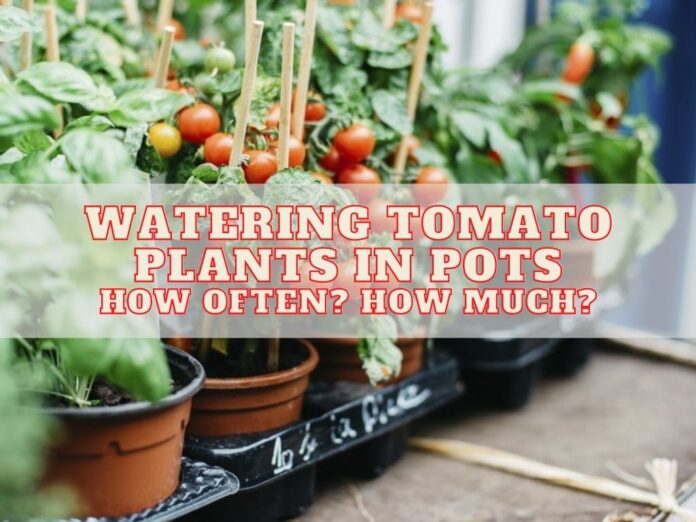
    Watering Tomato Plants in Pots
    Source: theglobalinside.com

    You need to observe the size of the pot in which you are growing the tomatoes, and you want to evaluate the amount of water you should be providing to your tomato plants.

    And if you are starting to grow your tomato plants, during the scorching heat of the summer seasons, your plant might yield you the best results. You should choose a tomato plant which has big bush-like leaves. This type of plant grows best in a 5-gallon plant pot. However, this tomato plant needs to be watered every day, occasionally twice a day.

    Soil Moisture

    An effective way of judging whether your plant needs water supply is by putting your finger inside the soil and feeling the moisture about 2″ deep. If you can’t feel any moisture, it indicates that you should water your tomato plant.

    Yellow Leaves

    damaged by disease and pests of fall leaves and fruits of tomato
    Source: agrilifetoday.tamu.edu

    Another effective way of determining the watering needs of your tomato plants is to check whether it’s leaves are turning yellow. Yellow Leaves indicate the water is not going to the parts of your plants. So you need to provide more water to quench your thirst.

    You can also consider investing in a soil moisture meter, which can effectively evaluate the water content of the soil in your plant pot.

    For using this tool, you just have to put the prong into the soil surface, and the meter will display the correct quantity of moisture in the soil of your plant pot. It’s the most straightforward approach to gauge the water content in the pot correctly.

    Now that you’ve proven that the tomato plant needs water, you’re probably wondering how much to give it.

    Things You Need To Keep in Mind while Providing Water to Your Tomato Plant

    As previously stated, a variety of factors influence the watering requirements of your domestic tomato plants. The following summarizes the factors that influence the frequency with which your domestic tomato plant can water.

    Colour and Size of the Container

    Source: gulleygreenhouse.com

    One of the most important aspects affecting your domestic tomato plant’s water needs is the size of the container.

    The roots of any typical domestic tomato plant can grow at a depth of around 20″ if given enough space. When roots are constrained by space, they begin to grow along the perimeter of the plant container, causing the plant to become ‘root bound.’

    Root-bound plants have a harder time absorbing essential nutrients and water from the soil, which can adversely affect the growth and quality of your tomatoes.

    It is undeniable that the quality of your tomatoes increases with the increase in the shape of your plant pot. However, it would help if you had a 15″ deep and 15″ broad pot. Moreover, if your tomato species tend to grow more enormous vines, then it is advised to use a 20″ container

    Type of Your Tomato Plant

    Tomato Plant
    Source: i.pinimg.com

    It has been proven that various unique species of tomato plants have considerably different watering requirements. So, if you don’t know much about your tomato species, set aside some time to learn about your tomato plant before evaluating its watering requirements.

    Some of the popular tomato species are Cherkoo and San MarzanoSan MarzanoSan MarzanoSan Marzano, which can reach a height of around 6 feet or more. Needless to say that, these species will be requiring more water to maintain proper growth and produce high-quality tomatoes.

    There are also smaller species of tomatoes that are dwarf trees that grow to be between 1 and 3 feet tall. They have a modest water requirement. Moreover, the water requirement of these plants becomes lower every day if they are sowed in larger containers.

    Weather

    If you’re growing any plant, you can’t ignore the aspect of weather, as it determines the surrounding environment of your domestic plants. If the temperature rises by even 5 degrees celsius, the water needs will go up considerably for your plants.

    And because of this, you should check the soil surface of your tomato plant at least two times a day and ensure that your plant doesn’t face any disadvantage of dehydration.

    Similarly, your tomato plant will require much less water to stay hydrated in the winter season as the environment gets quite cold.

    So, you can water your tomato plant every alternate day.

    Location Of Your Plant Container

    Tomato Plants
    Source: i2.wp.com

    The watering needs of your tomato plant can vary considerably depending on the type of location of your plant. For instance, if your plant container is exposed to direct sunlight all day, it will tend to lose a lot of moisture throughout the day. This will increase its water requirements.

    Subsequently, if you plant your tomato plant in your garden rather than a pot, then you have to provide around twice the amount of water.

    Frequently Asked Questions

    Q1: What should be the frequency of watering for your tomato plants?

    The watering needs will depend on the season. You usually should water twice a day in the summer season, whereas you should water once every two days during the winter season.

    Q2: What is the optimal way to water tomato plants?

    It would help if you water your tomato plants at a slow pace, which can provide enough time for the water to seep into the soil.

    Q3: Should the tomato plant be put under direct sunlight?

    Direct sunlight can evaporate the moisture from the plant’s surface, which can increase its water requirements. If you can provide more water, the quality of the tomatoes will not be compromised.

    Final Thoughts

    Fresh and juicy tomatoes have been in massive demand among the retailers as well as the chefs. Growing this food item is quite complex compared to other vegetables, as a slight change in environment or water supply can remarkably affect their quality.

    This article will provide you with a much-needed insight into how often and how much watering is needed for plants in pots.

  • What are Hybrid Plants? 2024 – An Overview of Most Popular Breeds

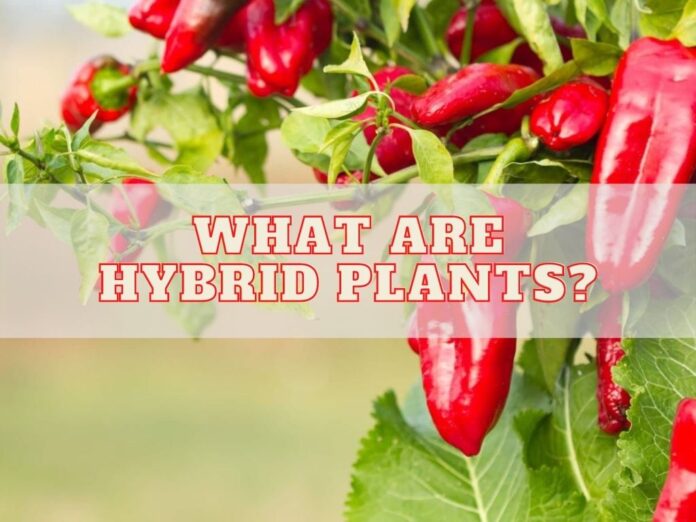
    What are Hybrid Plants? 2024 – An Overview of Most Popular Breeds

    You might have certainly heard of the term hybrid plants if you are an amateur gardening enthusiast or have been practicing gardening for a long time.

    You might have some questions regarding this type of plant, such as what are hybrid plants? What are the most popular breeds? Continue reading to have a better idea about hybrid plants, including how they are hybridized, distinct sorts, and more.

    Hybrid Plants: Definition & Examples

    What are Hybrid Plants?
    Source: blog.jungseed.com

    A hybrid plant is created by crossing two unique plant species and nurturing the seed that results from the cross-pollination.

    A plant that is created as a result of hybridization grows from that hybrid seed.

    Plants used for Commercial hybridizing are made sure that their offsprings retain some of the desired characteristics of the parent variety.

    Hybrids are created for a variety of reasons, including immunity to diseases, improving the size of flower petals, plant size or fruit size, improved blooming, color, flavor, or any other reason a plant can be regarded as unique. Many existing commercial plants sold now are hybrids.

    The Hybridization Process

    During a hybridization process, a pollen grain from the desired plant species is taken and inserted into the flower of different species.

    It depends on the breeder, which plant should be served as a female plant and which one should serve as the male counterpart. The female plant must contain a pistil, whereas a male plant should contain a stamen which is a male reproductive part of the plant.

    Instead of being natural, the pollen grain is manually inserted into the female reproductive part of the plant, which is the pistil. Also, it made sure that all the stamens were removed before carrying out the hybridization process.

    This ensures the prevention of any possible self-pollination. The resultant fruits produced by hybridization are collected, and their seeds are carefully extracted for further usage.

    Most Popular Hybrid Plants

    Now that we have a good idea about the hybrid plant let’s go over some of the types of commercially used breeds:

    Hybrid Lilies

    hybrid lilies
    Source: wsmag.net
    Oriental hybridsOriental hybridsOriental hybridsOriental hybrids and Asiatic hybridsAsiatic hybridsAsiatic hybridsAsiatic hybrids are two types of hybrid lilies. Oriental hybrid lilies tend to have enormous, fragrant blossoms that are 6 to 8 inches long and come in pink, crimson, white, and purple.

    Asiatic hybrid plants, on the other hand, are considerably smaller and often do not have a scent. Flowers in vibrant colors of rose, yellow, pink, gold, orange, and white are available.

    The blooming time period of the Asiatic lilies is usually during the early summer. In comparison, the Oriental lilies typically grow during the late part of the summer.

    When grown in a suitable medium with adequate light and proper hydration, hybrid lilies can simply be cultivated in domestic pots. The fluoride contained in various widely used growing mediums is likely to cause some cases of leaf scorch in lilies.

    Sweet Corn

    Sweet Corn
    Source: cdn.shopify.com

    Hybrid corn accounts for the majority of corn farmed across the globe. These kinds’ qualities have made them easier to grow for domestic gardeners. Apart from that, these hybrid corns tend to be sweeter than any regular grown corn. And for optimal pollination and proper corn growth, these hybrid corns are generally produced in relatively giant farms.

    Breeders usually sow the seeds in a location that is getting adequate sun rays. Also, the soil should be rich, well-drained, and deep.

    After the final frost, sow the seeds roughly two weeks later. Breeders primarily harvest the ears of the corn during the brief milk stage. During this timespan, punctured kernels release milky-coloured liquids.

    Olympia

    Olympia hybrid
    Source: sakatavegetables.com

    Olympia is a special type of hybrid spinach, which is renowned among breeders for its exceptional growth. Apart from being big, the leaves of the Olympia hybrid have a characteristic dark green color. These hybrid plants grow best during the summer or the spring season.

    However, their leaves tend to be resistant to warm climate conditions, and they can easily survive bolting. In only 48 days of sowing the seed of Olympia, they can be harvested in their fully grown state, significantly if they are grown under favorable conditions.

    When the soil temperature is around 40 degrees Fahrenheit, the Olympia seeds can be sown, and their germination period is about two to three weeks.

    Stargazer Lilies

    Stargazer Lilies
    Source: ellasfloralsandmore.com

    These oriental hybrids have large, fragrant flowers that can reach 8 inches across their diameter and come in various colors, including pink, red, white, and purple.

    They usually bloom best during late summer after a vigorous growth period in the summer. Plants are frequently sold in the spring and can be simply grown in pots.

    Plants bulbs that are thrice their size in length should be sown for optimal result. The best sowing period of these hybrids is around spring or fall, or summer.

    During its growing cycle, you should provide it with an adequate water supply and make sure to detach the spent flowers to redirect all the energy for the growth of the plant.

    Meyer Lemon Trees

    Meyer Lemon Trees
    Source: thespruce.com

    Tue Meyer lemon hybrid trees result from a typical hybridization process between the Mandarin orange trees and a lemon tree. This mandarin orange tree is generally brought in from china.  This kind of lemon is much sweeter than ordinary lemons, making it a desirable ingredient for various chefs and gardeners.

    These hybrid lemon trees can be easily cultivated in a warm environment.

    They are generally cultivated in plant pots and brought inside during the winter months. Purchase 2- to 3-year-old trees and place them into a well-drained, a little sandy, and somewhat acidic soil. Make sure to keep the soil moist but try not to waterlog in all the time.

    Frequently Asked Questions

    Q1:  Why are Hybrid Plants Cultivated?

    Hybrid plants tend to have a better size of flowers, fruits, and leaves the regular plants. This makes them ideal for being used for commercial products.

    Q2: Can a hybrid plant have seeds?

    Most of the hybrid plant possesses seeds, however, some of them might be sterile and can’t be reproduced.

    Q3: How are hybrid plants created?

    Hybrid plants are created by cross-pollinating two plants from completely different species, to attain the desired characteristics.

    Final Thoughts

    With the increased level of Competition within the consumer brand, every company is trying their best to improve their products to entice more customers. Making hybrid products is a great way to achieve the desired results without the usage of harmful chemicals.

    This article can provide great insights and will give you a proper explanation of what hybrid plants are or an overview of the most popular breeds.

  • How To Get Rid Of Waterbugs? 2024 – Complete Guide

    How To Get Rid Of Waterbugs? 2024 – Complete Guide

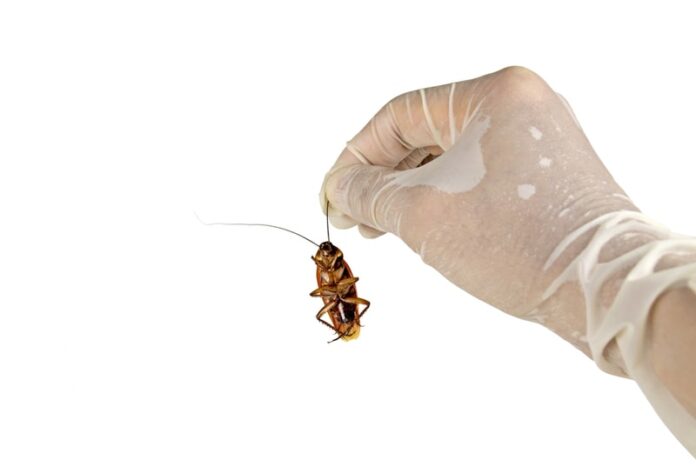
    Oriental cockroaches, giant water bugs, backswimmers, or the toe biters are common insects we find in and around stagnant water. Such bugs categorize themselves under the group of waterbugs that are now becoming a menace in every household.

    Swatting a single roach isn’t going to solve your problem if there is a possible infestation. If you think these bugs are getting into your toes every now and then, here are a few tips on how to get rid of waterbugs.

    Are water bugs dangerous?

    In simple words, not at all. These pests are not directly troublesome to us, but their presence in our homes and offices is. Outer water bugs and roaches don’t directly attack and bite humans, but they naturally sting if distributed. Their sting might cause local swelling, redness, and slight irritation.

    Moreover, as they live in colonies, they make their nests in unreachable places and spread around our houses, littering the area. The more bugs and pests are, the more are the chances of bacterial infections. Roaches and flying bugs can easily contaminate our food and supplies, directly affecting us. Thus, it is due to this unhygienic issue we consider getting rid of waterbugs.

    Spotting the presence of waterbugs

    Spotting the presence of waterbugs
    Source: prevention.com

    Before choosing a repellent or any procedure to wipe off the bugs, you should figure out the extent of the infestation and where they are dwelling.

    • Waterbugs like humid places. You can check below the sinks, behind the cabinets of the kitchen and bathrooms, and near the windows.
    • As water attracts them the most, look for the openly collected water around your property. It can be animal bowls, garden ponds, fancy fountains, or open swimming pools. You can also check for leaking pipes or open drains as the foul odor and moist places are their sure-shot nests.
    • Inside the home, look for their eggs, littered food particles, and droppings all around to ensure the bugs are roaming.

    Quick Home Remedies

    How To Get Rid Of Waterbugs
    Source: pinterest.com

    DIY solutions and home remedies are our instant choice to act fast soon as we spot the bugs. They are safe to use around the house without troubling anyone with irritation or allergies. You can choose among the following water bug killers that are available around your kitchen.

    Boric acid

    Sprinkling the boric acid powder on the most probable humid spots or the nests of the bugs kills them with irritation and dehydration as they eat away the powder. You can simply sprinkle the powder and clean the surface later. To attract more roaches and bugs, you can mix it with flour or sugar to set up bait.

    Vinegar

    It is a natural acid that irritates and kills bugs. To spray the solution on the damp and dank areas, make a solution of one part vinegar and three parts water. You can also add apple cider vinegar to create an inviting essence, thus attracting the lot immediately. You can also mix the solution with detergent to aggravate the heat and acidity.

    Essential oils

    The strong odor of different oils is famous for repelling and sometimes killing waterbugs. You can use the strongest like peppermint, rosemary, or eucalyptus oil that are capable of killing. Mild ones like Tea tree, cedarwood, and cypress oils can repel them. Dilute the oil with water, adding at least ten drops of the oil to 30mL of water. You can mix vinegar, baking soda, or other oils to increase the effect.

    Baking soda

    Baking sodaBaking sodaBaking sodaBaking soda releases carbon dioxide the moment bugs try to eat it. Soda also dehydrates and damages the exoskeleton of the waterbugs, killing them. You can simply spread the powder with a brush or sprinkle it wherever you spot their colonies. If the powder is messy, mix it with little water to form a paste or dilute to spray and apply around.

    Commercial products

    Chemical bug baits
    Source: cdn.shopify.com

    Mild natural solutions might not work well for a large colony or a severely damp area. For a fast reaction, you should rely on commercial water bug killers easily available in the markets.

    Chemical bug baits

    These baits are bug-attracting pelletsbug-attracting pelletsbug-attracting pelletsbug-attracting pellets, gels, or powders containing sweet luring elements along with toxic insecticides or pesticides to kill the bugs. Make sure you keep the other items out of reach and place the baits in located entry spots or near their nests to ensure the pests find them easily.

    You can use the products having indoxacarb, boric acid, fipronil, or hydramethylnon. These chemicals react with the brain and digestive system of the bugs as soon as they eat them.

    Repellent sprays

    Trapping with edible water bug killers can be slow and ineffective. Sprays are the quickest to cover a large area and react fast. They contain strong acids and toxicants, which attack the lungs and central nervous system as the bugs inhale the spray. Make sure you take proper safety precautions and cover-up to avoid direct contact as the chemicals are dangerous for humans and plants.

    Physical traps

    While all the above methods have the disadvantage that dead bugs and roaches make it a hassle to locate them and clean out, the physical bug traps can avoid this hassle. The traps are either closed boxes or sticky sheets to catch them. You can put any bait on them to attract the bugs, and voila! You can catch them dead or alive without any litter.

    Should you call for extermination services?

    extermination service
    Source: build-review.com

    Exterminators are a sure-shot solution to get rid of bugs and pest infestation. If you find the waterbugs have covered a large area in and around your house or your water bug killers utterly failed, it is better the experts act with the required equipment and treat the issue from the source.

    Exterminators track the bugs using baits and traps to find out their dwelling spots. They use highly potent chemicals and sprays to kill all the bugs. Later they clean the entire place and seal away the leaks, if there are any, thus preventing successive attacks. You can also book for the sanitation drive where they disinfect the surrounding areas around your property to clean the entire place.

    Final Words

    Waterbugs are physically harmless, but they can lead to food contamination and bacterial infection. To get rid of waterbugs and their colonies, it is necessary to approach them with a broad perspective.

    You can use several natural DIY solutions, commercial bug repellents, or hire pest control services. After ensuring the extermination is over, you should maintain dry and clean surroundings to avoid infestation again.

  • How Long Does It Take Grass Seed To Grow From Seed To 2” Tall 2024

    How Long Does It Take Grass Seed To Grow From Seed To 2” Tall 2024

    The germination of seeds is influenced by many factors. It is mostly due to the type of grass variant, climate, the season of the year in which it is planted, moisture of the soil, etc.

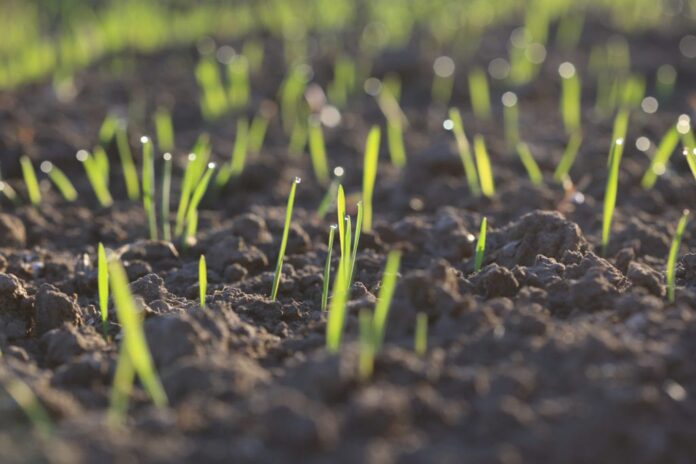
    Generally, a grass seed germinates between 5 and 30 days. But, for it to grow about 2 inches tall it will take approximately a month.

    This article will tell you what are all the parameters that influence grass seed germination and growth. We also have some interesting tips and tricks to make sure that your lawn has the perfect and evenly grown green grass.

    Factors that Influence Seed Growth

    Grass Seed
    Source: bobvila.com

    Grass Species or Variant

    Different grass species take different timings to grow. Grass which grows in the colder seasons grows fastest. It is between 10 and 18 degrees Celsius ( 50 to 60 degrees Fahrenheit) that the grass grows fastest.

    In the warmer climatic conditions, Bermuda grass grows the fastest while in cooler temperatures, Ryegrass germinates the fastest. These seeds take at least 7 to 10 days to germinate.

    Ryegrass requires the soil to be damp throughout the germination period, whereas Bermuda grass can be watered once every 3 days even during the hottest seasons. Some meadow grass seeds can take about a couple of weeks to germinate.

    Season of plantation

    Grass Seed
    Source: bobvila.com

    The time of the year during which the seeds are sown plays a major role in the germination and growth of the seeds. There are 2 types of grasses based on the type of season. They are:

    Cool-season grasses:

    These types of seasons are found usually in the Northwest Pacific, Northeast and Upper Midwest, etc. They have an active growth period during early spring and early fall.

    Temperatures ranging from 15 to 24 degrees Celsius are the best for cool-season grasses. They turn brown in the summer though they are green in winters.

    Cool Season Grass-types and their estimated time required to grow:

    • Ryegrass (Annual & Perennial): 7 to 10 days.
    • Tall fescue: 10 to 14 days.
    • Kentucky Bluegrass: 2 to 4 weeks.

    Warm Season Grasses:

    These types of seasons are found usually in the South and Southeast regions. They have an active growth period during mid to late spring and early fall.

    Temperatures ranging from 27 to 35 degrees Celsius are the best for warm-season grasses. They go dormant in the winters.

    Warm Season grass types and their estimated time required to grow are:

    • Bermuda grass: 7 to 10 days
    • Buffalo grass: two weeks to a month.
    • Centipede grass: 14 to 21 days.

    Watering Schedule

    Grass Seed
    Source: heritagelawnskc.com

    Adequate and optimal watering is important for any seed to germinate. If you water too much, it might wash away the seeds, and under-watering dries up the soil. Hence, no germination takes place in both cases.

    Here are a few tips on how and when to water:

    Create a moist environment by watering for several days, and ensure the soil is moist for about 6 to 8 inches deep. This will dampen the soil naturally and make the soil perfect to sow and germinate the seeds.

    Water the soil regularly so that the soil remains wet. Note that you should not water the soil up to soggy conditions.

    Monitor the plants and the amount of sunlight that each region in your lawn receives and water accordingly.

    Once your lawn is set, you will have to water about an inch every week.

    Avoid watering during nights as this can keep the soil wet for longer durations which in turn will promote fungus.

    Watering during the mornings is the best practice as this will not cause the water to evaporate quickly and will give the water plenty of time to percolate.

    Additional Steps

    Your seeds might not germinate even if you follow all the above-mentioned parameters. To ensure that your grass seeds grow nice and green you must follow these additional steps to plant seeds the right way.

    1. Soil Testing

    Grass Seed
    Source: smartnitrogen.com

    Testing your soil is important before growing any plant as this will give you an idea about your soil type. You will know your soil’s nutrient content, water retention capacity, pH, and many other vitals which will give you an idea of which type of grass seed you can grow.

    2. Soil Prep

    After knowing your soil type, you are now ready to analyze and prep your soil.  Till the soil to loosen it up to ensure faster seed germination. You can do it manually or use a rototiller.

    Now, you can add your manure to the soil. Grass would require nitrogen content in greater quantities hence, choose a manure that is rich in nitrogen contents.

    Remove all the unnecessary waste materials, debris, giant rocks, pebbles, stones, and wood as they would hinder the growth. Smoothen and level your surface to have an even and elegant look.

    3. Sowing the Seeds

    Sowing the Seeds
    Source: the-salutation.com
    Grass seedsGrass seedsGrass seedsGrass seeds do not require the actual sowing of seeds. You will have to just spread the seeds evenly. To do so you can either use a spreader that will ease your process or do it manually.

    4. Topdressing

    To lock in soil moisture place a layer of peat moss. This also prevents seeds from getting washed away and protects them from birds eating.

    5. Mowing the grass

    To have a smooth and leveled lawn, you must mow the grass once it reaches the height of about 3 to 4 inches. This makes your lawn look decent and well maintained.

    Final Words

    This article explains to you how different types of grass seeds require different kinds of treatment in order to germinate and grow from seed to 2” tall.  You can now select your perfect grass type for your lawn as you know how much time each variant requires to germinate and grow.

    You are also aware of different parameters and conditions that your seeds should receive in order to grow efficiently. If you are a beginner and are confused then make sure you follow these tips and tricks to have a clear idea on growing your lawn green from scratch. Happy gardening!

  • Centipede Grass Pros and Cons 2024 – Complete Guide

    Centipede Grass Pros and Cons 2024 – Complete Guide

    Centipede grass is an amazing solution for various relatively warm and humid climates. It originated from Asia and was introduced to citizens of the United States during the early twentieth century.

    At that point, decorated lawns became very popular Stateside, and demand for beautiful grasses that require low maintenance was pretty high. Because of that, many people referred to it as “lazy man’s grass.” Although it is pretty easy to grow, it develops really slowly when compared to other similar species.

    As great as it seems, this cultivar comes with various pros and cons. To help you reach a deeper understanding of this plant, we have collected valuable pieces of information related to useful and good properties as much as problematic ones.

    What are the pros of Centipede grass?

    Centipede Grass
    Source: lawnandpetal.com

    With its bright green color and density, this particular grass is a trendy choice for lawn enthusiasts. Even though it does not tolerate cold and frosty weather, it still deals better with it compared to other species of a similar kind. In the section below, we will list some of the good traits centipede grass possesses and the reasons why you should decide to opt for it.

    It requires very low maintenance

    Once this grass grows, it will require only basic care. All you need to do is water it regularly and fertilize the soil. If this cultivar’s climate is suitable, it will easily last for many winters to come. Since it is a slow-growing species, it is not necessary to mow it frequently. The best height for this cultivar is somewhere between 1 ½  up to 2 inches. It requires a low amount of nutrients to remain healthy and keep the right shade of green.

    Weed control is very easy

    You will have fewer weed worries when centipede grass has been established. Its thick and dense growth prevents the growth of various invasive plants and weeds that can damage its health. It will save you a lot of time and effort in weed-killing.

    Since this grass grows really slow, it reduces the chances of thatch buildup. Applying pre-emergent herbicide typically does most of the job regarding weed control, and it is best to do it early in the year. This will easily control winter grassy and broadleaf weeds.

    Centipede grass is extremely light and heat-friendly

    One of the best traits of this cultivar is that it loves the warmest parts of the year. It grows best in areas that have long, warm seasons. It will thrive in full sun and will not change color. All it needs is somewhere between 6 and 7 hours of sunlight.  The soil should be warm and have a temperature of at least 70 degrees for it to start flourishing. It is highly drought-tolerant, so you do not need to worry about grass changing its color as long as you water and maintain it regularly.

    It does not have a true period of dormancy

    Unlike various similar species, centipede grass will stay green throughout the winter months as well. This is pretty uncharacteristic for warm-season types of grass, and it can be a very useful trait if the area where you are planting has mild and brief winters.

    Aggressive growth

    Although it is developing slowly, it grows very aggressively. The result of this type of growth is a beautiful, carpet-like texture that will provide you with a lovely, green lawn with full and strong color. The thickness of this species also limits resources for weeds to take effect, so it is a type of natural defense mechanism.

    It can thrive in acidic and sandy soils

    It is a perfect cultivar for southern climate soils. Warm winters suit this plant best, and every area that has sandy soil is more than welcome for centipede grass. It thrives on high temperatures and recovers from any type of stress quite rapidly.

    What are the cons of centipede grass?

    Centipede Grass
    Source: hancockseed.com

    Even though this plant is low-maintenance and has successful survival in very hot climates, it still isn’t perfect. You should know about several disadvantages before deciding to opt for this choice as your new lawn. In the section below, we have listed some of the cons centipede grass possesses.

    Shade tolerance

    Although this species has a certain tolerance for shades, too much of it may be fatal. If this grass does not get enough sun throughout the day, which is typically somewhere between six or seven hours, it can cause significant damage. It grows best when it is exposed to large amounts of sun, and having a big shade over it each and every day is a big dealbreaker.

    Its surface is soft and delicate

    The delicate surface of this grass might be a big issue, especially if it is planted in high-traffic areas. Being a slow-growing plant, once it is stepped on, it will get damaged and take a lot of time to recover. This is typically a big drawback for people that want to plant it around their household and walk on it.

    Iron Chlorosis is a big threat

    Iron Chlorosis is one of the main reasons centipede grass can suffer from discoloration. Even though it will not affect its health, a color change is a big red light for lawn enthusiasts.

    Iron chlorosis problems tend to develop when you overdo it with fertilizers. Measure them properly because once discoloration sets in, you will not be able to treat it and will have to replace the lawn.

    It requires a lot of water

    Centipede grass requires a huge amount of moisture to keep healthy and have the right shade of green. It is not the biggest trouble you can encounter, but it is still a very important fact to know before opting for this type of grass.

    Typically, it requires roughly an inch of water over the course of the week. If you are growing it in the areas where it does not rain often, you will have to water it regularly.

    This grass is also vulnerable to standing water since it can attract various pests that can damage and kill it. Make sure that the soil you are planting this cultivar is well-draining.

    Final words

    Choosing the proper grass for your decorative lawn is definitely not an easy task. Different types come with different pros and cons that will make you second guess your decisions and confuse you further.

    Centipede grass is an amazing choice for warm and humid areasamazing choice for warm and humid areasamazing choice for warm and humid areasamazing choice for warm and humid areas and an absolute gem for eyes to see in your household, but it has its flaws, and it is significant for you to know about them.

    We hope that our post will solve some of the dilemmas you have regarding this particular species and that it will help you cultivate it with ease and joy.

    Read also: Zoysia Grass Review 

    Don’t miss this amazing offer on Amazon:

  • 9 Best Purple Houseplants For An Exotic Indoor Garden – 2024 Guide

    9 Best Purple Houseplants For An Exotic Indoor Garden – 2024 Guide

    Gardening can be a stress buster for many of us out there. It is an amazing physical activity that can really ground you to the present and you can just let all your worries melt away working with your little houseplants.

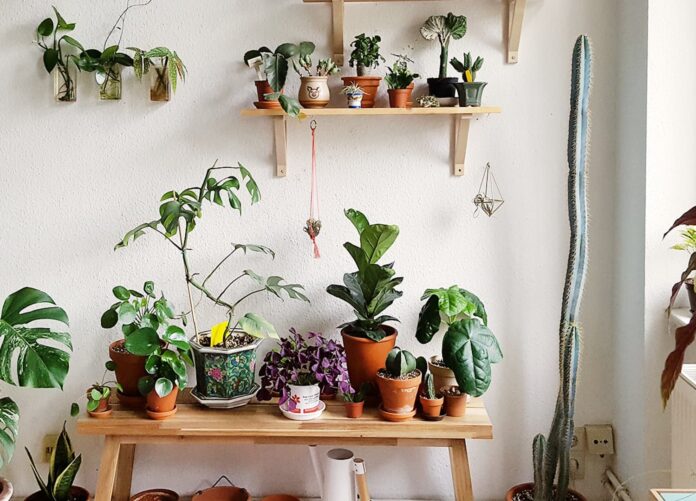
    Especially with the onset of the pandemic, many of us are confined in our homes and gardening has given a way out of our incessant boredom.  If you need a little push to spruce up your indoor garden and give it a little exotic twist with purple hues etched in your leafy friends, we got you covered.

    We have with us a comprehensive list of many purple houseplants for you to choose from and give your garden a makeover. Let’s get into it!

    1. Caladium

    Caladium
    Source: ubuy.co.id

    You can identify this particular plant from a mile away. Resembling an elephant ear, Caladium is sometimes also called the same. Other than that you might also know it as angel wings. This beautiful little plant has large leaves with foliage as thin as a wafer.

    With different interesting patterns, it sure will enhance the look of your garden. Sometimes you may see one even shaped like a heart, arrow, or even a lance. Originating from central and southern parts of America, Caladium comes from the Arum family. It can potentially grow up to 60 cm.

    Be sure to keep the soil moist during its growing season and make sure that it gets 3-4 hours of filtered light in a day. The best temperature for Caladium is 60⁰F during the night while 70⁰ F during the daytime.

    For best results keep the humidity levels at 50 percent or higher. Using well-drained soil with rich organic matter will give your plant the best results. Also, try to apply the 5-10-10 formula during every month of the growing season.

    2. Coleus

    Coleus
    Source: chatelaine.com

    Scientifically known as the Plectranthus Scutellarioides, Coleus is a very beautifully ornamented plant that can be grown indoors as well as outdoors. And if you want a purple houseplant, this might be the one for you.

    Structurally small, you can easily take care of this little beauty. Adoration from visitors is something you should get ready for if you’re bagging this vibrant eye-soothing plant for your house.

    Coleus is essentially a Southeast Asian and Australian-originated plant belonging to the family Lamiaceae. It can potentially grow up to about 36 inches making it one of the petite and cute plants in your garden. Do not forget to water this plant at least once or twice a day during warmer seasons.

    For light, make sure it gets good sunlight and maybe a little shade. The best temperature for this plant would be 70⁰F to 100⁰ F. It requires a moderate to high humidity level, so watch out for that. Your plant needs a liquid fertilizer to boost its growth so make sure to feed it at least once every week for a happy garden.

    For its soiling, do notice if it has a good drainage system and has enough perlite for it. Do not overwater this plant as it might lead to its root start rotting thereby killing your plant eventually.

    3. Iron-Cross Begonia

    Iron-Cross Begonia
    Source: charlie-cook.com

    The next one on our list would have to be Begonia Masoniana. Confused? Well, it is the scientific name of Iron-Cross Begonia. With its wide leaves and darkened hues, it is surely the belle of the ball.

    The name comes from the fact that it looks similar to the German iron cross. The foliage of this particular plant is uneven and pebbled with tints of purple blooming.

    This plant belongs to the family Begoniaceae and originates from China and Vietnam. It can grow up to around 18 inches, so prepare your pots accordingly. This plant has a fungus risk so try to keep the foliage wet. You must water the soil at least once every week.

    Make sure that if you plant an Iron-cross Begonia, it gets bright sunlight but not directly. The best temperature for this plant is around 65⁰F to 75⁰F. With high humidity levels, your plant will grow to its optimum capacity.

    For fertilizing, do it once a month by using the 10-5-5 formula. Make sure that the soil is neutral to acid and alkaline. Do not forget to add perlite for proper drainage. Like many others, this plant is also prone to overwatering which will cause mildew due to its drowned roots.

    4. Ti Plant

    Ti Plant
    Source: pinterest.com

    If you are looking for purple plants, this one delivers you that purple that is why it is on the list. This plant will certainly add a class to your garden that it wanted. With long foliage, you can place this plant in your room for a vibrant appeal.

    There are different varieties of this plant and most of them have the same strappy leaves with very bright shades of purple.

    Ti Plant originates from the Southeastern region of Asia and the Western Pacific Ocean regions. Born in the Asparagaceae family, this plant can grow up to 10 feet. You can decide to water this plant frequently but only in little amounts.

    The best temperature for this plant is around 65⁰F to 95⁰F. Make sure it is placed in a place where it receives partial sunlight and the humidity levels are at 40 percent to 60 percent. You have to feed it high nitrogen for its fertility.

    It thrives under acidic soil so make sure to check the pH of the soil. Do not overwater this plant as you might unintentionally make the leaves drop down. Also, make sure that it doesn’t receive too much sunlight as it will turn a yellow shade from its beautiful purple.

    5. Purple Oxalis

    Purple Oxalis
    Source: royal-bloom.com

    The plant is a full-on purple splash to your garden that you wanted. The scientific name being Oxalis Triangularis, this little leaf-shaped plant looks like a burst of starry purple blossoms. With very delicate foliage the small flowers in this plant make it the perfect decorative choice for your indoor garden.

    You can grow this plant in containers and look at this tiny butterfly-shaped plant come to life. It mostly remains closed during the night but if you put it in partially shaded environments then it will start to open up as you notice.

    Originating from Brazil it comes from the family of Oxalidaceae. Has a potential growth height of around 25 CM making it a very small plant.

    Do put this under a partial shade environment and make sure that it gets a temperature of around 60 degrees to 70 degrees. It thrives under a moderate humidity level. Do try to put mist on the foliage from time to time.

    You can get fertilizer to feed every 2 to 3 weeks and for the soiling make sure you get a very rich soil that has a very well-drained potting mix.

    A few of the problems with this plant are that you might observe powdery mildew and the occurrence of white spots on the leaves that appear due to possible sunburn.

    6. Begonia Maori Haze

    Begonia Maori Haze
    Source: pinterest.com

    Next is this beautiful little number begonia Maori haze that will make your garden pop with the perfect purple. This little plant is also known as begonia Rex be leaf and it doesn’t have a scent of its own. The foliage of this tropical plant is a sight to behold.

    This perennial rhizome originates from Brazil from a family called Begoniaceae. The potential height of 40 to 60 CM this plant is moderately tall. The watering for this plant differs from season to season. During the growing season make sure to water it regularly while during winter reduce the watering.

    Do not put this plant under any direct sunlight but do a mixture so it receives some amount of light during the day. The best temperature for such plants is 72⁰F during the day and at night make sure it receives at least a 64° F temperature.

    The humidity level that it thrives on is higher, so, make sure to mist around the plant frequently. Use fertilizers only during the growing season and as for the soil, this plant prefers a slightly acidic one. Plants of this kind may form powdery mildew which needs to be treated with fungicide.

    7. Echeveria

    Echeveria
    Source: pinterest.com

    From the natives of semi-desert regions, these are flowering plants with a unique design for their leaves. Primarily house plants, these plants are shaped like rose succulents. The leaves of this plant are very fleshy with a waxy texture on the outside.

    Traceback the origin of this plant to Central America from a family of Crassulaceae. It can potentially grow up to 12 inches. That you do not overwater this plant. Watering it once every 10 days works. The plant needs full sun so try to place it in a place where it can get direct sunlight.

    The best temperature for this plant should be a subtropical climate with an average humidity level of 40%. Does not necessarily need a fertilizing portion but if it somehow stops, you can apply a cacti fertilizer.

    The soiling of this plant needs proper drainage so make sure it has perlite and make sure you water it consistently as poor watering may lead to wilting leaves.

    8. Greenovia

    Greenovia
    Source: carousell.sg

    Now if you look at the pictures of this flower, it is guaranteed that you’re gonna want it for your garden. It is a succulent plant shaped like a rose, scientifically known as Greenovia Odrentalis. The leaves have circular petals which are very symmetrical.

    This plant grows in clusters and can be traced back to the Canary Islands. Songs from a family of Crassulaceae are very small given that the potential height is 6 inches. This plant only when the top surface of the soil feels dry which you can make sure of by dipping your finger into the soil.

    Needs a bright sun to grow properly and thrive under a subtropical climate with an average humidity level of 40%. You don’t necessarily need to fertilize this plant. For soiling makes sure it has fast-draining soil which is sandy and has gritty loam.

    Be very careful about overwatering Greenovia as it might lead to yellow leaves. Make your dream of having an exotic garden with this addition.

    9. Wandering Jew

    Wandering Jew
    Source: epicgardening.com

    The last one on our list has to be the Purple striped plant also known as the wandering Jew. Scientifically called tradescantia zebrina, this little plant has very small petals that bloom in violet and white hues.

    If you are bored out of your mind and need something to take care of, this plant will be the perfect addition to your garden as this plant needs a lot of attention during its growing, starting from watering it properly to feeding it regularly.

    What will quickly catch your eye is the silver and olive markings that can be found at the top layer of the leaf and as you go on the underside you see a dark purple color on it. This belongs to a family of Commelinaceae.

    Potential growth height of 6 feet this plant needs regular watering and bright sunlight which is not direct for its growth. The temperature for this will be 50⁰F to 80⁰ F. It requires an average humidity level. You can feed it half-strength liquid fertilizing.

    Make sure that the soil for the pot mixing is moist at all times. Common problems that these little plants face are spider mites, fungus gnats, and aphids. Top searched problems you can use Neem oil.

    Conclusion

    All of these plants will be a beautiful addition to your exotic gardening needs. You cannot just decide to get a plant and forget about it after.

    Plants need proper nurturing to grow properly and if you want a well-maintained garden, make sure to tend to all the needs of different plants that are housed in it.

    With the information provided here, you have nothing to worry about. Hopefully, you have found your rightful match in one of the several that we have on our list. So don’t just sit around and procrastinate and get your plant now! Happy Gardening!

  • 6 Tips on How do Farmers Maximize Their Crop Production

    6 Tips on How do Farmers Maximize Their Crop Production

    When talking about agriculture, crop yield is one of the top priorities for many farmers. Since antiquity, farmers have tried to improve the yield of their crops and, at most times, they’re at the mercy of mother nature. Bad weather, pandemics, and various wild animals can easily destroy crops or stall their growth.

    This is why, in those days, farmers took primitive measures to help save their crops by using a wide range of different fertilizers such as charred materials and even human or animal waste. But, they do so much more. Here is what you might want to know about the history of agriculture, as well as how do farmers maximize their crop production nowadays:

    History of Agriculture

    source: unsplash.com

    As you probably know, agriculture has been around for thousands of years, and the methods, as well as techniques, have mostly been consistent throughout the centuries. Of course, there are some minor and major improvements, but the entire concept remains the same. Agriculture has developed independently in different parts of the words, and the earliest form of farming dates as far back as 10.000 BC.

    19th Century – The Industrial Revolution

    source: unsplash.com

    At the turn of the 19th century, there were great advances in agricultural technology such as the invention of the tractor and weather forecasting. These new and beneficial inventions – and many, many more – provided much-improved farming efficiency and productivity. With further advancements in this particular industry, farmers now have new ways of improving the yield their crops produce.

    In recent years, a wide range of new technologies and products are introduced, all of which will help farmers improve their crop yield. These new technologies and products are being combined with ancient methods in order to boost fertility and improve crop yields. For you to better understand what farmers are currently doing, here is a list of the most common strategies and methods they use:

    1. Verdesian Life Sciences

    source: unsplash.com

    The very first innovation that you might want to know about is from Verdesian, one of the world’s foremost companies that carry out research and development of different sustainable, agricultural products. One product that helps farmers quite a lot bring nitrogen into their plants is Preside CL. What is this particular product and what can it help with?

    Well, it’s actually quite easy to understand – Precise CL is a soybean inoculant, which has the main purpose of bringing nitrogen into a specific plant or several of them. It utilizes a patented technology that is often referred to as “Take Off”, which is present in a unique extender that is capable of paring with the soybean inoculant. This can help the plants thrive, thus, they could also maximize crop production.

    2. Seasonal Crop Rotation

    source: unsplash.com

    Most farmers will plant their crops season-by-season, however, it’s quite crucial that you understand how sowing the same crops on the same land can affect the yield the plants produce. For instance, if a farmer plants corn each year, the yield the crops produce will decrease. Of course, if the soil and conditions are good enough, people could plant the same crops, but, it’s always better to choose something else.

    So, why is this important? Well, if you choose to plant alternative crops, you’ll be capable of diversifying the needs of the soil, hence, if you opt for, for example, planting beans instead of corn, you won’t only ensure that the soil stays fertile, but, you could also ensure that the plant produces more goods and that it continues producing it throughout the year. So, consider doing this.

    3. Water Drainage is Crucial

    source: unsplash.com

    Why is drainage important when plants love water? Well, managing the water is crucial to ensure the survival of the vegetables and/or fruits, thus, by managing it properly, you can ensure that you maximize the potential of your yield.

    This is why one of the main things you must focus on is to not over-water the crops. Additionally, a lot of farmers install drainage systems on their land, mostly because this will prevent waterlogging.

    4. Fertilizers Are a Must

    When it comes to maintaining optimal soil conditions, adding fertilizers to the soil is a must. For instance, when you’re sowing corn or beans, adding some fertilizer to the seeds could easily provide all the important nutrients to it – including things such as calcium – and by doing so, the crop will most likely thrive in the future. Keep in mind, an increasing number of people are becoming more careful about what they eat, thus, it might be best to use something safe and organic.

    5. Testing The Soil is Essential

    source: unsplash.com

    If there is one thing that you must take away from this article, it’s the fact that you must test out your soil. Why is this important? Well, the soil has a direct influence on how your crops grow, and more importantly, how much they can produce for one season. Hence, by knowing the composition of the soil, you’ll also learn how you can handle the plants better. It’ll also tell you if there are enough nutrients, all of which will help you determine what needs to be done.

    6. The Quality of The Seeds

    source: unsplash.com

    If you want to ensure that you increase the yield of your vegetables and/or fruit production, you also must ensure that you use high-quality seeds. There are really two options to choose from – hybrid and non-GMO seeds. Hybrids will grow faster and stronger, while non-GMO seeds are sustainable and more affordable. Depending on your preferences and needs, you could choose what suits your needs and requirements better.

    Conclusion

    Whether you’re thinking about taking on farming or if you were simply interested in how farmers ensure that they maximize their crop yield, the aforementioned methods and strategies are commonplace in the world of agriculture. From installing a drainage system to testing out the soil, all of these are crucial for improving the production of produce.

    So, now that you’re aware of what you could do, you might want to drop everything you’re doing. Instead of losing time, you should determine what strategies you might need to implement, and by doing so, you’ll also guarantee that your plants produce more crops.