Category: Fertilizers

  • 12 Best Weed Killer for Flower Beds 2024 – Lawn & Garden Care

    12 Best Weed Killer for Flower Beds 2024 – Lawn & Garden Care

    I’ve spent years researching and testing various weed control solutions in both professional and home garden settings. My expertise is backed by a degree in horticulture and numerous publications on effective weed management. I’ve seen firsthand the havoc that weeds can wreak in flower beds, competing with your prized blooms for nutrients, water, and sunlight.

    Choosing the right weed killer for your flower beds is crucial. It’s not just about killing weeds; it’s about doing so without harming your flowers. I’ve sifted through countless products and scientific studies to bring you options that are both effective and safe for your plants. Let’s get your flower beds looking their best.

    1. Compare-N-Save 016869 Concentrate Grass and Weed Killer

    Makita HR4002 1-9_16-Inch SDS-MAX Rotary Hammer Drill

    Check on Amazon Check on PlanetsHoup

    I recently used the Compare-N-Save 016869 Concentrate Grass and Weed Killer in my garden. The first thing I noticed was its efficacy. Within a couple of days, the weeds started to wilt and die off. The concentrate formula means you get a lot of bang for your buck; a single bottle covered my entire garden and then some.

    However, it’s not all sunshine and rainbows. The product is non-selective, which means it will kill any plant it comes into contact with. I accidentally sprayed some on my flowers, and they suffered the same fate as the weeds. But if you’re careful with the application, this shouldn’t be a major issue.

    All in all, despite the minor hiccups, I think this is a good option for those looking to get rid of weeds quickly and efficiently. It does what it promises, and the concentrate formula ensures you get value for your money.

    Feature Specification
    Type Concentrate
    Coverage Area Up to 25,000 sq ft
    Active Ingredient Glyphosate
    Application Method Spray
    Visible Results 2-4 days
    Pros
    • Highly effective on weeds
    • Concentrate offers great value
    • Easy to apply with sprayer
    Cons
    • Non-selective; kills all plants
    • Requires careful application


    2. Preen 246422 Extended Control Weed Preventer

    Preen 246422 Extended Control Weed Preventer

    Check on Amazon Check on Walmart Check on eBay

    The product claims to prevent weeds for up to six months, and in my experience, it largely delivers on that promise. I applied it around my flower beds and noticed a significant reduction in weed growth over the following weeks.

    That said, it’s important to note that this is a preventive solution, not a weed killer. If you already have a weed problem, this product won’t eliminate it; you’ll need to remove existing weeds manually. Also, the granular form can be a bit messy to apply, especially on windy days.

    Despite these drawbacks, I find the product to be a good option for long-term weed control. It’s particularly useful if you’re planning a new garden layout or have just cleared an area of weeds and want to keep it that way.

    Feature Specification
    Type Granular
    Duration of Control Up to 6 months
    Active Ingredient Trifluralin
    Application Method Spread manually
    Safe for Plants Yes, when applied correctly
    Pros
    • Long-lasting weed prevention
    • Safe around established plants
    • Easy to integrate into gardening routine
    Cons
    • Not for existing weed problems
    • Can be messy to apply


    3. Spectracide Weed & Grass Killer Concentrate

    Spectracide Weed & Grass Killer Concentrate

    Check on Amazon Check on HomeDepot Check on Walmart

    After battling persistent weeds in my garden, I turned to Spectracide Weed & Grass Killer Concentrate for help. The results were quick and impressive. Within 48 hours, I saw the weeds and unwanted grass shriveling up. The concentrate formula is potent, allowing me to cover a large area with just one bottle.

    However, it’s crucial to handle this product with care. It’s a non-selective herbicide, meaning it will eliminate any vegetation it comes into contact with. I learned this the hard way when a few of my prized flowers got caught in the crossfire. Additionally, the product requires a dry spell of at least 24 hours post-application for optimal effectiveness, which can be a bit limiting.

    Despite these considerations, I find Spectracide to be a reliable choice for quick and effective weed control. It’s especially useful for clearing out large areas or tackling stubborn, invasive species.

    Feature Specification
    Type Concentrate
    Active Ingredient Diquat, Fluazifop and Dicamba
    Visible Results Within 48 hours
    Application Method Spray
    Weather Resistance Needs 24 dry hours
    Pros
    • Quick visible results
    • Effective on various weeds
    • Good coverage area
    Cons
    • Non-selective; caution required
    • Weather-dependent effectiveness


    4. Preen 2464127 Garden Weed Preventer

    Preen 2464127 Garden Weed Preventer

    Check on DvaSata Check on eBay

    When spring arrived, I decided to give Preen 2464127 Garden Weed Preventer a shot to maintain the pristine look of my flower beds. The product is designed to prevent new weeds from sprouting, and it did just that. After a single application, I noticed fewer weeds cropping up, allowing my flowers to flourish without competition.

    However, it’s worth mentioning that this product is purely preventive. If you’ve already got weeds, you’ll need to remove them manually before applying Preen. Also, the granules need to be watered in to activate, which means you’ll need to time your application around the weather or your watering schedule.

    In summary, Preen 2464127 is a solid choice for those looking to prevent weed growth in their gardens. It won’t help with existing weeds, but if you’re starting fresh or have just cleared out an area, it can save you a lot of future weeding work.

    Feature Specification
    Type Granular
    Active Ingredient Trifluralin
    Duration of Control Up to 3 months
    Application Method Spread manually
    Activation Requires watering
    Pros
    • Effective preventive measure
    • Easy to apply
    • Long-lasting effect
    Cons
    • Not for existing weeds
    • Requires watering for activation


    5. Roundup Weed & Grass Killer Concentrate Plus

    Check on Amazon Check on Target Check on Walmart

    Tired of the relentless weeds in my garden, I turned to Roundup Weed & Grass Killer Concentrate Plus. The product’s reputation for quick and effective results caught my attention, and it didn’t disappoint. Within three days, the weeds were visibly wilting, and my garden started to look much cleaner.

    However, there are a couple of things to keep in mind. This is a non-selective herbicide, so you have to be precise during application to avoid harming desirable plants. I used a targeted sprayer to minimize the risk. Also, the product is rainproof for 30 minutes, but you’ll want to apply it on a dry day to ensure maximum effectiveness.

    Overall, Roundup offers a potent and fast-acting solution for weed control. If you’re looking for a way to reclaim your garden from invasive plants quickly, this is a strong contender.

    Feature Specification
    Type Concentrate
    Active Ingredient Glyphosate
    Visible Results Within 3 days
    Application Method Spray
    Rainproof 30 minutes
    Pros
    • Rapid weed elimination
    • Potent concentrate formula
    • Rainproof after 30 minutes
    Cons
    • Non-selective; needs careful application
    • Best on dry days for effectiveness


    6. Fertilome 33692 Killzall Weed and Grass Killer

    Fertilome 33692 Killzall Weed and Grass Killer

    Check on Amazon Check on Walmart

    In my quest for a weed-free garden, I decided to try Fertilome 33692 Killzall Weed and Grass Killer. The results were quite promising. Within just a few days, I noticed the weeds starting to yellow and eventually die off. The concentrate formula also allowed me to cover a large area, making it cost-effective for bigger gardens.

    On the flip side, this product is non-selective, so you’ll need to be cautious during application. I used masking to protect my desirable plants, but it still requires a steady hand. Another point to consider is that it’s not rainproof immediately, so you’ll need to plan your application around the weather.

    In conclusion, Fertilome 33692 Killzall is a strong option for those dealing with persistent weeds. It’s effective and offers good coverage, but it does require careful application and favorable weather conditions.

    Feature Specification
    Type Concentrate
    Active Ingredient Glyphosate
    Visible Results 2-4 days
    Application Method Spray
    Rainproof Not immediate
    Pros
    • Quick and effective results
    • Good coverage area
    • Cost-effective concentrate
    Cons
    • Non-selective; precision needed
    • Weather-sensitive application


    7. Spectracide HG-55829 Concentrate

    Spectracide HG-55829 Concentrate

    Check on Amazon Check on Walmart Check on Spectracide

    I used Spectracide HG-55829 Concentrate to tackle the weeds in my yard. It worked fast. In just a day or two, the weeds started to wilt and die. The concentrate form is also a plus, as it allowed me to cover a large area without needing multiple bottles.

    However, it is not perfect, just like the most other products from the same category. Therefore, you must be cautious when applying it around your plants. Weather conditions can also impact the efficiency, which means that you should apply it only on sunny days.

    In the end, I think Spectracide HG-55829 is a solid choice for quick and effective weed control. Just be mindful of its limitations, and you should get the results you’re looking for.

    Feature Specification
    Type Concentrate
    Active Ingredient Diquat, Fluazifop and Dicamba
    Visible Results 1-2 days
    Application Method Spray
    Rainproof Not immediate
    Pros
    • Fast results
    • Large coverage
    • Easy to use
    Cons
    • Kills all plants, be careful
    • Not rainproof right away


    Buying Guide

    With years of experience in horticulture and plant care, I’ve had the opportunity to test and evaluate various weed killers in different settings, including flower beds. My recommendations are based on firsthand experience, scientific understanding of herbicides, and the specific needs of flower beds.

    Weeds are the bane of any flower bed. They compete with your beautiful blooms for nutrients, water, and sunlight. Choosing the right weed killer can make all the difference in maintaining a healthy, vibrant flower bed. Here’s what you need to consider.

    How to get rid of weeds in flower beds

    Types of Weed Killers:

    • Selective Herbicides: These target specific types of plants and are generally safe for your flowers. They’re ideal for flower beds but often require more frequent application.
    • Non-Selective Herbicides: These kill all plants they come into contact with. They’re effective but require careful application to avoid harming your flowers.
    • Pre-Emergent Herbicides: These prevent weed seeds from germinating but won’t kill existing weeds. They’re best used at the start of the growing season.
    • Post-Emergent Herbicides: These kill existing weeds and are what you’ll likely need if you’re reading this guide.

    Key Factors to Consider:

    • Effectiveness: Look for a product that starts showing results within a week. Speed is often crucial in preventing weeds from setting seeds.
    • Residual Activity: Some herbicides continue to work for weeks or months after application, preventing new weeds from sprouting.
    • Ease of Application: Sprays are generally easier to apply than granules, but they can drift onto desirable plants. Choose a product that suits your comfort level with application.
    • Environmental Impact: Opt for eco-friendly options if possible. Some herbicides break down quickly in the soil, reducing their environmental impact.
    • Cost: Concentrates are generally more cost-effective than ready-to-use formulas, but they require mixing before application.

    Expert Recommendations:

    • For Selective Control: I highly recommend products containing 2,4-D or MCPP. These are selective herbicides that target broadleaf weeds without harming most ornamental flowers.
    • For Non-Selective Control: Glyphosate-based products are highly effective but should be applied with a precision sprayer to avoid contact with desirable plants.
    • For Pre-Emergent Control: Products containing Trifluralin are excellent for preventing weed germination and are generally safe for flower beds.
    • For Organic Options: Corn gluten meal is an effective natural pre-emergent herbicide, while acetic acid solutions can work well as a post-emergent option.

    Spectracide Weed & Grass Killer

    FAQs

    What is the best weed killer that won’t kill flowers?

    The best weed killer that won’t harm your flowers is a selective herbicide. Products containing 2,4-D or MCPP are excellent choices as they target broadleaf weeds without affecting most ornamental flowers.

    What is the strongest weed killer for gardens?

    The strongest weed killer for gardens is generally one that contains Glyphosate. This is a non-selective herbicide that will kill almost any plant it comes into contact with, so use it carefully.

    What is the best weed killer to kill the weeds permanently?

    No weed killer can guarantee permanent eradication, as new weed seeds can always blow into your garden. However, products with residual activity, like those containing Imazapyr, can keep weeds at bay for an extended period.

    How do you get rid of weeds so they never come back?

    Complete eradication of weeds is challenging. However, a combination of pre-emergent herbicides to prevent new growth and post-emergent herbicides to kill existing weeds can be highly effective. Regular maintenance and mulching also help.

    Is vinegar as good as Roundup?

    Vinegar is a natural alternative and can be effective on young weeds. However, it’s generally not as potent or long-lasting as Roundup. Vinegar also lacks the residual activity that some chemical herbicides offer.

    Conclusion

    Choosing the right weed killer for your flower beds is crucial for both the health of your plants and the ease of your garden maintenance. Always read and follow the manufacturer’s instructions for the best results, and when in doubt, test a small area before full application.

    By considering the type of weeds you have, your application preferences, and the safety of your flowers, you can select the most effective and efficient product for your needs.

    Take a look at these products from the same price range, that are available right now on Amazon:

    Also, See Top Best Organic Weed Killer for Garden & Lawn

  • 10 Best Poison Ivy Killer 2024 – Best-Rated Options Available

    10 Best Poison Ivy Killer 2024 – Best-Rated Options Available

    I’ve been dealing with poison ivy in my own garden and helping neighbors with theirs for over a decade.

    Trust me, I’ve tried every product out there. After years of hands-on experience, I know what works and what doesn’t when it comes to killing this stubborn plant.

    Now, I’m going to share my top picks for the best poison ivy killers. These are the products that have proven to be effective time and time again, both in my garden and in the field.

    1. RoundUp 5203910 Ready-to-Use Poison Ivy Plus

    Check on Amazon Check on Walmart Check on eBay

    The product comes in a convenient spray bottle, which makes application a breeze. I noticed that the poison ivy started to wilt within a day, and within a week, it was pretty much gone.

    However, it wasn’t all smooth sailing. I found that I had to reapply the product for some stubborn patches. Also, be cautious when using it around other plants; it’s not selective and will kill anything it touches. But overall, I think it’s a good option if you’re dealing with a poison ivy problem.

    In terms of cost, it’s on the higher end, but you’re paying for convenience and effectiveness. If you’re looking for a ready-to-use solution that requires minimal effort, RoundUp 5203910 is worth considering.

    Feature Specification
    Form Ready-to-Use Spray
    Active Ingredient Glyphosate
    Application Method Spray Bottle
    Target Plants Poison Ivy, Poison Oak
    Size 1.33 Gallons
    Pros
    • Easy to apply
    • Quick results
    • Convenient packaging
    Cons
    • Requires reapplication
    • Not plant-selective

    2. Bonide (BND506) – Poison Oak and Ivy KillerBonide (BND506) – Poison Oak and Ivy Killer

    Check on Amazon

    Check on Walmart Check on DvaSata

    This product is another reliable choice for dealing with poison ivy and poison oak. The formula is potent, and I observed that the plants started to show signs of stress within 48 hours. In about a week, most of the treated areas were clear of the invasive plants.

    That said, I did find that the spray nozzle was a bit hard to control, leading to some overspray. Also, the smell is quite strong, so you might want to use it on a day when you can keep your windows closed.

    Despite these minor issues, I believe Bonide (BND506) is a good option, especially if you’re dealing with a larger infestation and need something robust.

    When it comes to cost, it’s reasonably priced for the amount you get. If you’re looking for a cost-effective, yet potent solution, Bonide (BND506) is worth a shot.

    Feature Specification
    Form Liquid Concentrate
    Active Ingredient Triclopyr
    Application Method Spray Bottle or Tank Sprayer
    Target Plants Poison Ivy, Poison Oak
    Size 32 oz
    Pros
    • Potent formula
    • Cost-effective
    • Works on large areas
    Cons
    • Nozzle control issues
    • Strong odor

    3. Ortho MAX Poison Ivy & Tough Brush Killer ConcentrateOrtho MAX Poison Ivy & Tough Brush Killer Concentrate

    Check on Amazon Check on Walmart

    I’ve used The Scotts Ortho Max Poison Ivy Tough Brush Killer in my garden, and it’s a product that I find to be quite effective.

    Within just a couple of days, I saw the poison ivy plants start to wither. By the end of the week, they were almost entirely gone. The product comes in a jug, which I find convenient for treating larger areas.

    However, it’s not without its drawbacks. The formula is potent, so you have to be careful not to get it on desirable plants.

    I also noticed that it took a bit longer to see results on tougher, more mature plants. But if you’re dealing with a significant poison ivy problem, this product might be the best solution.

    Feature Specification
    Form Liquid Concentrate
    Active Ingredient 2,4-D, Triclopyr
    Application Method Tank Sprayer
    Target Plants Poison Ivy, Tough Brush
    Size 32 oz
    Pros
    • Effective on tough brush
    • Good for large areas
    • Quick initial results
    Cons
    • Risk to other plants
    • Slower on mature plants

    4. Roundup Concentrate Poison Ivy Plus Tough Brush KillerRoundup Concentrate Poison Ivy Plus Tough Brush Killer

    Check on Amazon Check on Walmart Check on Lowes

    This concentrate is highly effective, especially on stubborn plants like poison ivy and even tree stumps. I mixed it according to the instructions and applied it using a tank sprayer. Within a few days, the treated plants started to die off.

    On the other hand, there are a couple of things to note. First, because it’s a concentrate, you’ll need to mix it yourself, which can be a bit of a hassle.

    Second, this product is extremely potent, so you need to be very careful when applying it to avoid damaging other plants. But if you’re up against some really tough plants, this Roundup concentrate is a strong option to consider.

    Feature Specification
    Form Liquid Concentrate
    Active Ingredient Glyphosate, Triclopyr
    Application Method Tank Sprayer
    Target Plants Poison Ivy, Weeds, Stumps
    Size 32 oz
    Pros
    • Highly effective
    • Versatile use
    • Long-lasting results
    Cons
    • Requires mixing
    • High potency risk

    5. Southern Ag 100520254 Crossbow Specialty HerbicideSouthern Ag 100520254 Crossbow Specialty Herbicide

    Check on Amazon Check on Walmart Check on eBay

    This product is a low-volatile herbicide, which means it’s less likely to drift and affect other plants. I found it to be effective on a variety of tough plants, not just poison ivy. Within a week, the treated areas were visibly clearer.

    Still, keep in mind that it is a concentrate, so you’ll need to spend some time mixing it. Also, it’s not the fastest-acting solution out there; you’ll need to be patient to see full results. But if you’re looking for a more controlled, less volatile option, Southern Ag Crossbow is a good choice.

    Feature Specification
    Form Liquid Concentrate
    Active Ingredient 2,4-D, Triclopyr
    Application Method Tank Sprayer
    Target Plants Weeds, Brush
    Size 1 Gallon
    Pros
    • Low volatility
    • Effective on variety
    • Good for large areas
    Cons
    • Requires mixing
    • Slower action

    6. Southern Ag Surfactant for Herbicides Non-IonicSouthern Ag Surfactant for Herbicides Non-Ionic

    Check on Amazon Check on Walmart Check on eBay

    This surfactant is designed to help the herbicide stick to the plants, increasing absorption and ultimately making your weed killer more effective. I found that when I added it to my herbicide mix, the results were noticeably better.

    When it comes to potential challenges, there are a couple of things to keep in mind. First, you’ll need to measure and mix it carefully with your herbicide, which adds an extra step to your weed-killing process.

    Second, it’s an additional cost on top of your herbicide. But if you’re looking to maximize the effectiveness of your weed killer, this surfactant is a valuable addition.

    Feature Specification
    Form Liquid
    Type Non-Ionic Surfactant
    Application Method Mix with Herbicide
    Usage Improves Herbicide Effectiveness
    Size 16 oz
    Pros
    • Boosts herbicide effectiveness
    • Easy to mix
    • Cost-effective
    Cons
    • Extra mixing step
    • Additional cost

    7. BioAdvanced 704655A Brush Killer PlusBioAdvanced 704655A Brush Killer Plus 1

    Check on Amazon Check on Homedepot Check on Walmart

    It’s a ready-to-use product that comes in a 1-gallon container. This is particularly useful for those who don’t want to bother with mixing concentrates.

    I found it effective on not just poison ivy but also on other tough brush. The “Roots & All” claim on the label holds true; it did a good job of killing plants down to the root.

    While the product does its job well, there are a couple of things you might want to consider. First off, its potency is a double-edged sword; it’ll kill the weeds but can also harm plants you want to keep if you’re not careful.

    Feature Specification
    Form Ready-to-Use Liquid
    Active Ingredient Glyphosate, Triclopyr
    Application Method Spray Bottle
    Target Plants Tough Brush, Poison Ivy
    Size 1 Gallon
    Pros
    • Ready-to-use formula
    • Kills roots effectively
    • Versatile on tough plants
    Cons
    • Potency requires caution
    • Higher price point

    8. Ragan And Massey 75260 32oz Brushtox Brush Killer ConcentrateRagan And Massey 75260 32oz Brushtox Brush Killer Concentrate

    Check on Amazon8 Check on Ragan and Massey Check on Walmart

    This concentrate is highly effective on a wide range of woody plants and broadleaf weeds, including poison ivy. After mixing it according to the guidelines and applying it, I saw a significant reduction in the targeted plants within a week.

    While Brushtox is powerful, it’s not a grab-and-go solution; you’ll need to spend some time mixing it.

    Also, its potency means you’ve got to be precise during application to avoid collateral damage to nearby plants. But if you’re dealing with stubborn brush and you’re okay with a bit of prep work, this product is a strong candidate.

    Feature Specification
    Form Liquid Concentrate
    Active Ingredient Triclopyr
    Application Method Tank Sprayer
    Target Plants Woody Plants, Broadleaf Weeds
    Size 32 oz
    Pros
    • Highly potent
    • Covers large areas
    • Good value for money
    Cons
    • Mixing required
    • Precision needed during application

    9. Voluntary Purchasing Group Hi-Yield 11484 Brush Killer Stump KillerVoluntary Purchasing Group Hi-Yield 11484 Brush Killer Stump Killer

    Check on Amazon Check on eBay

    This is another product that I tested and used frequently. I applied it directly to the stumps and saw them start to decay within a couple of weeks.

    Keep in mind that it is a concentrate, so you’ll need to roll up your sleeves and do some mixing.

    Also, it’s not the fastest-acting solution in my arsenal; you’ll need to exercise some patience to see the full results. But if you’ve got a variety of tough plants and stumps to deal with, this Hi-Yield product is a multitasker that’s up to the challenge.

    Feature Specification
    Form Liquid Concentrate
    Active Ingredient Triclopyr
    Application Method Brush or Sprayer
    Target Plants Brush, Weeds, Stumps
    Size 16 oz
    Pros
    • Versatile use
    • Competitive pricing
    • Effective on stumps
    Cons
    • Requires mixing
    • Slower to show results

    10. Spectracide Weed & Grass Killer ConcentrateSpectracide Weed & Grass Killer Concentrate

    Check on DvaSata Check on Spectracide Check on Walmart

    I’ve put it to the test in my garden, specifically on driveways, walkways, and around trees and flower beds. This product is a solid performer for clearing out unwanted vegetation in these areas. Within a few days of application, I noticed the weeds and grass starting to yellow and die off.

    This concentrate does require you to mix it yourself, so be prepared for that extra step. Also, it’s a non-selective herbicide, meaning it will kill any plant it comes into contact with, so you’ll need to be cautious during application.

    Feature Specification
    Form Liquid Concentrate
    Active Ingredient Diquat, Fluazifop, Dicamba
    Application Method Sprayer
    Target Plants Weeds, Grass
    Size 64 fl Ounce
    Pros
    • Effective on multiple surfaces
    • Large coverage area
    • Reasonably priced
    Cons
    • Mixing is necessary
    • Non-selective formula

    Bying Guide

    Based on my experience and results I got from using all kinds of products, I will introduce you to some of the most important factors to consider when looking to buy a Poison Ivy Killer.

    Types of Poison Ivy Killers

    1. Ready-to-Use Sprays: These are convenient and great for small areas. I’ve found products like RoundUp 5203910 and BioAdvanced Brush Killer Plus to be effective but a bit pricier.
    2. Concentrates: These require mixing but are cost-effective for larger areas. Brushtox and Southern Ag Crossbow are potent options, but you’ll need to be precise during application.
    3. Non-Ionic Surfactants: These are additives like Southern Ag Surfactant that you mix with herbicides to make them more effective. I’ve used them to boost the potency of my herbicides.

    Key Features to Consider

    • Active Ingredient: Look for products with Glyphosate or Triclopyr for best results.
    • Application Method: Choose between spray bottles for convenience or tank sprayers for larger areas.
    • Form: Decide between ready-to-use or concentrates based on your needs.
    • Target Plants: Make sure the product is effective not just on poison ivy but also on other plants you want to eliminate.
    • Size: Consider the size of the area you need to treat and buy accordingly.

    Budget

    While it’s tempting to go for the cheapest option, remember that effectiveness is key. I’ve found that spending a bit more often gets you a product that works faster and more thoroughly.

    Safety Precautions

    Always read the label for safety instructions. I always wear gloves and a mask when applying herbicides to protect myself.

    My Recommendations

    • Best Overall: RoundUp 5203910 Ready-to-Use Poison Ivy Plus
    • Best for Large Areas: Southern Ag Crossbow Specialty Herbicide
    • Best Budget Option: Spectracide Weed & Grass Killer Concentrate
    • Best Non-Ionic Surfactant: Southern Ag Surfactant for Herbicides

    FAQs

    What is the most effective poison ivy killer?

    The most effective chemical herbicide for killing poison ivy is glyphosate. Brands like Roundup offer products containing this ingredient. Always follow the manufacturer’s instructions for safe and effective use.

    What kills poison ivy permanently naturally?

    A natural solution of vinegar, salt, and dish soap can be effective. Mix one gallon of white vinegar, a cup of salt, and a tablespoon of dish soap. Spray the mixture on the leaves and stems. Note that this solution kills other plants too, so be careful when applying.

    What is the fastest way to get rid of poison ivy?

    The fastest way is to use a chemical herbicide like glyphosate. It can kill poison ivy within 24 to 48 hours. Make sure to wear protective gear to avoid skin contact with the plant.

    What kills ivy permanently?

    For regular ivy, digging it out from the roots is the most permanent solution. You can also use glyphosate-based herbicides for a chemical approach. Again, follow the manufacturer’s guidelines for best results.

    How do you get rid of poison ivy in a few hours?

    There’s no method to completely eradicate poison ivy in just a few hours. Chemical herbicides can act fast but usually take at least 24 hours to show significant results. For immediate relief from the plant’s presence, you can manually remove it, but be sure to wear protective gear and dispose of it properly to avoid spreading the oils.

    Final Thoughts

    Selecting the right poison ivy killer is key to effectively tackling your issue. Based on my years of hands-on experience, the products I’ve highlighted above have consistently delivered top-notch results.

    Always remember to follow safety guidelines and happy gardening!

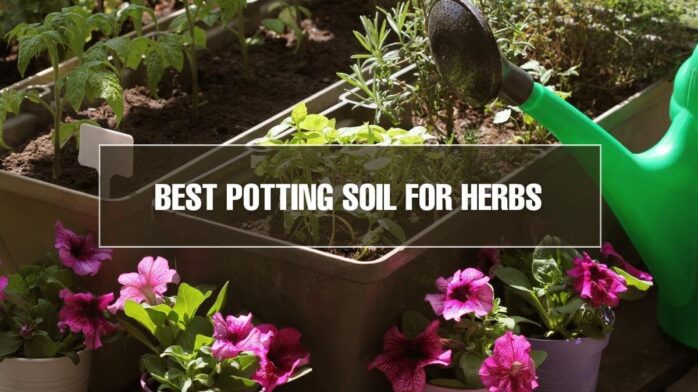
  • 10 Best Potting Soil for Herbs 2024 – Grow Safe and Solid Plants

    10 Best Potting Soil for Herbs 2024 – Grow Safe and Solid Plants

    Growing plants are not the same as using an open garden or raised bed in pots or containers.

    That’s why using the best potting soil for herbs is so important to ensure that your herbs get exactly what they need to grow safe and solid.

    When choosing the soil for herbs, you can be sure that your plants get the kind of soil that requires strong roots, enough water, and adequate drainage. Those are the most important features of potting soil.

    What soil to use in pots for herbs?

    It is essential to use potting soil, not garden soil, to grow the herbs in pots or containers.

    Potting soil does have its name because it is specifically formulated for plants grown in pots. It’s not the same as garden soil and similar use of the two will cause problems.

    There are a few differences between the two but the main reason soil potting is different is how water is absorbed. When you grow herbs or other potted plants this is really important.

    Potting soil is built to maintain the correct amount of water for the pot while the excess drain is permitted. On the other hand, since garden soil should be spread over a large area of surface, it retains too much water for a container.

    Not all of that, garden soils that contain clay can get even harder and pull away from the sides of the pot, essentially turning into concrete that is obviously not good for your herbs.

    One downside to traditional potting soils is that they don’t have many organic ingredients in them. So, it’s important to choose a blend that has a nice mix of organic ingredients to ensure your herbs get everything they need.

    Top Potting Soil for Herbs

    There are plenty of choices when it comes to potting soil, but if you want to know which items in pots or containers are best for herbs, here are the very best ones.

    1. FoxFarm Ocean Forest Potting Soil

    FoxFarm Ocean Forest Potting Soil

    The great thing about this potting soil on FoxFarm is that it is ready to use right out of the bag. Nothing needs to be mixed and the pH has already been adjusted to allow the best possible uptake of fertilizer.

    This potting soil features a good blend of organic materials including earthwork castings, bat guano, and Pacific Northwest fish and crab meal to provide the micronutrients your herbs need to grow.

    The texture is another reason why it is perfect for potted herbs. It’s a mixture of humus from the forest, sandy loam, and peat moss sphagnum that keeps it light and airy to allow excess water to drain through and establish a solid root system.

    2. Foxfarm FX14053 Ocean Forest Organic Plant Garden Potting Soil

    Foxfarm FX14053 Ocean Forest Organic Plant Garden Potting Soil

    This potting soil from FoxFarm is yet another great choice filled with the organic ingredients that are missing from the regular potting soil. It requires castings of earthworms that remove toxins from the soil and peat moss to help supply nutrients and minerals.

    The texture too is fantastic. A mixture of sandy loam, sphagnum peat moss and composted humus forest keeps it light and airy to allow excess water to drain easily, and roots may grow strong to provide better support.

    Plus, since this soil is ready to go straight out of the package, at first you don’t have to think about adding any fertilizers for nitrogen. The pH is perfect for consuming fertilizer and also helps the plants grow and prosper.

    3. Black Gold 1302040 8-Quart All Organic Potting Soil

    Black Gold 1302040 8-Quart All Organic Potting Soil

    Black Gold is an organic, all-purpose potting soil perfect for potted herbs. It features a rich, loamy mix that incorporates perlite and pumice to create a light, airy texture that creates pores and airspace for proper root growth and drainage of water.

    As for ingredients, the mixture varies regionally but includes a blend of around 50 percent Canadian Sphagnum peat moss, prelit, worm castings, and various composted materials such as peanut hulls, rice hulls, pumice, cinders, or forest products.

    This commodity is listed by the Institut for the analysis of organic materials. It’s quality checked and it has a proven performance record that your herbs will love.

    4. Espoma AP8 8-Quart Organic Potting Mix

    Espoma AP8 8-Quart Organic Potting Mix

    This organic Espoma potting mix is a perfect alternative for indoor or outdoor potted herb gardens. It features a rich blend of peat moss, humus, perlite, and Myco-Tone sphagnum to help ensure proper water retention.

    It is also loaded with plenty of organic ingredients that help offer everything they need to thrive to your herbs, including earthworm castings, alfalfa meal, kelp meal, and shrimp food. This 8 quarter bag also has an easy-to-store zipper.

    5. Miracle-Gro Expand ‘n Gro Concentrated Planting Mix

    Miracle-Gro Expand ‘n Gro Concentrated Planting Mix

    When it comes to planting, Miracle-Gro is a well-known and respected brand and this Expand ‘N Gro potting soil is a good example of why. If you are searching for something to fill a large pot or container it is a great option.

    It not only retains up to 50 percent more water than standard potting soil, but it also extends up to three times while adding water to create an airspace network that helps grow strong roots and remove excess water.

    Keep in mind that this is a concentrated soil that can rise and develop. Combine it thoroughly with your potted herbs in a large container before use. Be sure to follow the instructions for better results.

    What is the Best Potting Soil for Herbs?

    The Best Soil

    While all the products we choose will help your herbs grow fast, FoxFarm Ocean Forest Potting Soil is the best potting soil. It is ready to use right out of the container, and the pH is already set for proper absorption of fertilizer.

    Since it contains a mixture of earthworm casting, bat guano, and crab and fish meal, it contains the essential micronutrients to thrive your herbs need.

    Not all of that, the texture is designed specifically for potted plants. Since it uses a mix of hummus from the forest, sandy loam, and peat moss sphagnum, it is light and airy to promote proper root growth and drain excess water properly.

    Soil Depth Requirements for Herbs

    It is the depth that is one of the most important things to remember when selecting a pot or container of herbs.

    Although it depends on the particular herbs that you cultivate, the majority need soil depths of at least six to eight inches. Others need as many as 10.

    Here are some of the most growing herbs to grow properly, and how much depth they need.

    • Chives – 3 inches
    • Oregano – 6 inches
    • Tarragon – 6 inches
    • Thyme – 6 inches
    • Basil – 8 inches
    • Parsley – 8 inches
    • Cilantro – 8 inches
    • Rosemary – 12 inches
    • Mint – 12 inches
    • Dill – 12 inches
    • Coriander – 18 inches
    • Sage – 24 inches

    As you can see, the depth of soil varies considerably from one herb to the next. Also, you should keep in mind that these figures are the low end of the range and some of these herbs might use a few inches more.

    How to Grow Herbs in Pots?

    Growing herbs in pots or containers aren’t incredibly difficult but taking the right steps is important to help your herb garden succeed.

    Here are a few tips to ensure you get off to a good start.

    Choose the right Herbal Pot

    Pick the Perfect Pot for Your Plant

    There are two ways to tackle that. You can use a smaller pot for each herb if you’re just planning to grow one or two different herbs, or if you have a rack or planter that you want to use. Just ensure the pot is deep enough to grow the herb properly.

    Another choice is to put together a growing, deep pot and group many herbs. If you want to grow multiple herbs and don’t want to keep each one in its own container, this is a good option.

    It’s really important that you choose a container with sufficient drainage, particularly if you are going to have them outdoors where they’re going to be exposed to rain. Herbs do not like extremely wet soil so drainage is one of the most important things to remember.

    Some herbs have specifications that are very unique. Mint, for instance, really likes spreading and needs a long space so a long, large window box is better than a small pot.

    It is important to choose the right material too. You can choose something that is sturdy enough to put it outdoors but light enough that when the weather changes you can carry it in. It is important how well the material retains moisture too.

    Terracotta is a great option because it is fairly inexpensive and lightweight, but make sure that in the winter you carry it inside because it cracks. Also, plastic pots are affordable and easy to move, but they can easily break.

    Unless you live in a climate where you don’t have to worry about frost or if you have a permanent home in mind, avoid stone or cement pots. Those pots are great but very heavy and hard to move.

    Which herbs are you able to cultivate together?

    Growing multiple herbs in one big pot will save space, and actually save will make it easier to care for them if they are arranged properly.

    One strong combination is to bring together herbs from the Mediterranean. Since they all come from the same region, they have similar growth requirements, such as lots of sunshine and a little dry soils. Try to group rosemary, oregano, sage, thyme, and marjoram together.

    There are many herbs, too, that like a little more moisture than Mediterranean herbs. Consider putting together basil, cilantro, tarragon, and parsley and you won’t need to think about overwatering.

    Often, you can plant multiple varieties of the same herb together and get good results. Try to bring peppermint, spearmint, and catmint together, for example, but note that mint actually spreads and needs space to expand.

    Also, See How Deep Should Garden Beds Be Raised?

    How to Plant Herbs?

    Once the containers are in, fill each pot up to 1 inch below the ledge. Use one of the soils that we recommend here to ensure that it drains properly and incorporates the organic ingredients that your herbs need to thrive.

    If you start from seeds, put them in the soil about 1⁄4 inch thick. Use your finger to dig underneath the earth, place about 5 seeds in each hole, and then cover them. If you are transplanting already existing plants, arrange these accordingly. Place tall plants around the rim with smaller ones in the middle of the bowl.

    Whatever method you use, make sure you use a popsicle stick or some other marker to label them so you know when your garden begins to grow.

    Water the soil once you have your seeds and plants put in. If the level of soil goes down, add more on top until the level is again 1 inch below the surface.

    Maintaining a Herb Garden

    As you see the plants begin to expand, remove any seedlings which do not appear to thrive. It allows more space and access to more nutrients to the tougher plants, since they don’t have to compete with other plants.

    Keep your herbal containers in an area where they get at least 6 hours of sunlight each day, but keep them indoors if the risk of frost is high.

    Don’t overstretch. Step your finger into the soil about 1 to 2 inches deep. When it feels hot, then it is time for watering. If you still sense a little moisture, let it be and search again later that day or the next morning.

    Regularly prune any wilting or broken leaves so that the healthier ones can thrive.

    Final Thoughts

    One of the best things you can do to start a good container herb garden is to realize that potted plants are different from plants that grow in a greenhouse.

    The biggest difference is that potted plants require easily draining soil which allows their roots to grow freely. Good potting soil for herbs has just the right mix of ingredients to keep the right amount of moisture and the organic materials your herbs need to grow.

    Also, See How to Clear Rid of Weeds in Flower Bed?

    Check Here for More Products or take a look at the following list:

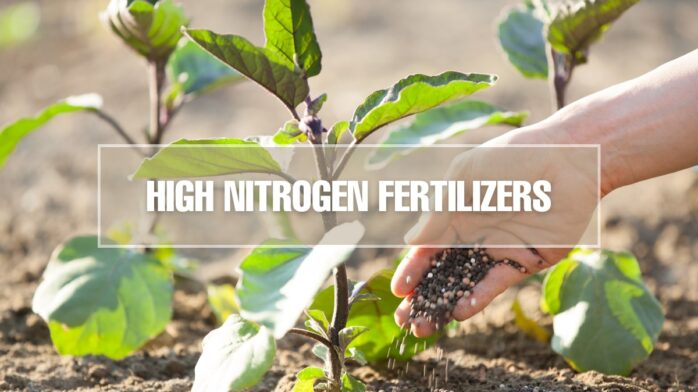
  • 8 Best High Nitrogen Fertilizers 2024 – Buying Guide

    8 Best High Nitrogen Fertilizers 2024 – Buying Guide

    Plants make our environment look greener. The seamless benefits of having plants in your lawn or garden are plenty. It provides a calm and relaxing environment.

    Hence, it is your responsibility to look out for them. Plants need different nutrients and minerals for their proper growth and development.

    Sometimes there can be deficiencies in these nutrients that can affect the growth and development of plants. You can provide them with all the essential nutrients with fertilizers.

    Fertilizers increase soil fertility to promote the growth of plants. Here is a detailed list of the best high nitrogen fertilizers to aid gardeners with rapid plant growth.

    Top Fertilizers High in Nitrogen

    1. PetraTools Liquid Nitrogen Fertilizer

    PetraTools Liquid Nitrogen Fertilizer

    This nitrogen fertilizer from PetraTools is most recommended by many customers in the market. This fertilizer has high nitrogen content and is an excellent option to get timely results. This plant supplement ensures the fast growth of your plants and green grass. This ultimate liquid nitrogen fertilizer is made of ultra-high nitrogen formula that turns plants into thick, lush green.

    This is a 2-in-1 liquid nitrogen fertilizer with a unique formula that provides quick release nitrogen up to 70% for fast growth of plants and 30% slow-release nitrogen for the continuous growth of plants. The quick and slow-release technology provides an easy solution for all lawn and plants food in one simple application.

    This lawn and plant food work perfectly on all types of plants, especially grass. It allows you to make your lawn or garden look green with lush grass. It is equally effective for both warm and cold season grass and promotes effective growth in plants. It is super-effective for all types of gardening needs.

    This lawn food fertilizer by PetraTools allows you to apply nitrogen much quicker with convenience. This NPK lawn food for grass and plants is simple to use and doesn’t take much time. You can easily prepare the fertilizer.

    Simply mix 5oz of nitrogen per gallon of water for consistent growth and maintenance and 10oz of nitrogen to restore nitrogen level and quick growth of plants, and spray it evenly across your lawn with a sprayer.

    Features :

    • High and super effective liquid nitrogen fertilizer
    • 2-in-1 fertilizer with quick and slow-release technology
    • Works on all types of plants, especially grass and shrubs
    • Apply fertilizer to your lawn quickly with ease

    2. CESCO Urea Nitrogen Fertilizer

    CESCO Urea Nitrogen Fertilizer

    Up next, this nitrogen fertilizer by CESCO is ideal for both indoor and outdoor plants. This plant fertilizer is super-effective and boosts your plant growth. It is amongst the best food fertilizer in the market, made with top-notch quality ingredients. It is completely a water-soluble product made with the finest purity Urea for healthy and effective growth of plants.

    This powerful nitrogen fertilizer will provide your plants with the sufficient nitrogen they require for proper growth. This highly effective plant fertilizer allows you to get a lush green lawn with healthy and leafy plants. This is the ultimate urea fertilizer for nitrogen-deficient plants.

    This urea fertilizer has multiple uses. Urea provides dynamic colors for tie-dye and batik projects that help you to showcase your talent apart from maintaining a lush green garden. For example – you can make handmade crafts as home décor.

    The unique airtight resealable packaging helps you to store the fertilizer for a long period. This granular 46-0-0 fertilizer comes in 3 sizes in a 5lb, 10lb, and 15lb packaging as per your requirements. Preserve and protect your plants with this highly effective urea nitrogen making an evergreen planet.

    Features:

    • Made with top-notch quality ingredients with high purity Urea
    • Strong nitrogen fertilizer to fulfill nitrogen deficiency in plants
    • Multiple uses of urea helps to create home décor crafts
    • Re-sealable and easy packaging helps to store for a longer period

    3. Simple Lawn Solutions High Nitrogen Lawn Food

    Simple Lawn Solutions High Nitrogen Lawn Food

    This nitrogen lawn food supplement by Simple Lawn Solutions is amongst the best-rated fertilizer by several satisfied customers. This lawn food is made with a high nitrogen formula that ensures vigorous growth and development of a lush green lawn with healthy plants. Chlorophyll promotes green color in plants, and nitrogen helps in the formation of insufficient chlorophyll in plants.

    The quick-release and slow-release technology of this lawn fertilizer give you dual features with 70% quick release nitrogen for quick green growth and 30% slow-release nitrogen for consistent development and daily maintenance of plants. This nitrogen fertilizer is made with high-quality compounds and liquid nutrients to make your garden look greener.

    It is easy to use a lawn fertilizer with a unique sprayer bottle that helps you to evenly spray lawn food covering an area up to 3,200 sq. ft. ensures no corner of your lawn is left out. This nitrogen fertilizer is prepared with the perfect ratio of compounds that makes it super effective for all types of plants, grass, and other shrubs.

    You can have an attractive lush green lawn with dense grass and healthy plants with this plant booster. This strong fertilizer serves the deficiency of nitrogen and ensures healthy and rapid growth in plants. It provides the essential macronutrients in plants, boosting their lateral and vertical growth and maintaining the color, quality, and strength of plants.

    Features:

    • High-quality food nutritional supplement for effective plant growth
    • Dual feature Fertilizer with quick release and slow release technology
    • Unique design sprayer bottle makes it easy to spray
    • High nitrogen formula to treat nitrogen deficiency in plants
    • The perfect ratio of compounds makes it suitable for all types of plants

    4. TPS nutrients N-Primer Nitrogen Supplement

    TPS nutrients N-Primer Nitrogen Supplement

    An excellent high nitrogen plant fertilizer by TPS nutrients is Amazon’s choice highly recommended plant supplement. Make your lawn full of healthy plants with dark, lush green leaves and grow dense grass with this super effective nitrogen supplement. A perfect food supplement for rapid vegetative growth.

    This fertilizer provides a constant supply of nitrogen that steadily promotes rapid and healthy growth and development in plants. Maintain the balance of nitrogen with this perfect ratio of liquid nutrients that supply both positively and negatively charged nitrogen.

    Enhance plant growth and get dark green leaves with the proper formation of chlorophyll due to the abundant source of nitrogen.

    The high-quality pure compounds of this plant fertilizer make it safe and highly effective on all plants and prevent leaf burn with the right amount. This plant fertilizer is prepared to be bio-available in the soil and slowly absorbed by the plants. This plant booster contains nitrogen injectors that trigger the stress response in plants and increase nitrogen uptake.

    A quality supplement specially designed to be sustainably prepared with the right amount of ingredients. These food supplements contain high nutritional value ensuring your plants contribute to a greener environment. Use these fertilizers during the veg and early bloom of plants for better results.

    Features:

    • Perfectly balanced nitrogen fertilizer for every need
    • High nutritional value ensures rapid growth and lush green leaves
    • Contains nitrogen injectors ensures a constant supply of nitrogen
    • Prepared with the right amount of ingredients that make it highly effective on all plants

    5. GS Plant Foods Amino Power Powder Nitrogen Fertilizer

    GS Plant Foods Amino Power Powder Nitrogen Fertilizer

    This amino power powder nitrogen fertilizer by GS Plant Foods is amongst the highly recommended based on customer ratings. This high nitrogen fertilizer powder for plants is easy to mix and 100% soluble in water to aid them with the rapid growth of plants. This amino power plant fertilizer avoids deficiency of nitrogen in plants and promotes green leafy growth.

    Amino power powder nitrogen improves chlorophyll formation that ensures a high degree of photosynthesis in plants. This amino power nitrogen fertilizer ensures plants receive optimum NPK. This plant supplement is perfectly suitable for all kinds of plants, so you can get a lush green lawn, and plants get an abundance of nitrogen.

    You can use this nitrogen fertilizer along with other synthetic and organic fertilizers to provide plants with a high supply of nutrients for their healthy and fast growth. The amino powder acts as a strong chelating agent that makes it easy for plants to uptake micronutrients efficiently. This plant booster doesn’t contain any animal by-product and can be used as foliar plant spray.

    The fertilizer is easy to apply and provides naturally effective results. Use a hose-end sprayer to spray the fertilizer evenly all over your lawn. Read the instructions properly to use the right amount of powder to mix with water as per your requirements.

    Features:

    • Powerful nitrogen fertilizer for preventing deficiency in plants
    • A plant-based amino acid that contains an optimum amount of NPK
    • Easy to use and dissolves 100% in water
    • Trusted and reliable and ensures highly effective results

    Buyer’s Guide

    High Nitrogen Fertilizers buying guide

    These were the best high nitrogen fertilizers in 2024 for lush green gardens and lawns. You can buy any of the above-mentioned plant fertilizers to meet the deficiency of nitrogen in crops.

    All these plant supplements are best-rated and highly recommended by maximum ratings. It ensures rapid and healthy plant growth. After the descriptive features of the best high nitrogen fertilizer, if you are unsure about which plant supplement to buy, then follow this buyer’s guide before making a purchase.

    Nutrients in Fertilizers

    Before buying any plant fertilizer, you must look for the nutrients present in the fertilizer. Plants need various nutrients, and the deficiency of these nutrients is fulfilled by these plant supplements.

    Ensure that the plant fertilizer contains the three major components, i.e., Nitrogen, Phosphorus, and Potassium (NPK). You can easily find out the composition of these major components from the fertilizer number.

    Types of Fertilizers

    Types of Fertilizers

    There are different types of fertilizers based on the nutrition requirements of the plant. If you require fertilizers for rapid plant growth, lush green leaves, vivid structure, and rapid formation of chlorophyll, then you must look for high nitrogen fertilizers.

    Similarly, if you are looking for fertilizers for effective root growth and the creation of food, seeds, and flowers, then you need high phosphorus fertilizer, and for plant and root development, you need potassium fertilizers.

    Trusted and Reliability

    Before buying plant fertilizers, ensure that you are buying from a trusted and reliable source. Buy fertilizers of a good brand for highly effective results.

    Buying fertilizers from a good brand provides you with user manuals with instructions on how to effectively use them in the right quantity.

    Buying from an unreliable source might even damage your plants more. Wrong or incorrect proportions of plants can cause leaf burn and make plants die.

    FAQs

    High Nitrogen Fertilizers faq

    What is the use of high-nitrogen fertilizer?

    Nitrogen is an essential nutrient that promotes the growth and green leaves in plants. High nitrogen fertilizer fulfills the lack of nitrogen in plants, helping the formation of chlorophyll that ensures lush green leaves and improves growth in plants. It is widely used to grow dense grass in your lawn or garden.

    Read also: Best Grass Fertilizer

    How long can you store fertilizers?

    There is no expiry date for fertilizers. However, they must be stored in an airtight container or re-sealable packets so that they have the same effect even if you are using them after a long time. If you are storing it properly, then it can even last for years.

    What should I look for when buying nitrogen fertilizer?

    If you are buying nitrogen fertilizer, then look for the nitrogen, phosphorus, and potassium number. Ensure that the nitrogen levels are high, and you can use it on all types of plants to avoid wastage. Also, ensure that you are buying a branded, high-quality fertilizer for super-effective results.

    Conclusion

    This article provides a detailed description of the best high nitrogen fertilizers in 2024.

    These nitrogen fertilizers are ideal for rapid plant growth and increase the formation of chlorophyll that makes lush green leaves in plants. These fertilizers are easy to use and safe for all kinds of plants. Read the instructions before using them for the best results.

    These fertilizers are completely soluble in water, and you can easily spray the mixture with a hose-end sprayer over your plants. Before making a purchase, you must follow the buyer’s guide to buying the most effective nitrogen fertilizer that’s best for your plants.

    With nitrogen fertilizers, proper maintenance, and care of your plants, you can have a lush green garden full of dense, smooth grass and healthy plants.

    Check this also:

  • 9 Best Fertilizer For Trees And Shrubs 2024 – For Fantastical Landscape

    9 Best Fertilizer For Trees And Shrubs 2024 – For Fantastical Landscape

    Don’t we all love a lush, green garden with vibrant flowers adorning the front yard with a fragrance so enchanting that it reminds you of a distant wonderland?

    Exactly. Not only does a vibrant garden provide a fantastical landscape, but it may also be a passion for some people.

    And if you are one of them, we know you would want your plants to grow as healthily as they can. For that, of course, you need efficient fertilizers.

    Best Fertilizers for Growing Trees and Shrubs – Top Picks

    1. Miracle-Gro Tree & Shrub Plant Food Spikes

    Miracle-Gro Tree & Shrub Plant Food Spikes

    These spikes are user-friendly, very straightforward in terms of usage. They can be used to fertilize twice a year in different spring seasons and then again in the fall. All you need to do is create a drip line across the shrubs or hammer the product into the ground.

    This fertilizer is a slow-release, meaning that it releases all the beneficial nutrients steadily down the plant’s root area. This helps in the development as well as the flowering of the plant without filtration into the soil.

    Deciduous trees, as well as shrubs, hugely benefit from this fertilizer. As a consistent user, you will start noticing lush, green, nutritious leaves on the plants.

    However, it is essential to read and abide by the instruction manual on the pack. Many are reported to have harmed their plants and even destroyed them for not being vigilant enough.

    These tree and shrub spikes come in packs of 12 and are highly affordable, providing you monetary convenience. Formulations for citrus and fruits are also available in the market.

    Features:

    • High nitrogen content for solid growth
    • Loaded with potassium for sturdy growth and fruiting
    • Comfortable and straightforward to use
    • Slow-releasing nutrients

    2. Scotts Evergreen Flowering Tree & Shrub Continuous Release Plant Food

    Miracle-Gro Shake' N Feed Flowering Trees and Shrubs Continuous Release Plant Food

    One of the most well-known brands in the fertilizer industry, Scotts has earned its name for providing quality products for evergreen, deciduous trees and shrubs. The abovementioned fertilizer also caters to flowers.

    It comes with a Nitrogen-Phosphorus-Potassium ratio of 11-7-7. The NPK level is slightly below the percentage of other fertilizers. It is a granular fertilizer. Essentially meant for acid-loving plants, this fertilizer has a slow and steady release of nitrogen along with 2% sulfur.

    This ratio increases the acidity of the solution. In this way, it becomes an excellent match for plans that cannot absorb essential nutrients when the soil’s pH level reaches beyond 5.5.

    You must apply the fertilizer away from the tree trunk (around 8 to 12 inches) in terms of usage. This then needs to be watered well enough for nutrients to seep in. It takes mere weeks for the good results to show. As the plants absorb the acidic solution, you see quick changes in greenery and sturdiness.

    The Evergreen Flowering and Tree Shrub come for a very low range, making it highly affordable and, therefore, an in-demand product. The item weighs 3 pounds and is readily available in the market or online.

    Features:

    • Product by a reputed brand
    • Slow-releasing nutrients
    • Loaded with potassium and phosphorus for fruiting
    • Best for acid-loving deciduous trees
    • Contains sulfur

    3. Miracle-Gro Shake’ N Feed Flowering Trees and Shrubs Continuous Release Plant Food

    Miracle-Gro Shake' N Feed Flowering Trees and Shrubs Continuous Release Plant Food

    The Miracle-Gro Shake N’ Feed fertilizer is suitable for most variants out there, including flowers. Trees and shrubs. It is a slow-release fertilizer, and therefore, it leaves more scope for absorption. As the name suggests, it gives a continuous release of nutrients.

    What makes this product more viable is the fact that both indoor, as well as outdoor plants can benefit from its usage. It is straightforward and comfortable in terms of use. All you need to do is spread the solution over the soil and let it seep in. It is an all-around product and astoundingly long-lasting.

    The plants that this fertilizer has been used upon will enjoy a steady supply of nutrients and keep showing growth for up to three months after the first usage. The high potassium content shows that this is an excellent supplement for flowering and fruiting plants.

    Since fertilizers that are slow-release help strengthen the stem and roots, this product with its natural ingredients helps the plants thrive with greenery all year round.

    The usage is pretty simple. All you need to do is mix the granules with the surface of the soil and water the area afterwards. You can also sprinkle the mixture over the soil ahead of a rainy forecast.

    Features:

    • Best for flowering plants
    • Simple and comfortable usage
    • For both indoor and outdoor plants

    4. Osmocote Smart-Release Plant Food Plus Outdoor & Indoor

    Espoma Organic Fertilizer

    If we talk about the most popularly used fertilizer brands in the market, Osmocot comes to mind. It includes a slow-release system like the other products mentioned in this article. The nutrient ratio, i.e. Nitrogen-Phosphorus-Potassium ratio, is 15-9-12, and this nutrient mixture is housed within a brilliant linseed ball design within the package.

    This ball is further coated with a dissolvable outer layer, thus, helping in a slow release of nutrients. In popular opinion, this product is very efficient with an intelligent design.

    The fertilizer can feed a plant for a whole season, i.e. approximately six months. It is very suitable for smaller plants and not big garden trees. Indoor plants grow exceptionally well with this fertilizer.

    All you need to do is spread the product on the soil- 1 spoon for every four squares of the planting area and water it afterward. This needs to be done every six months, and you are good to go!

    So if you are looking for fertilizer to meet the needs of your small plants and shrubs, this is the one for you.

    Features:

    • Comfortable and straightforward to use
    • Slow-release fertilizer
    • Not suitable for garden trees; only small pot plants
    • It lasts for six month
    • Best reviewed by customers

    5. Espoma Organic Fertilizer

    Espoma Organic Fertilizer (2)

    The Espoma TR4 Plant Food makes it on this list because of its applicability and easy usage. This slow-release fertilizer helps shrubs and trees have steady and healthy growth and keep them evergreen. The Nitrogen-Phosphorus-Potassium ratio of the product is 6-3-2. It is slightly lower as compared to other fertilizer products.

    Like the others on this list, all you need to do is sprinkle the material on the soil surface and hammer it in or water it to seep down afterward. In terms of measurements, you need to apply one cup every 35 square feet of plant soil. You may use this product twice a year, before spring and fall. 

    However, one may need to dig the soil and pour the mixture in (closer to the roots) for big trees. 

    The product comes in a pack of 4 pounds and is rated 4.5/5 by Amazon customers. This solution feeds the plants and shrubs for an approximate period of 2-3 months.

    Despite the lack of iron in the mixture, it is well-absorbed by acid-loving plants, evergreen, and flowering shrubs and plants, as well as flowering plants.

    Features:

    • An organic fertilizer
    • Delivers exceptional nutrition to big plants

    Buyer’s Guide

    How to Select a Fertilizer - Organic vs. Synthetic

    Before buying from the products mentioned above, you need to know what you are buying. Therefore, the following are the types of fertilizers out in the market, and you can determine what kind of fertilizer suits your requirements.

    Quick or Slow Release Tree Fertilizer

    Fertilizers can be majorly classified as quick or slow-release. This terminology is based on the speed of the fertilizer dissolving into the soil and spreading its micro as well as macronutrients into the roots of the plant.

    Slow-release fertilizer spikes for trees

    Trees or plants have not yet grown fully because of slow fertilizers as they need a steady flow of nutrients that reach the roots over a long period.

    Spikes take a longer time to diffuse as compared to granular fertilizers. Also referred to as fertilizer sticks, these spikes are generally hammered onto the plant soil, two feet away from the tree trunk.

    Quick-release fertilizer for trees

    This type of fertilizer works on mature trees and shrubs that need an immediate nutrient boost. You may consider using this fertilizer when your trees or plants look dull.

    This fertilizer is generally applied in grains or powder by digging a hole in the ground near the plant soil and then filling it in. It can also be allowed to seep in with the help of water and is also available in liquid form.

    Chemical or natural fertilizers

    As the names suggest, mineral fertilizers are produced artificially and loaded with the nutrients plants require to grow and fruit efficiently. On the other hand, plant residue and other natural compost materials are combined to form natural fertilizers.

    Due to the lack of chemicals in the product, natural fertilizers tend to be healthier, even though they have unbalanced nutrients.

    Organic Fertilizer

    These fertilizers are procured by animals as well as plant residues. Since they are natural, they take longer to take effect and have a raw smell that may cause your garden to have a foul odor.

    You must always read the user instructions and ingredients mentioned behind the package to know exactly what you are pouring into the roots of your trees.

    Chemical or inorganic fertilizers

    These are the most commonly preferred fertilizers because they are infused with a nitrogen-based compound essential for the growth of your plants.

    The Nitrogen-Phosphorus-Potassium ratio is the highest in this type. If your tree is severely malnourished and lackluster, you may want to consider an inorganic fertilizer.

    FAQs

    How to Keep Your Trees and Shrubs Healthy

    How should you fertilize your trees and shrubs?

    You must distribute the fertilizer as close to the roots as possible for the best results. Ideally, the fertilizer (granular) should be spread evenly across root soil, and the spikes must be arranged about 2 feet away from the tree.

    However, do not apply fertilizers before an expected downpour because that can wash away the essential nutrients that the fertilizer intended to provide in the first place. Watering the nutrients and giving them time to sink is always better since the efficient fertilizers tend to be slow-release.

    What is the best season to use fertilizers?

    Improper usage paired with wrong timing can prove to be more disastrous than beneficial for your garden.

    You can apply the intended product before the onset of spring or summer to give the fertilizer time to provide the plant with needed nutrition. The plants then can fully grow and mature in 2-6 months.

    Fall is another great season for fertilizing. The vital NPK component helps the plants to survive harsh weather conditions by making them stronger and sturdier. This is the period between September-October.

    How often should trees and shrubs be fertilized?

    Small plants require fertilization more often than mature ones because they tend to be more fragile. Nurturing them with proper nutrients is essential for steady growth is an important aspect.

    With that in mind, they must be fed every two weeks till they are mature enough. Upon maturing, trees and shrubs do not require as much supplementary nutrition to be provided twice annually.

    However, it would be best to fertilize your plants during a given season, like summer or fall. Excess usage of fertilizers is not recommended.

    Conclusion

    The above article provides a thorough guide of the best fertilizers for growing trees and shrubs in 2024. However, you know your garden more than we do.

    Therefore we would like you to base your opinion on the characteristics of your plants, their nutrient requirements, the types of fertilizers that are available, and whether they suit your requirements.

    We hope you have a great experience with the fertilizers mentioned above.

    Take a look at these products that are available right now on Amazon:

  • 10 Best Fertilizer for Vegetable Garden 2024 – Grow Healthy Vegetables

    10 Best Fertilizer for Vegetable Garden 2024 – Grow Healthy Vegetables

    If you have a vegetable garden, you’re probably already aware that if you want the largest, strongest harvest, you need the right fertilizer. The thing is, there are so many choices out there; choosing the right one isn’t easy.

    We’ve put together this analysis of the best vegetable garden fertilizer to help you find out what to look for and how to make a decision. Plus, we included an analysis of ten of the best available items.

    Vegetable Garden Fertilizer Options

    The best thing you can do is test your soil before you determine which fertilizer is right for you and you know what sort of fertilizer you need. For other plants, you have to remember the NPK ratio but with a vegetable garden, there are many other aspects to consider.

    A lot of other nutrients are needed in vegetable gardens to grow healthy and give you the best and most delicious vegetables. This is why it is so important to use a fertilizer that is specifically intended for vegetable gardens. There are usually two main forms to choose from: organic and synthetic.

    Synthetic fertilizers contain ingredients that are man-made. Some contain nutrients that the plant immediately uses. Some are made for gradually releasing nutrients over a longer period of time. Others use them in combination.

    Pay attention to the NPK ratio when looking at synthetic fertilizers. This is the sum of potassium, phosphorus, and nitrogen. Some vegetables prefer a 10-10-10 or 20-20-20 balanced ratio but others, prefer leafy greens, which only need nitrogen and others need more potassium.

    Vegetable Garden Fertiliser Options

    One thing you should remember is what sort of fertilizer you want. For the most part, liquid fertilizer is short-acting. This is typically applied to the soil or waterline but it is possible to add certain formulas directly to the leaves. Some formulae are powders designed to be dissolved in water and used in the same manner.

    Another alternative is fertilizer in granular form. This form is usually intended for extended release. Nutrients are gradually released out of the granules. A single program lasts for four months or more for certain formulae.

    If you love to get your hands in the dirt, the custom stickers with your garden name and your own design are for you! The custom garden sticker really add a statement and so much fun to your garden planner and journal.

    You could also apply your gardening stickers for gifts from your vegetable garden. The vegetable are fresh, the theme is perfect, the colors vibrant, and CustomSticker.com has good stick to them. Let your vegetables grown with love!

    10 Best Vegetable Garden Fertilizer Reviews

    1. Miracle-Gro Water Soluble Tomato Plant Food

    Miracle-Gro Water Soluble Tomato Plant Food

    Miracle-Gro is one of the most well-known gardening brands so it’s no wonder their tomato plant food is one of your garden’s best options. Because it says “tomato” on the box, don’t worry, all vegetables can be used with it.

    What’s very cool about this fertilizer is that you can use it on plants and seedlings in pots or in your backyard garden. This has an 18-18-21 NPK, so the 1.5-pound kit will last for some time – you only need one scoopful for each order.

    This formula isn’t going to burn your plants when used as directed. It starts working immediately and gives you vegetables bigger and better. Feed your garden once to two weeks daily for better performance. For a watering bowl or a Miracle-Gro Garden Feeder, you should submit.

    2. Jobe’s Organics 9026 Fertilizer, 4 lb

    Jobe’s Organics 9026 Fertilizer, 4 lb

    If you prefer a granular fertilizer that is also organic, take a look from Jobe’s Organics at this drug. This quick-acting solution is perfect for all vegetables and has been licensed by the USDA for organic gardening. This means no synthetic chemicals and naturally occurring ingredients plus it is biodegradable, organic, and renewable.

    This fertilizer involves Jobe Biozome, a special mixture of micro-organisms such as healthy bacteria, fungi, and archaea. That breaks down the material so that it can be used more easily by plants.

    Not only can you see results quickly but it also strengthens the soil that helps your plants survive drought, insects, and disease during the season.

    You can have this fertilizer in a 1.5, 4, or 16-pound bag so you can order exactly what your garden needs. Comprehensive instructions for container gardening, seeds, seedlings, and existing plants are available on the box.

    3. Osmocote 277960 Smart-Release Plant Food Flower & Vegetable

    Osmocote 277960 Smart-Release Plant Food Flower & Vegetable

    Osmocote is a must-have for anyone who prefers a slow-release fertilizer. Not only is it formulated for vegetables and perennials but it takes up to four full months for one application. Plus, since it comes in an eight-pound package, adequate to get you through the growing season.

    This plant food encourages both top-growth and good root production for healthy, robust plants. How’s it working out? The granules are covered with semi-permeable resin. Water penetrates the inside of the surface and dissolves the nutrients.

    Nutrients are released into the soil when the temperature increases. So, it gets more of what it needs to flourish when the warmer growing season hits and your garden gets really productive. It’s easy to apply, just sprinkle the fertilizer onto the soil, mix it with the top few inches and water daily. Reapply as needed, every four months.

    4. Miracle-Gro Shake ‘N Feed Tomato, Fruit & Vegetable Plant Food

    Miracle-Gro Shake 'N Feed Tomato, Fruit & Vegetable Plant Food

    Here’s another fantastic Miracle-Gro product that has been created for your vegetable garden. It’s perfect for the berries and tomatoes, too. One application takes three months to complete. You can also get it in a container worth one or 4.5 pounds, so you can get what you need to cover your garden.

    This fertilizer uses natural ingredients to feed the microbes in the soil which, by supporting strong roots and water quality, helps ensure long-term health. Micronutrients and calcium are also available which encourage your plants to grow more crops.

    It fertilizer can be used for in-floor plants or containers. Simply remove the lock, insert the applicator cap, and open the sputum to apply. Add the dry granules to the surface, remove stems, and then mix in one to three inches in the field. Air and ready to go.

    5. Fox Farm FX14049 Liquid Nutrient Trio Soil Formula

    Fox Farm FX14049 Liquid Nutrient Trio Soil Formula

    A great alternative for a vegetable garden is this trio from Fox Farm. The best thing about this collection is that it lets you tailor the fertilized that you use to the needs of your plants at the time. This is not a one-size-fits fertilizer for everything. This is intended to span the whole development cycle.

    You get a bottle of Big Bloom liquid fertilizer which provides nutrients that can be used immediately by your plants. It includes earthworm castings and bat guano plus organic gardening is registered as free. Use it for all the plants it fruit.

    Grow Big fosters lush growth, making your plants larger, stronger, and growing more fruits and buds. And its low pH makes it more available to micronutrients.

    Last but not least, you’ll get a Tiger Bloom bottle that encourages robust growth and is safe to use in both soil and hydroponic applications. Remove it before harvest, at the first sign of flowering.

    6. Liquid Kelp Extract Seaweed 32 Ounce Fertilizer Concentrate

    Liquid Kelp Extract Seaweed 32 Ounce Fertilizer Concentrate

    One great organic liquid alternative is this GS Plant Food kelp extract. It’s one of the highest quality seaweed products available, extracted from Norway harvested Ascophyllum Nodosum. This is a natural plant food which has many advantages for your garden.

    This fertilizer not only increases the root growth and seeding but also helps to increase the size of blooms and fruits. The plants should be better suited to cope with severe weather conditions and other difficult ones. They will be greener, healthier, and more able to cope with the disease and insect attacks.

    For even better results, you can use this product alone, or combine it with high-quality fish fertilizer. While being perfect for gardens, it can also be used for seedlings and houseplants. Best of all, it won’t hurt your plants because it’s all-natural, even though you overuse it, making it a very healthy option.

    7. Worm Castings Organic Fertilizer, Wiggle Worm Soil Builder

    Worm Castings Organic Fertilizer, Wiggle Worm Soil Builder

    Many fertilizers use earthworm castings as an ingredient but Wiggle Work Soil Builder takes the castings to the next stage. It is made of pure earthworm castings and works well from your vegetable garden to your potted houseplants with just about any type of plant.

    Earthworm castings are completely natural and healthy to provide your plants with immediate nutrients and also enrich the soil to feed your plants gradually over a longer period of time. It’s non-toxic, odor-free, all-natural and if you use too much it won’t burn your plants.

    This fertilizer does a lot for the soil to help avoid root rot by enhancing aeration and encouraging drainage. For any application, you just need to use a little bit so this 15-pound bag will give you a lot of coverage. This is incredibly cost-effective and works very well.

    8. Neptune’s Harvest Organic Hydrolized Fish & Seaweed Fertilizer

    Neptune’s Harvest Organic Hydrolized Fish & Seaweed Fertilizer

    The Harvest liquid fertilizer from Neptune is one of the most flexible fertilizers out there, and a perfect alternative for your garden. It’s easy to blend and can be added to the drip line with a watering tube, sprayer, or.

    This plant, organic fertilizer is extracted from seafood and fish. The brand suggests using one ounce of fertilizer for each gallon of water for vegetables, and applying it every two weeks or so. The big 36-ounce bottle will last for some time, depending on how much land you cover.

    Saturating the top and bottom of the leaves can either saturate the soil or spray directly onto the leaves for foliar feeding. Do it either early in the morning or late in the day if you prefer foliar feed so the leaves are not too wet in the strong sunlight.

    9. J R Peters 52024 Jacks Classic No.1.5 20-20-20 All Purpose Fertilizer

    J R Peters 52024 Jacks Classic No.1.5 20-20-20 All Purpose Fertilizer

    If you want an all-purpose fertilizer, check this one from Classic Jack’s. It feeds via the roots and leaves and has been shown to be effective for decades in vegetable gardens. Besides, it can also be used in your indoor plants.

    The balanced 20-20-20 NPK ratio encourages the rapid expansion of the leaves and good, dark green leaves. Using one table liter per gallon of water for outdoor applications. Includes a convenient measuring spoon and detailed instructions.

    This product comes in a wide 1.5-gallon resealable tub which makes it very easy to store. It’s also available in multipacks of two or four if you want to buy in bulk so you can cover more ground and save a little bit of time.

    Since 1947 JR Peters has been in the business and has a history of producing great products. If you are looking for a fine, all-purpose fertilizer you can trust this one.

    10. Dr. Earth Organic 5 Tomato, Vegetable & Herb Fertilizer Poly Bag

    Dr. Earth Organic 5 Tomato, Vegetable & Herb Fertilizer Poly Bag

    This Dr. Earth vegetable garden fertilizer is made from 100 percent organic and natural ingredients. This has no GMOs, sewage sludge or manure for chicken, and is classified as OMRI for organic farming.

    The box includes specific instructions for the application of various plants, including peppers, tomatoes, cucumbers, eggplant, beans, and lettuce.

    The strength of this commodity is its versatility. It is designed to feed both container and vegetable gardens. This can also be used when planting or transplanting seedlings and can be used for both summer and winter crops. Your plants are going to be better, and the vegetables produce even more delicious.

    The recipe includes a variety of naturally occurring food-grade ingredients and is manufactured in the USA sustainably. A four-pound bag goes a long way but if you prefer, you can buy in bulk. There are packs of two, three, and four packs.

    When to Apply Fertilizer to Vegetable Garden?

    when to fertilize vegetable garden

    Whether you just start a garden or are planning to replant, the best time to fertilize is in the spring. If you’ve done a soil test and know you need to make a lot of changes before planting is safe, start early so you can get the fertilizer deep down into the soil before you start.

    If your soil is all right, fertilizing in the spring is always a smart idea so you don’t have to worry about having any extra time. It’s a good idea to use a general, all-purpose fertilizer before seeding. You might even want to try one which is a bit higher in nitrogen.

    Typically, when your plants start growing faster you need to add more fertilizer. Around this time the plants are essentially ramping up production and using more of the nutrients available. It hinges on the plant when you need to think about this.

    Some plants grow fast pretty early in the season, such as lettuce. In the other hand, in the middle of the summer, plants such as cabbage, corn, tomatoes, and potatoes grow the fastest. At this level, they would need an extra boost. For more help with fertilizers for your vegetables, eg. for tomatoes you can find more on BackyardStyle.

    If you are using an extended-release fertilizer, it may suffice to last the entire season. Follow the instructions for the kit, and keep an eye on the plants to ensure that they are stable. The only way to be sure that your soil is good is to check it over the summer and make changes as needed.

    What time of day to apply fertilizer depends on that too. You don’t have to think about it with an extended-release fertilizer. The fertilizer is already in the soil, just make sure that you water it properly and that you are good to go.

    When you add the fertilizer directly to the leaves, do so at any time early in the morning or late in the day. When the sunlight is bright and strong, applying this form of fertilizer at the height of the day’s heat will burn the leaves and cause serious damage to the plant.

    All that said, it’s best to follow the instructions provided with your fertilizer because each is a little different.

    How Often Should You Fertilize a Vegetable Garden?

    If you’re planning to plant different seasonal items, you’ll have to do some research year-round. After harvesting all at the end of the season, and before the field is too hard to till, apply a balanced slow-release fertilizer to the soil.

    Work it gently to the top few inches and then cover the ground. For that, a thick mulch layer works well. It provides on-surface food for worms that keep the soil aerated. The slow-release fertilizer replenishes the nutrients used up by the plant in the summer through the winter.

    how often should you fertilize Garden

    As we have said, it’s time for the start of the growing season to add some balanced fertilizer in the spring. When you fertilized in the winter, this might not be important, but again, the only way to say for sure is to check the soil.

    In summer again fertilize. If you do this it depends on what kind of vegetables you produce. If you are not planting until the summer, add a balanced fertilizer with a gradual release. Check the soil as required to ensure that you are getting it right.

    When the summer is particularly hot or dry, your garden requires a little extra care. Soft, dry soil makes it more difficult for the plants to use the nutrients available, so you can need to add some magnesium.

    Fall crops don’t need as much fertilization as they have a shorter growing season. You can add fertilizer for fast release every few weeks, as needed. And if you get a frost, stop fertilizing. Because of the cold weather, the plants would be tired, and too much fertilizer will kill them.

    You should always follow the instructions included with your chosen fertilizer. Just once a season should slow-release fertilizers be applied whereas short-acting should be applied every few weeks. Every brand is a little different so make sure you use yours the right way.

    FAQs

    1. What fertilizer do vegetables need?

    Vegetables need fertilizer that is specifically made for them. A balanced fertilizer will have the right amount of nitrogen, potassium, and other nutrients that are needed for vegetable growth. Look for a fertilizer that has an NPK ratio of 12-12-12.

    2. Which fertilizer makes vegetables grow faster?

    There is no one fertilizer that will make vegetables grow faster. Different vegetables need different types of nutrients, so you will need to experiment to find the right fertilizer for your garden. The best way to find out what nutrients your vegetables need is to start with a soil test.

    3. What is the best natural fertilizer for vegetable gardens?

    Some people prefer to use compost as a natural fertilizer for vegetable gardens, while others might prefer to use a commercial fertilizer. There are many different types of fertilizers on the market, so it is important to choose one that is specifically designed for vegetable gardens.

    4. Is Coca Cola good for plants?

    Coca Cola good for plants

    Not really. Coca Cola contains phosphoric acid, and while it is not harmful to plants in small doses, excessively high levels of phosphoric acid can stunt plant growth. Additionally, Coca Cola contains caffeine, which can block the absorption of important nutrients by your plants.

    5. Is urine good fertilizer for plants?

    Some people say that urine can be used as fertilizer for plants, but it is not recommended to do so. Urine is full of salts, which can damage the plant’s cells and cause them to die. If you really want to use urine as fertilizer for your garden, make sure to dilute it first.

    6. What liquids help plants grow best?

    There are three main liquids that help plants grow: water, fertilizer, and earthworms. By mixing these liquids together in the right proportions, you can provide your plants with exactly what they need to grow.

    Conclusion

    Both plants need fertilizer but exceptional are vegetable gardens. Rapid growth draws something from the soil. You need to use the best vegetable garden fertilizer to grow healthy plants that produce an abundance of large, delicious veggies.

    There are a variety of issues to remember. Do you prefer organic or synthetic? Short-acting or protracted release? Liquefied or granulated? There is plenty to choose from different products. Fortunately, the items we reviewed cover a wide variety of choices and are highly recommended to all.

    Lastly, seedlings are the get-go stage of any gardening, where you have to be truly patient and caring. And you can’t do it without the best fertilizer for seedlings. Check out GardenerWiki to find the suitable one.

    Take a look at these products from the same price range, that are available right now on Amazon:

    Also, See The 8 Best Liquid Lawn Fertilizers – Buying Guide

  • 10 Best Fertilizer for Bermuda Grass 2024 – for a Lush and Healthy Lawn

    10 Best Fertilizer for Bermuda Grass 2024 – for a Lush and Healthy Lawn

    Does the grass yellow, or does patchy? If so, then it might be time to look at fertilizer. The soil sometimes doesn’t have enough nutrients for the grass to grow healthy and solid.

    When picking the right lawn food you need to know what type of grass you’ve got. Anyone with Bermuda grass has to find a suitable fertilizer to use.

    We are talking about the right Bermuda grass fertilizer and we’re giving you 10 brands to choose from. You can learn more and get helpful tips on these things. Find out when to fertilize and how to get the fertilizer applied.

    What Is the Best Fertilizer for Bermuda Grass?

    For Bermuda grass, the right fertilizer to buy depends on a number of factors. In general, you can select slow-release lawn food. That means the grass keeps getting nutrients throughout the season.

    You must also consider the ratio to the NPK. It is an indicator of the amount of potassium ( K), nitrogen ( N), and phosphorus ( P) in the substance.

    In most cases, you want to use a 3-1-2 ratio. That means the other main ingredients are more nitrogen than those. Sometimes, though, you don’t really see those numbers.

    You can use a product 12-4-8, or an option 6-2-4. With the 12-4-8 ratio, you know the fertilizer bag contains 12 percent nitrogen with 8 percent potassium and 4 percent phosphorus.

    Some experts think you don’t need fertilizer for Bermuda grass at all unless you’ve over-seeded the lawn. That is often wrong. All types of grass need some extra nutrients if you want them to look green and whole.

    It is important that nitrogen-rich fertilizers help with greening. Phosphorus in the soil helps to thicken and luster the grass while stimulating root growth. Potassium encourages thicker cell walls so that any grass blade can withstand heat, disease, and cold.

    Best Bermuda Grass Fertilizer Reviews


    1. Advanced 16-4-8 Balanced NPK – Lawn Food Natural Liquid Fertilizer

    Advanced 16-4-8 Balanced NPK

    Those who want a complete and balanced lawn food could be considering the Simple Lawn Solutions Advanced Liquid Fertilizer. The NPK ratio is 16-4-8NPK ratio is 16-4-8NPK ratio is 16-4-8NPK ratio is 16-4-8, which means it has a little more nitrogen than the 3-1-2 combination. Even, this product is incredibly helpful if your lawn looks yellow.

    The goal is to nourish your grass without a lot of chemicals being laid down. That product is natural and organic. And it’s safe for cats, kids and yourself.

    In a way, this liquid fertilizer can be used for any kind of grass. It does fit really well for Bermuda, however. It can also be used for the varieties Centipede, Buffalo, Zoysia, and Bahia.

    You’ll like this model, as it comes with its own sprayer. You just add the spray head to your garden hose, and you’re good to go. In comparison, one bottle will heal 3,200 square feet of grass.

    Since it is organic there are ingredients for seaweed and fish. In reality, these are important to your lawn. They help feed it with macronutrients, so that year after year it grows dense and lush.

    Advanced 16-4-8 Balanced NPK


    2. Simple Lawn Solutions Extreme Grass Growth Lawn Booster

    Simple Lawn Solutions Extreme Grass Growth Lawn Booster

    Those who need to give a boost to their lawns might like Simple Lawn Solutions Concentrated FertilizerSimple Lawn Solutions Concentrated FertilizerSimple Lawn Solutions Concentrated FertilizerSimple Lawn Solutions Concentrated Fertilizer. It’s not a full or balanced lawn-food. Alternatively, it’s built to improve your grass growth, both laterally and vertically.

    It contains fulvic and humic acid and is thus an advanced formula. You need some biological stimulants since this product is organic. This is what these acids do, and many natural lawn care products are very popular.

    This contains nitrogen and phosphorus but has no potassium. For most lawns, including those made from Bermuda grass, this works well in many cases.

    It does fit well on many forms of grass, however. These may include Palmetto, Bluegrass, and Centipede. Additionally, grasses from Buffalo, St. Augustine, and Zoysia are gained.

    This natural solution is non-toxic, so it can be used around kids and pets. This also comes with its own sprayer handle, so it can be easily applied and does not need any additional equipment.

    Simple Lawn Solutions Extreme Grass Growth Lawn Booster


    3. Scotts Turf Builder WinterGuard Fall Lawn Food

    Scotts Turf Builder WinterGuard Fall Lawn Food

    If in the winter you want to protect your dormant grass, you’ve been protected by the Scotts brand. The food at WinterGuard LawnWinterGuard LawnWinterGuard LawnWinterGuard Lawn is suitable for fall use. Although the grass is not growing, the roots still remain.

    If you use this product the roots should grow stronger and deeper during next year’s spring and summer months. For certain cases, fertilizing is best during the fall. So, next season, the grass is ready to be lush and thick.

    This product provides the nutrients to match your lawn. The primary objective is to restore damage caused by drought, heat, and daily lawn activity. Of course, the roots are better equipped to tackle the winter weather as you put it on during the fall.

    You may also be assured that the product can boost the capacity of your lawn to retain more rainwater. This means that the herb will be able to take care of itself during its growing season.

    Scotts Turf Builder WinterGuard Fall Lawn Food


    4. Scotts Green Max Lawn Food, 5,000 sq. ft.

    Scotts Green Max Lawn Food, 5,000 sq. ft.

    Wanna have a greener lawn? If so, then you need a Scotts Green MaxScotts Green MaxScotts Green MaxScotts Green Max. It comes as normal but residents of Florida have their own kind. You can get a greener lawn in three days, from the moment you use the drug.

    Which means it has plenty of nitrogen in it. As for the NPK ratio, there is no listing. Therefore, we believe there is no potassium or phosphorus unless it comes in very low quantities.

    Now, this is a two-in-one process, which adds iron to the lawn and feeds it well. Grass needs iron so chlorophyll can be produced which is essential for photosynthesis.

    This product is perfect for you if you find bare spots on your lawn. It is intended to thicken the herb and make it lush. Therefore, it must spread without any, to cover those regions.

    You too have the advantage of crowding out weeds with thicker turf. You do not need to use a weed killer, because they have no space to expand.

    Scotts Green Max Lawn Food


    5. Scotts Turf Builder Lawn Food, 12.5 lb

    Scotts Turf Builder Lawn Food, 12.5 lb

    The Scotts brand has you covered when it comes to cleaning up your lawn and making it look amazing. The Lawn Food Turf Builder is built to support and feed your lawn. This means you’ll have less issues in the future.

    Using this product makes sure the roots grow deeper and get stronger over time. You’ll also find that grass can better absorb nutrients and water.

    The Scotts brand is of course well known for its proprietary invention called all-in-one particles. That means every bit of plant food has all the nutrients it needs. You thus get a more even feeding which leads to a greener all-around lawn.

    You feel find it works on all sorts of plants, too. That means it is suitable for the grasses in Bermuda.

    Know you need to use a spreader for fertilizer. If you do not already have one, you will need to purchase additional equipment.

    Scotts Turf Builder Lawn Food


    6. Miracle-Gro Water Soluble Lawn Food, 5 lb.

    Miracle-Gro Water Soluble Lawn Food, 5 lb.

    Miracle-GroMiracle-GroMiracle-GroMiracle-Gro is the brand which many people trust when it comes to those things. It works well and the lawn food that it offers is designed to instantly feed your grass. Plus, it can be used in Bermuda and other styles.

    The product’s goal is to promote the growth of a smoother, greener grass carpet. Because it works quickly, in just a few short weeks you can be the envy of the neighborhood. This commodity is, of course, meant to be used month after month, and a half.

    One box has 5 pounds of fertilizer in it. This makes 4000 square feet of coverage. That is usually enough for most lawns, though you should first weigh yours to be sure.

    It’s planned to be used from the same brand as a garden feeder. If you don’t already have this in your garden shed, a watering can or another form of feeder product can be needed.

    Until applying it, you need to blend it with water, because it is water-soluble. Place the feeder on your hose, and you’re ready to go. Alternatively, instructions may also be found to connect it to a typical watering may, but this can take longer to complete the cycle.

    Miracle-Gro Water Soluble Lawn Food


    7. Milorganite 0636 Organic Nitrogen Fertilizer

    Milorganite 0636 Organic Nitrogen Fertilizer

    When you notice that your lawn just doesn’t look green or lush, considering some fertilizer might be the time. The brand MilorganiteMilorganiteMilorganiteMilorganite is a superb product. This is also organic and it contains no toxic chemicals.

    That means that once the product has been applied, your kids or pets can still go outside and play. It has a 6-4-0 NPK-ratio. That means it contains much more nitrogen than phosphorus and there is absolutely no potassium.

    While this product isn’t bad, potassium can help protect your lawn from disease. If your soil is balanced, though, that’s not likely to be a problem.

    Most people appreciate this product because it allows you to will the time needed to mow the lawn. It’s thicker and fuller but it glides through the lawnmower. You will need to water less the lawn so more water can be kept by the grass and used as needed before the next storm.

    Milorganite 0636 Organic Nitrogen Fertilizer


    8. The Andersons PGF Complete 16-4-8 Fertilizer

    The Andersons PGF Complete 16-4-8 Fertilizer

    The Andersons brand is perfect for you if you want a full fertilizer and don’t know whether it’s organic or natural. It features a 16-4-8 NPK ratio16-4-8 NPK ratio16-4-8 NPK ratio16-4-8 NPK ratio which is a bit more nitrogen than recommended by most experts.

    Now, you should have a greener lawn than you’ve ever had before. Additionally, it also contains the right amount of potassium and phosphorus.

    Both humic and fulvic acid appears in the list of ingredients. These are essential to help process all the nutrients in your grass. While it does not contain iron, due to the fulvic and humic acids, this is not a significant problem.

    This comes in really small particles, and you can get more per square foot of them down. If you have more food on the grass, that means it’s better to spread and used.

    The formula for slow release is perfect, as it ensures that you only have to apply the drug once every two months. But you would only need to use it three times in spring and summer.


    9. Super Juice All-in-One Soluble Supplement Lawn Fertilizer

    Super Juice All in One Soluble Supplement Lawn Fertilizer

    Looking to supplement the nutrients in your soil? If it does, then Super Juice’s all-in-one fertilizerSuper Juice’s all-in-one fertilizerSuper Juice’s all-in-one fertilizerSuper Juice’s all-in-one fertilizer is perfect. It’s healthy, complete and comes in a dry blend.

    Just add water and sprinkle it all over your lawn. It comes in a package, and that means a step forward. Even, adding fertilizer for a more balanced distribution is a perfect way to.

    One bag of this drug is capable of treating 43,560 square feet of lawn which is one acre. Applying it in a 14-2-4 NPK ratio and handling an acre frequently is optimal. You can also use it with a 7-1-2 ratio at its half-strength to treat two acres at once or treat your acre of land twice during the season.

    This does not contain biowaste or contaminants, but it is not sustainable. So delivering the item to California or South Dakota is not possible, but if you reside in other states you can purchase it.

    Super Juice All-in-One Soluble Supplement Lawn Fertilizer


    10. Raw Organic Humic Fulvic Acid

    Raw Organic Humic Fulvic Acid

    The Basic Increasing Solutions can be found at Basic Lawn SolutionsBasic Lawn SolutionsBasic Lawn SolutionsBasic Lawn Solutions. It is a condensed, grassy, liquid vegetable food. This treatment of natural soil can help with stressed soil, but it also improves germination levels. Anyone with the wrong pH of soil would find it will help with prolonged use.

    Still, your soil has nutrients trapped deep inside. This product is built to release them so that more of the nutrients your grass requires will take in.

    The drug is however a booster, so it does not contain much nitrogen, potassium, or phosphorus. Instead, you should use it with a full fertilizer to make sure your soil and grass have all they need to grow healthy and strong.

    It can be used on any grass type, but it can also support hardy trees, vegetable gardens, and much more. It is also widely used in commercial applications of turf and forestry, so it is excellent for many needs.

    Check Here for More ProductsCheck Here for More ProductsCheck Here for More ProductsCheck Here for More Products

    Raw Organic Humic Fulvic Acid


    When to Fertilize Bermuda Grass?

    Best Fertilizers for Bermuda Grass

    When fertilizing grass, particularly the Bermuda grasses, timing is crucial. There is a timeline you can use quickly.

    The Bermuda grass is beginning to grow and get green during mid-spring (March through April). This happens when temperatures rise to and remain around 60 to 65 degrees Fahrenheit. When the danger of frost is over, and the grass is about halfway green, it’s time to add your favorite fertilizer.

    You want to be fertilizing again in mid-summer. After the first application, this is around two or three months. It normally ranges from late June to early July.

    You want to apply it during late August or early September for early fecundation in the fall. The use of the same grass food is also possible during the year. Make sure it’s a slow-release solution that contains more nitrogen than the other ingredients in NPK.

    Bear in mind you don’t fertilize Bermuda grass in winter and shouldn’t do so. It will encourage the growth of the grass which could kill it. When you do want to fertilize, however, the Scotts WinterGuard lawn food might be better here.

    How Much Fertilizer for Bermuda Grass?

    Whatever the NPK ratios and brand, there are common methods for determining how much to use. You have to decide how much nitrogen the bag or bottle contains. Bermuda grass typically requires about four to five pounds per 1,000 square feet annually.

    Those that purchase the slow-release type of nitrogen should plan to use it three times, using 1,000 square feet of 1.5 pounds of nitrogen. This will happen in the months of Spring, Summer, and Fall.

    The problem here is that most producers don’t mention the actual amount of nitrogen in the product. Also, estimation is simple with the weight of the bag and the NPK ratio. Take the nitrogen percentage shown, and multiply it by the weight of the container.

    This tells you how much that bag contains nitrogen. For instance, if you have a 50-pound fertilizer bag with a 12-4-8 NPK ratio, you multiply 12 percent by 50 percent. That tells you, the bag contains six pounds of nitrogen.

    Now, you need to work out the amount of coverage. Divide the amount of nitrogen in the bag by how much nitrogen you would be expected to add for that time. It is 1.5 pounds of nitrogen for every 1,000 square feet of Bermuda grass.

    So, using the example above, your fertilizer bag, which contains six pounds of nitrogen, may cover 4,000 square feet of lawn. You break six to 1.5.

    It means you’ll need to know the yard size. Unless it is less than 4,000 square feet, anything you don’t use can be omitted. Weighing about one pound, about two cups of any fertilizer.

    While measuring it all can be a hassle, this is the best way. You don’t over-fertilize and waste this crop that way.

    How to Apply Fertilizer to Bermuda Grass?

    A handheld or distributed fertilizer should be used to distribute the granular fertilizers. This is not ideal, and calibrations may be of whatever the brand may be. Knowing the size of your lawn and how much stuff you can use (discussed earlier) also helps you here.

    All who purchase liquid fertilizer will place the substance being concentrated in a bottle and add it to their hose. Many lawn feeds do this for you already. Then, just turn the hose on and spray it all over the grass.

    Conclusion

    The right fertilizer is key for those with Bermuda grass. We know you are looking for us to help you find the right option. Also, we very much liked the two goods.

    The Andersons brandAndersons brandAndersons brandAndersons brand is a complete 16-4-8-ratio fertilizer. Of several factors, this is desirable but it is not sustainable. Consequently, it wins as the non-organic alternative.

    Simple Lawn Solutions has you covered if you want anything organic to make it better for your pets and kids. The natural liquid fertilizernatural liquid fertilizernatural liquid fertilizernatural liquid fertilizer is also equilibrated and has a ratio of 16-4-8 NPK.

    Both products are manufactured in the United States, and both provide enough nutrients for your grass. The only choice now is whether you want organic or lawn food manufactured commercially.

    Also, See Best 10 Fertilizer for Grass in Summer

    Before you go, take a look at these products also:

  • Top 10 Best Organic Weed Killer for Garden & Lawn 2024 – Detailed Guide

    Top 10 Best Organic Weed Killer for Garden & Lawn 2024 – Detailed Guide

    Weeds will improve your garden’s aesthetic appeal. And you can get rid of them as soon as they’re sprouting. Some lawn lovers face a challenge owing to the unselective presence of certain weeds and plant killers. Unselective herbicides may be toxic to the vegetation you’ve tendered for years.

    Knowing the right organic weed killer for the lawns is also necessary to avoid any harm to your lush turf. We understand you want to destroy the weeds on your lawn with minimal if any, interference. While messing with the lawn’s appearance, weeds would also rob the plant of its nutrition and ability to grow. With the aid of a zero turn lawn mower, keep your lawn tidy here too!

    The results may cause the grass to become toxic, contributing to decay. There are other weeds that you can easily get rid of by weeding or uprooting. Some are persistent, which would be pointless attempting to eliminate them. Even, we are not unaware that weeding and rooting may be tiresome for you.

    Chemicals are the most effective, efficient, and easiest tool for bidding goodbye to troublesome weeds. Use a good weed killer that will prevent marijuana from rising again! See these string trimmers for more ways to maintain your yard looking top-notch.

    Benefits of Using Organic Weed Killer

    Best Organic Weed Killer for Garden & Lawn

    Many gardeners tend to use healthy, more sustainable weed control approaches as opposed to harsh, harmful chemicals that may destroy the nearby plants and may even contaminate groundwater.

    It’s also a safer option for your family to use organic weed killers, especially if you have pets or small children running around your yard.

    Yeah, what’s so terrible with the organic weed killers? The primary element, glyphosate, builds up in the soil for a long period, then stays around. This may contribute to genetic defects or trigger cancer with ample exposure. If you’re curious about class actions related to glyphosate, check out this article.

    The biggest distinction between chemical and organic killers of weeds is that organic killers of weeds may not use pesticides and they are much healthier. They even function, as we shall see, in a very different appetite than chemical herbicides.

    Another nice thing about organic weed killers is that they don’t have the same strong, toxic scent that typical weed killers do. Since all of them come from essential oils, some also smell sweet, believe it or not.

    Finally, you don’t have to wait days when you’re using an organic weed killer to use your yard again. This is perfect especially if you have children or pets that love to spend time running around the yard. Typically, you can replant very easily in the field too.

    Also, See Natural Ways to get rid of Weeds and Grass from Growing in Garden

    Top Organic Weed Killers for Garden & Lawn

    There is a large selection of herbal weed killers out there. If you are not sure which one to purchase or feel a little confused, here are eight of the best available ones.

    1. Green Gobbler Vinegar Weed & Grass Killer

    Green Gobbler Vinegar Weed & Grass Killer

    This Green Gobbler weed killerGreen Gobbler weed killerGreen Gobbler weed killerGreen Gobbler weed killer destroys weeds in under 24 hours. Acetic acid, extracted from maize, is the principal element. Acetic acid is the same substance present in table vinegar but is just four times as high with this dosage.

    As this drug is organically certified it is suitable for residential or agricultural use. You may use it on driveways, on mulch fields, on farms, etc. It’s good against all sorts of weeds like white clover, moss, dandelions, and crabgrass and it’s ready to go out of the bottle right away.

    Using supplied sprayer to apply. Use on a clear sunny day for better performance, then blend with a surfactant. One of the great aspects of this offer is that it comes with a fixed 30-day money-back. If you’re not satisfied with that, Green Gobbler can refund your money without any queries.

    2. Natural Armor Weed and Grass Killer All-Natural Concentrated Formula

    Natural Armor Weed and Grass Killer All-Natural Concentrated Formula

    Another great choice is Natural ArmorNatural ArmorNatural ArmorNatural Armor, a family-owned company devoted to its clients and the climate. The organic solution is chemical-free with no pesticides and destroys over 250 plant and weed forms.

    Since this weed killer is biodegradable, non-toxic, and environmentally sustainable, it’s healthy for your families and pets as well as for the area’s wetlands, birds, and fish. The container arrives with a sprayer, which is able to use, with no blending or dilution.

    Data can be reported in as early as 24 hours, if not earlier. We appreciate this product comes with a money-back guarantee of 100 percent as well. If you’re not happy with the way it operates, you’ll get a trouble-free refund from Natural Armor

    3. Doctor Kirchner Natural Weed & Grass Killer

    Doctor Kirchner Natural Weed & Grass Killer

    To make this strong and efficient weed killer, Doctor KirchnerDoctor KirchnerDoctor KirchnerDoctor Kirchner uses saltwater, food-grade commercial-strength vinegar, and wash. You don’t have to blend or dilute it, simply dump in and add the liquid herb killer into a spray container.

    This approach was developed to provide for weeds without damaging the natural ecosystem. When used as guided it is pet-friendly, kid-friendly, and absolutely free. Sprinkle until soaked plants, then wait. That’s it! The findings are visible within hours, with peak tests varying from 12 to 24 hours.

    This has a very long shelf life and you purchase a big container, use what you use, and reserve the remainder for when you use it. — container is proudly manufactured in Fort Pierce, Florida, and starts at high tide with ocean water gathered. You simply can’t get more normal than that.

    4. ECO Garden PRO – Organic Vinegar Weed Killer

    ECO Garden PRO

    Green Greenhouse Design process that is highly environmentally conscious. Both products are chosen to be healthy not only for children and pets but also for birds, bees, and other wildlife that might come into contact with it.

    You can use this drug just about everywhere because it’s so clean. It’s made of natural white vinegar, Himalayan rock salt, plant activators, and co-factors that remove a variety of weeds like clover, dandelion, crabgrass, white clover, thistle, and more.

    Eco Garden SolutionsEco Garden SolutionsEco Garden SolutionsEco Garden Solutions is also a formidable organization. They do use products in a prescription quality that are manufactured sustainably where appropriate. Each bottle is backed by a 100 percent guarantee of satisfaction. They will give you a full refund if you are not satisfied.

    5. BioSafe Systems 7601-1 BioSafe Weed Control Concentrate

    BioSafe Systems 7601-1 BioSafe Weed Control Concentrate


    If you are looking for something that works quickly, take a look at this Biosafe SystemsBiosafe SystemsBiosafe SystemsBiosafe Systems device. In as little as two hours it destroys undesirable grasses and weeds and is successful against liverwort, spurge, crabgrass, ragweed, dandelions, and more.

    What we particularly appreciate about this drug is that it isn’t going to pass through the soil and damage the plants around it. Plus, you can only replant four days after application in the same place.

    This drug performs well when added to weeds that are very rain- or dew-wet. Since it begins functioning in touch, it’s easy to see if you’ve implemented it, helping to prevent bad plants. During hot weather, the solution works well but is successful at any time.

    6. Weed Slayer Organic Herbicide Natural Grass and Weed Control


    Weed & Grass Killer

    You can trust with a name like Weed SlayerWeed SlayerWeed SlayerWeed Slayer this one gets the job done. This solution is produced using a herbicide dependent on plants, extracted from the basic clove oil called eugenol, a safer alternative to glyphosate that is healthy for your health and the world.

    This line is a bit different than what we have seen so far, so you have to put it together. A fifth of AgroGold goes along with the herb killer. Simply combine the two substances in equal sections and before use, blend with cold. Includes easy-to-understand guidance.

    The odor is something we really enjoy about this drug. Since it’s made from natural oils when you mist it has a nice scent. This system functions a little slower than some of the other items we’ve used but it’s reliable and incredibly healthy overall.

    7. Bonide (BND7465) – Burnout Concentrate

    Bonide (BND7465)

    Finally, we suggest this Bonide Weed KillerBonide Weed KillerBonide Weed KillerBonide Weed Killer. In as few as a few hours, it handles a number of grassy weeds and broadleaf plants with success. Check out the guidelines provided for information about how to treat every form of the plant.

    What we particularly appreciate about this one is that it is waterproof until it dries, and it stays running even though the weather changes later in the day. It may be used in temperatures as low as 40 degrees F so it is protected along with large forests, walls, driveways, and even school grounds.

    Until used, this drug needs to be combined with water, approximately one part weed killer to three parts water. It contains a measuring cup, so you can get the right proportions. Just blend together, then add a spray bottle. Citric acid and clove oil are the primary ingredients so that it tastes amazing too.

    Check for More Products on Organic Weed KillerOrganic Weed KillerOrganic Weed KillerOrganic Weed Killer

    What is the Best Organic Weed Killer?

    All the items we mentioned in this review are fantastic but if we were to pick one, we will go for Green Gobbler Vinegar Weed & Grass Killer. We love that gets tests in less than 24 hours and use corn-derived acetic acid as the key ingredient.

    A lot of people are seeking to use white vinegar for plant control. Well, this drug uses the same acid contained just four times as strong in vinegar which makes it far more powerful. It’s easy to go straight from the box and contains a sprayer so you don’t have to add anything special.

    Another factor we strongly suggest this drug is that it comes with a money-back guarantee for 30 days. Whether you’re doing something and it’s not effective or you’re not pleased with the outcome, ask Green Gobbler for a refund, with no queries.

    How is Natural Weed Killer Working?

    Organic weed killers operate a bit better than chemical weed killers because the active ingredient relies on their process of destroying plants. We chose to use a few separate active ingredients for the items. Here’s how they work.

    Weed & Grass Killer

    Acetic Acid

    Acetic acid is the compound that appears in white vinegar except at a far higher stage. And, in essence, they function the same way except white vinegar would probably take far longer to have the same impact on the weeds.

    Drug killers that use as the key component acetic acid operate directly on the leaves which can induce browning within 24 hours. Younger plants are typically more receptive to vinegar whereas the more strong acetic acid is needed by older, tougher plants.

    As these weed killers operate on the leaves above ground and the areas of the plant, you will need to use multiple formulations to reach the heart. If not, perhaps after a few weeks the weeds will reappear. This being said, weed killers with a high concentration of acetic acid can faster get the seed.

    Remember that acetic acid is naturally acidic, and can briefly raise local soil acidity. This is transient and usually removes by itself as the substance is rinsed away by rain or irrigation.

    Saltwater

    To learn from an ocean beach is the perfect way to grasp how salt and saltwater function as a weed-killer. Part of the reason plants don’t thrive in the sand is that the continuous access to saltwater eliminates both the nutrients and moisture. This is just how weeds work.

    The application of an herbal weed killer using salt as an active component dries the plant and underlying soil up. Over-applying will create bald spots in the soil and do any short-term harm and you need to be cautious about applying as correctly as you can.

    One of the easiest ways to use this form of weed killer is in cracks around highways, roads, and hiking trails. Since there is not much grass or other development in the field, you need not be as cautious about specific applications.

    Weed & Grass Killer

    Eugenol

    Eugenol is a chemical mainly present in raw clove oil that is a popular component in organic weed killers. It functions closely to acetic acid in that it kills the surface of the plants, inducing contamination of the cells and death.

    Eugenol is also ideal for destroying portions of the plant above ground like acetic acid, although it is not the right option for weeds with deep root structures or ones with roots, tubules, or soil rhizomes.

    Also, in certain cases, particularly around the edges of buildings and walkways, these weed killers are ideal and very successful for controlling spot development of low, young weeds.

    Do I Need a Surfactant?

    You may have noted that it is suggested that some of these items use a surfactant for more successful performance. It is a surfactant, precisely, and why do you need one?

    Most organic weed killers are added directly to the plant’s leaves because most leaves have a dense, waxy covering which is a little hard to penetrate. Water, an ingredient of most weed killers, just beads off the plant and rolls away.

    Weed & Grass Killer

    Where a surfactant comes in

    A surfactant is something that helps items to blend, adhere, and work better. They are normal in other chemical reactions because, for our purposes, surfactants help break down the waxy surface of the leaf and keep the weed killer in place, so that it is ingested more readily.

    Use a surfactant helps weed killers more efficient as it avoids washing away and allows the weed killer the length of time it requires to function efficiently. Any of these items require you to use an extra surfactant whilst others might have one already used in the blend.

    Want a surfactant? Not actually but you may already have one put to the weed killer you want. That said, it is a smart thing to do so if you want a drug that suggests using a surfactant. You would definitely be having great tests.

    Final Thoughts

    If it comes to finding the right herbal weed killer there is a variety to worry about. There are tons of excellent drugs out there because, although few of them are utilizing the same harmful chemicals as industrial weed killers, they are operating differently.

    Both these items we think are fantastic but strongly recommend Green Gobbler Vinegar Weed & Grass Killer.Green Gobbler Vinegar Weed & Grass Killer.Green Gobbler Vinegar Weed & Grass Killer.Green Gobbler Vinegar Weed & Grass Killer. It operates within 24 hours, utilizing corn-derived acetic acid as the principal ingredient. This is like white steroid vinegar, which is successful without damaging the climate.

    Another perfect excuse to check it out is because it is supported by a promise of 30 days money-back satisfaction. Whether you have never ever used an herbal weed killer, this is a perfect way to start. What would you lose?

    Take a look at these also:

    Also, See

  • Top 12 Best Liquid Lawn Fertilizers 2024 – Quick & Effective

    Top 12 Best Liquid Lawn Fertilizers 2024 – Quick & Effective

    There are many great different options out there when it comes to fertilizing your grass.

    If you are looking for something that can be applied quickly, effectively, and easily, liquid fertilizer is the way to go.

    The best liquid lawn fertilizers give your lawn everything it needs for a longer period of time to grow greener and fuller and stay healthier.

    Here are some of the main reasons why you should choose a liquid fertilizer and some of the best out there products. Also, See Best Fertilizer for Indoor Plants, Fertilizer for Vegetable Garden, Fertilizer for Tomatoes.

    Best Liquid Lawn Fertilizers


    Our Top Picks


    1. Advanced Lawn Food Natural Liquid Fertilizer

    Advanced Lawn Food Natural Liquid Fertilizer

    This Basic Lawn Solutions fertilizer is a well-balanced blend of the important macronutrients your spring and summer lawn requires including nitrogen, phosphate, and potash. It also has an extract of seaweed to stimulate maximum growth.

    One of the notable things about this liquid fertilizer is that it contains nitrogen that is both short and long-acting. That means it helps your lawn grow fast and keeps it long green and lush. It also increases root strength and stress tolerance in your lawn.

    Easy Lawn Solutions Fertilizer is ultra-concentrated and comes with a sprayer attachment in a compact ready-to-use bottle. Attach it to any standard garden hose for quick, simple, and precise application. This formula works on all types of grass and up to 3,200 square feet of a 32-ounce bottle of treats.


    2. Simple Lawn Solutions Extreme Grass Growth Lawn Booster

    Simple Lawn Solutions Extreme Grass Growth Lawn Booster

    If you are looking for something that is both safe and non-toxic, take a look at this Basic Lawn Solutions fertilizer.

    It is ideal for growing thicker your lawn or for accelerating growth and can be used on new or existing sod.

    One cool thing about this product is it intensifies the reactions that occur naturally in the soil between your lawn and the minerals that can help prevent mineral deficiencies. It works likewise on any form of grass.

    This drug contains no harsh chemicals and is made with natural ingredients of food-grade in the USA. It’s pet-friendly and child-friendly so you can deliver great results without worrying.

    Simple to add, just attach the bottle to a garden hose and you’re ready to go. The 32-ounce bottle covers approximately 3,200 square feet.


    3. Superior Nitrogen & Potash 15-0-15 NPK

    Superior Nitrogen & Potash 15-0-15 NPK

    Here’s another great Basic Lawn SolutionsBasic Lawn SolutionsBasic Lawn SolutionsBasic Lawn Solutions product which we just have to recommend. This is a great option if your lawn shows signs of a deficiency of potassium or nitrogen such as yellow or brown areas and patchy growth. Note that this product does not contain phosphate.

    This formula helps grow your grass quicker, greener, and stronger. Plus, it contains humic/fulvic acid to help the fertilizer move or better outcomes throughout the plant. This will help enhance the ability of your lawn to withstand heat and cold and is beneficial even in sandy soils.

    A bottle of 32 ounces treats 3,200 square feet and works on all grass types including bluegrass and palmetto. There are no harsh chemicals, only organic ingredients of food quality that will not stress your lawn and are safe for pets and children.

    The bottle comes with an easy-to-use sprayer so all you have to do is attach it and add it to your hose. Since this product is intended to combat shortages, be sure to keep your lawn watered to ensure the grass can properly absorb the nutrients it needs.


    4. Rapid Green & Growth Liquid Fertilizer

    Rapid Green & Growth Liquid Fertilizer

    If you find more weeds, less lawn clippings, and yellow grass, there is a fair chance that your lawn has a deficiency in nitrogen. This LawnStar liquid lawn foodLawnStar liquid lawn foodLawnStar liquid lawn foodLawnStar liquid lawn food is a perfect alternative for combating it. This formula includes nitrogen quick and slow-release and works for long-term development.

    Use this product in the spring and summer to kick-start growth and keep it going all season. Not only will you see results but after a few weeks, they will not fade.

    This one-gallon container contains enough fertilizer for up to 16,000 square feet of treatment. The container comes with simple mixing instructions to figure out how much to use for your lawn. You’ll need a pump sprayer garden trouser for application.

    The top-quality sources of nitrogen used in this formula are effective on all types of grass including Bermuda grass and Fine Fescue. If you’re not happy with the performance, LawnStar provides a 30-day money-back guarantee.


    5. Urban Farm Fertilizers Liquid Lawn Fertilizer

    Urban Farm Fertilizers Liquid Lawn Fertilizer

    When you hear the words “hand-crafted” and “micro-brewed,” the first thing you think of might not be fertilizer. But that only shows how much time and effort Urban Farm FertilizersUrban Farm FertilizersUrban Farm FertilizersUrban Farm Fertilizers put in their liquid lawn formula.

    This formula gives all the micro and macro nutrition your lawn needs with nitrogen, phosphorus, and potassium balances as well as iron, mycorrhizae, humic acid, and more. It provides fast results that last the entire season.

    When using a hose sprayer or tow-behind tank, one gallon of this solution treats 5,000 square feet for at least eight applications (or 40,000 square feet altogether). It works for all forms of lawns and turf and is perfect for quick or long-term maintenance treatments.


    6. LawnStar Chelated Liquid Iron (32 OZ) for Plants

    LawnStar Chelated Liquid Iron (32 OZ) for Plants

    LawnStar’s other great choice is this flexible formula that works not only on your lawn but also on shrubs, trees, and flowers. It does not contain nitrogen, potassium, or phosphorus and it works by adding chelated liquid iron to grass and soil.

    Iron deficiency is a common cause of yellowing, early dormancy, and failure to thrive in general. Chelated liquid ironChelated liquid ironChelated liquid ironChelated liquid iron helps to combat these problems, restoring your lawn by increasing the production of metabolism and chlorophyll.

    Not all of that, this fertilizer improves root production for long-term growth and helps increase its resistance to severe variations in temperature. It is also based on sugar so it is much healthier than some other chelated alternatives.

    What are this product covers depends on how you plan to use it. Detailed instructions are on the side of the bottle. Dilute then apply with a sprayer with the appropriate amount of water.

    This liquid fertilizer also earns a money-back guarantee from LawnStar. If after 30 days you’re not satisfied, they will give you a refund that has been requested for no-questions.


    7. Grass So Green 7-7-7 F4G Liquid Fertilizer

    Grass So Green 7-7-7 F4G Liquid Fertilizer

    Another environmentally friendly alternative is this Grass So Green liquid fertilizerGrass So Green liquid fertilizerGrass So Green liquid fertilizerGrass So Green liquid fertilizer. It contains the special Bio Builder from the company, a special blend of organic ingredients that help improve the quality of the soil, thus making your grass grow green and solid.

    This is an all-purpose mix that fits both cool grass and warm-season grass. A one-gallon container for one month feeds up to 2000 square feet.

    It is worth noting that this product was specially designed to be used with an irrigation system that will be delivered over a long period of time to your lawn in small doses. You can’t use a sprayer to apply it and expect the same effective results.

    This product is compatible with formulae for Nature Shield and Rid O Rust. It is also safe for children and pets and made in the United States. Plus, if you’re not happy with the outcome it’s covered with a money-back guarantee.


    8. Scotts Turf Builder Starter Food for New Grass Ready-Spray

    Scotts Turf Builder Starter Food for New Grass Ready-Spray

    It is worth noting that this product was specially designed to be used with an irrigation system that will be delivered over a long period of time to your lawn in small doses. You can’t use a sprayer to apply it and expect the same effective results.

    This product is compatible with formulae for Nature Shield and Rid O RustNature Shield and Rid O RustNature Shield and Rid O RustNature Shield and Rid O Rust. It is also safe for children and pets and made in the United States. Plus, if you’re not happy with the outcome it’s covered with a money-back guarantee.

    This bottle, of 32 ounces, covers up to 1,800 square feet. It’s easy to apply, too, just attach it to any garden hose and you can simultaneously feed and water your new grass.

    The first application will be after the seeds of grass have begun to sprout. Spray again a week later and again a week later, for best results.

    Check Here for More ProductsCheck Here for More ProductsCheck Here for More ProductsCheck Here for More Products


    When to Apply Liquid Lawn Fertilizer?

    Liquid Lawn Fertilisers

    When applying your liquid fertilizer it depends on the kind you use. Detailed instructions can usually be found on the side of the bottle. Having said that, certain general guidelines need to be kept in mind.

    If the fertilizer is used once a year, apply it around Labor Day. That’s when your lawn needs it the most, and all the nutrients are soaked up. It also helps to build up a buffer in the soil to help it get ahead during the cold fall and winter.

    If you want your fertilizer to be applied twice a year, add a second application in October to give your lawn some extra food for the winter.

    You may also choose to do a third application in early spring and if necessary, a fourth mid-summer. If you apply fertilizer throughout the year, it’s best to give a smaller dose in the spring unless you notice slow growth or discoloration.

    Some of the products which we have chosen for our recommendations are for spring and summer. In this case, the first dosage is typically given in the summer with smaller doses administered every few weeks in the spring.

    Take caution when applying liquid chemical fertilizer when it is really hot and humid at the summer peak. In fact, it can damage your lawn. Fortunately, in this weather, organic possibilities are safe to use. In our list, we have included several organic options.

    The most important thing as far as what time of day to apply fertilizer is to avoid the hottest part of the day. Applying fertilizer will kill the grass when the weather is too hot and humid. In the summer, applications are best early in the morning.

    Finally, when the ground is moist it is best to fertilize your lawn. It would help it absorb quicker. It’s also less likely to burn or damage your grass than when you apply it to dry soil.

    How to Apply Liquid Lawn Fertilizer?

    Lawn Star Liquid Iron

    Again, it does differ. The most important factors to determine how much fertilizer your lawn size is, and how much nitrogen it needs all year round.

    It’s really important to know the right amount of fertilizer to apply. So little and you are not going to get the results that you’re looking for. Too little and you’re not going to get the result you ‘re aiming for; too much and you might end up damaging your lawn seriously.

    Testing

    The best way to get a soil test is to find out how much fertilizer you need to apply to your lawn. Fertilizers are classified by their nitrogen, phosphorus, or potassium content. This is expressed in NPK format. A soil test can tell you how much will help you choose the right fertilizer from each you need.

    It’s not as difficult to test the ground as you would imagine. Most major home and garden centers sell easy-to-use kits in liquid grass fertilizers that measure all three of the major elements. Once you know what your soil needs, you can pick a fertilizer that suits the needs of your lawn.

    How Much to Apply

    When you know the right fertilizer is being used, follow the instructions on the side of the container. These fertilizers usually have pretty clear instructions as to how much you should use throughout the season for initial applications as well as for the maintenance doses.

    Conclusion

    It is really important to make sure you know what your lawn needs in order to select the right liquid fertilizer for the lawns. The best way to do this is by a soil test. They are easy to use, cheap, and available at most house and garden centers.

    If you know what NPK ratio you need to choose from, there are plenty of great choices. Here we have included a nice variety of quality products to help you find one which works best for your lawn.

    Also, See Best 10 Fertilizer for Grass in Summer – Buying Guide

    Here are some other options for you:

  • 10 Best Fertilizer for Fruit Trees 2024 – For Strong & Stable Trees

    10 Best Fertilizer for Fruit Trees 2024 – For Strong & Stable Trees

    To develop strong and stable, fruit trees need the right nutrients so they can yield lovely, tasty fruit year after year.

    The easiest approach to guarantee that plants are receiving just what they need is to use the right nutrient for fruit trees.

    8 Best Fertilizer for Fruit Trees

    1. Jobe’s Organics 09224 Fruit & Citrus Fertilizer

    Jobe’s Organics 09224 Fruit & Citrus Fertilizer

    This fertilizer from Jobe’s OrganicJobe’s OrganicJobe’s OrganicJobe’s Organic is a good choice for both new and established trees.

    How does it work? It uses organic ingredients certified by the USDA to actively break the material down. This improves nutrient intake, producing quicker efficiency.

    Jobe’s Biozome, a mixture of protective microbes, Mycorrhizal fungi, and Archaea, is the main ingredient. This mix not only produces strong performance but also increases the soil’s long-term consistency and you’ll have long-term benefits to come.

    The vegetation not only strengthens but trees can also tolerate pathogens and insects. Plus, it allows them more prone to droughts throughout the growing season and dry spells. Jobe’s is specifically designed to make trees grow more fruit while remaining environmentally friendly.

    Each of the available sizes comes in a simple to pour, handy to a resealable container, and simple to pack. This fertilizer has been developed for trees that grow in the forest and should be re-applied every 2 to 3 weeks to ensure consistent fertilizer release.

    2. Jobe’s 100046754 1612 Fertilizer Spike

    Jobe’s 100046754 1612 Fertilizer Spike

    Jobe’s fertilizer spikesJobe’s fertilizer spikesJobe’s fertilizer spikesJobe’s fertilizer spikes are designed to feed trees directly at the root which is right where they most need it. If you inject them directly into the ground at the dripline of the vine, they provide a constant supply of nutrients just beneath the surface.

    One of the great things about this slow-release fertilizer is it will last all season. There’s no need to reapply every couple weeks, just put them in the early spring and late fall in the field and you’re done.

    Besides, there’s no unnecessary rain to think about, risks, or foul smells.

    For all fruit trees, like oranges, you will use such points. They supply the trees that need nitrogen, phosphorus, potash, calcium, magnesium, and sulfur to produce the tastiest, juicy fruit imaginable.

    3. Urban Farm Fertilizers Apples & Oranges Fruits and Citrus Fertilizer

    Urban Farm Fertilizers Apples & Oranges Fruits and Citrus Fertilizer

    The best thing about Urban FarmsUrban FarmsUrban FarmsUrban Farms is that micro-brews all their liquid fertilizers on a weekly basis by hand. That doesn’t only mean the price is outstanding, it also lets you realize that every time you get the freshest stuff you can.

    This fertilizer is the content of composite, organic part, and hydroponic part type. With a dilution ratio of 56:1, it is, therefore, ultra condensed. Or put it another way, 1 quarter allows 64 gallons of fertilizer.

    As this is in liquid form, it may be used in a number of forms including drip systems, hose ends, dirt, hydroponics, and manual watering. It provides all your fruit and citrus trees need, particularly during the fruiting process, to achieve fast results.

    4. Espoma CT4 4-Pound Citrus-tone 5-2-6 Plant Food

    Espoma CT4 4-Pound Citrus-tone 5-2-6 Plant Food

    Another fantastic bio alternative is this Espoma plant foodEspoma plant foodEspoma plant foodEspoma plant food. This is 100% raw and contains no fillers or sludges. It fertilizer can help the plants grow bigger, more tasty fruit that can be used in fruit crops, citrus trees, and even avocados.

    As this is a recipe for slow activation, you need only a few applications. Indeed, 3 a year would be adequate. Do a pre-bloom application later in the year, a post-bloom application for more late spring fruit production, and one early in the autumn to help supply food throughout the winter.

    This drug may of course also be used on potted plants, although it should be used more frequently. If you regularly water and drain with a potted oak, you lack the advantage of delaying fertilizer production. Apply over in late winter and break every 60 days.

    5. Southern Ag – 01902 – Citrus Nutritional Spray

    Southern Ag – 01902 – Citrus Nutritional Spray

    First, this Southern Ag spraySouthern Ag spraySouthern Ag spraySouthern Ag spray is designed primarily for tropical fruit trees such as oranges, avocados, and mangos, although it may also be used successfully on other fruit trees.

    This one is a little special as it is supposed to be sprayed on the leaves and is designed to manage deficiencies of minor elements that can contribute to yellowing leaves. Often small problems like this are the first indication of anything larger so finding and fixing them is important.

    What’s in it, then? It comprises 5 essential nutrients for the growth of trees: zinc, iron, manganese, magnesium, and sulfur. This may be blended at 1 teaspoon per gallon, and used for preventive treatment twice a year.

    However, if you notice a problem, add 2 tablespoons per gallon and administer in intervals of 2 weeks, until the issue improves.

    6. Liquid Kelp Extract Seaweed 32 Ounce Fertilizer

    Liquid Kelp Extract Seaweed 32 Ounce Fertilizer

    GS Plant Foods Liquid KelpLiquid KelpLiquid KelpLiquid Kelp is a great choice that takes advantage of all the kelp ‘s natural goodness. This fertilizer is produced from Norway ‘s finest seabed plant varieties.

    This fertilizer encourages root growth and the absorption of nutrients in stronger, healthier plants. It also makes trees adapt better to stress induced by severe weather, pests, insects, and even frost.

    There are a variety of ways to use the drug. This is very condensed and the maker suggests spraying formulations using 1 to 2 tablespoons in a gallon of water. For daily watering using 2 ounces in a gallon.

    7. J R Peters Inc 52524 Jacks Classic No.1.5 Food Fertilizer

    J R Peters Inc 52524 Jacks Classic No.1.5 Food Fertilizer

    This is this JR Peters Citrus fertilizerJR Peters Citrus fertilizerJR Peters Citrus fertilizerJR Peters Citrus fertilizer. This recipe has the strongest mix of citrus trees nutrients like traditional peach, lemon, lime, and grapefruit plants, as well as mangos and kumquats.

    This fertilizer is used in 2 respects. First, you should use it as a regular additive by watering any time you wash with 1 teaspoon per gallon. Or, add 1 lb/gallon and use every 7 to 10 days.

    For the right mix of micronutrients, this recipe has been improved to have solid roots, green leaves, and more tasty berries. This comes in a resealable jar holding 1.5 pounds of fertilizer, with a spoon for simple calculation.

    8. Miracle-Gro Fruit & Citrus Plant Food Spikes

    Miracle-Gro Fruit & Citrus Plant Food Spikes

    Last but not least are those Miracle-Gro fertilizer spikesMiracle-Gro fertilizer spikesMiracle-Gro fertilizer spikesMiracle-Gro fertilizer spikes, one of the most popular planting products today. These spikes produce a slow-release compound that encourages more fruit and lush vegetation.

    All you need to do is place those sticks along the drip line into the field, once in the spring and again in the fall. Spring feeding is meant to help them flush out buds, leaves, and seeds and fall feeding supplies what the plants need the next year to grow further blooms.

    Check HereCheck HereCheck HereCheck Here for More Products

    What Kind of Fertilizer is used for Fruit Trees?

    How and when to fertilizing fruit trees

    The bulk of tree fertilizers produce a combination of nitrogen, phosphorus, potassium, or NPK.

    Typically you can see written on the bag the combination of certain ingredients. Typically, it is 10-10-10 or 12-12-12. A healthy combination of these three factors renders the usage of the fertilizer secure on most plants.

    There are other trace elements that trees require to help them grow well. Let’s dig at more of the basics more closely.

    Nitrogen

    Fruit trees also need high-quality nitrogen fertilizer. Nitrogen is one of the most essential nutrients in all plant development since it helps to give leaves their green color that is required for photosynthesis. During general growth and the development of leaves, it is most essential.

    Nitrogen is easily available in certain organic fertilizers and composts such as blood meal or manure but it is advised to use a fertilizer specially formulated for fruit trees as it often takes into consideration its mineral specifications.

    Phosphorous

    All plants require phosphorus to transfer energy from one section of the tree to another, helping to grow roots and flowers strongly. Phosphorous does not spread very quickly through the ground which is why every tree fertilizer should be an ingredient.

    Potassium

    Potassium is essential because it helps to control water pressure within and outside the cells of the tree. It also helps with metabolism and is a key component of root development.

    When to Fertilize Fruit Trees?

    Fertilize Fruit Trees

    In the late winter or early spring the safest opportunity to fertilize fruit trees is. This is the best opportunity to have the additional nutrients the plant requires to be healthy just before the growing season.

    You may also use a semifinished fertilizer in the fall for older, mature plants. The hope is that the nutrients gradually find their way into the soil and it’ll be filled with all the trees need, come spring.

    Trees will not necessarily be fertilized in fall unless they exhibit symptoms of deficiencies. Winter is a stagnant season which implies no development occurs. Therefore, to dress for winter there’s no need to fertilize.

    Believe it or not, it may potentially have a detrimental impact on freshly planted young trees by fertilizing trees in Fall. Why? For what? Since the extra nutrients, when they should be dormant, allowing them to develop. This renders them less resilient and harsh, snowy winter is impossible to endure.

    The best time of day for feeding your trees is in the morning, especially in the summer. It allows the trees a fair opportunity to suck up some fertilizer until the bright sun arrives and the temperature starts to increase.

    How often to Fertilize Fruit Trees?

    How much you can fertilize the fruit trees partially depends on the tree’s size. You should be very cautious not to overfertilize the young plants, as we discussed earlier. In reality, for the first year, some experts advise not to fertilize a new tree at all.

    The rationale behind this is that new development may not be as high as young trees are. Just the correct amount of fertilizer will potentially induce slower, poorer development at the wrong moment.

    Developed trees are a little more complicated because how much you fertilize depends on the sort of fertilizer you are using.

    During times of prime growth, liquid fertilizers may be used regularly if they are diluted enough but are typically only used once or twice a month at a higher concentration. Spray fertilizers can be added roughly once every 2 weeks, though usually only once a season flares though granulates.

    Conclusion

    When selecting a suitable fertilizer for the fruit trees, there is a variety to worry about. One of the greatest things you can do before making a decision is actually studying the kind of trees you grow and thinking about them as much as you can.

    Another factor to remember is which form of fertilizer is more convenient. Although you have a better influence over the application of condensed liquids, it may be difficult to blend and add. On the other side, granules and spikes are fairly simple, and need not be followed up a lot.

    Choosing the fertilizer that works best for you and your plants, is essential.

    Take a look at these products from the same price range, that are available right now on Amazon:

    See Also