
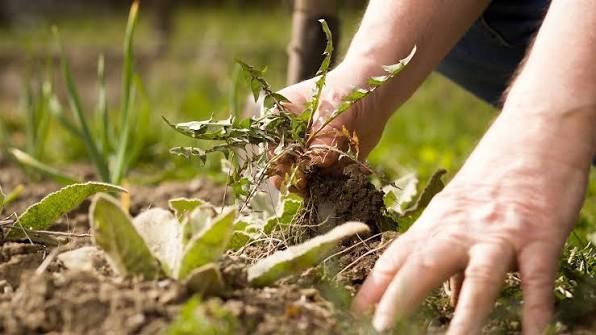
The window between seeding and crop emergence is short. Weeds that get established early move fast, pulling moisture, nutrients and light away from young crops at the exact stage when they are least able to compete.
For pulse growers across Western Canada, that pressure comes with an added layer of complexity. The biological activity happening in the root zone during establishment is just as critical as what is happening above the soil surface. Balancing both is where a well-planned early-season program earns its value.
Why early weed control sets the tone for the season
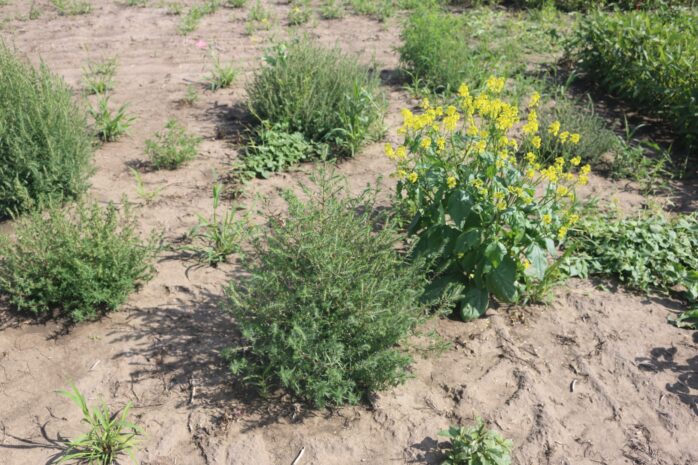
Pulse crops are naturally poor competitors during establishment. Their open canopy gives aggressive species like kochia, green foxtail, wild oats and wild buckwheat room to move in early and take hold. The yield consequences are real, but so is the longer-term risk of resistance.
Relying on the same modes of action repeatedly, without diversity, increases selection pressure, making weeds harder to manage across the rotation.
A clean start in the spring is not just about this season. It is a resistance management decision that protects the tools available for seasons to come.
The root nodulation factor
What makes pulse agronomy distinctive is the nitrogen-fixing partnership these crops form with rhizobia bacteria in the soil.
Shortly after germination, rhizobia colonize the developing root system and form nodules, the structures responsible for converting atmospheric nitrogen into a form the plant can use.
When that process is working well, it supports crop nutrition and contributes to soil health across the rotation.
The timing of nodulation overlaps directly with the early-season window when pre-emergent weed control is most needed. The question growers and agronomists are asking is a reasonable one: can effective suppression be achieved without disrupting the biology the crop depends on?
The right choice for Canadian farmers
A well-chosen pre-emergent herbicide in Canada can heavily benefit farmers by targeting germinating weed seeds below the soil surface before they emerge, working in the germination zone while the crop is still establishing. Mode of action matters here.
Products that target weed-specific biological pathways are better positioned to deliver consistent suppression while preserving the microbial environment of the root zone.
Soil moisture at the time of application is equally important. Most soil-applied pre-emergent products require moisture to activate and move into the zone where weed seeds are germinating.
Adequate soil moisture provides the product with the distribution it needs to form a reliable barrier across the field.
Several factors are worth working through when selecting a pre-emergent product for pulse systems:
- Mode of action and its known behaviour around rhizobia activity
- Residual activity relative to the critical weed-free period of the specific crop
- Soil type and organic matter, both of which influence how the product moves and binds
- Compatibility with any inoculants being applied at seeding
Building it into a broader system
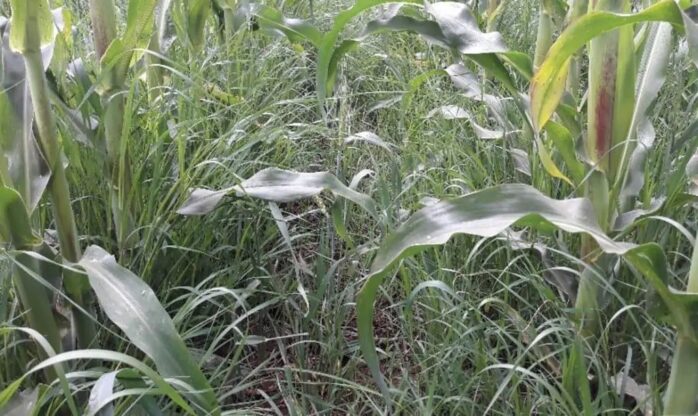
Pre-emergent application works best as part of an integrated program rather than a standalone solution. Rotating modes of action across seasons reduces pressure from resistance.
Strong establishment practices, optimal seeding depth, appropriate seeding rate, and good seed-to-soil contact mean the crop contributes to its own weed suppression as the canopy closes.
Advanced crop protection products designed for Canadian growing conditions increasingly reflect this systems thinking. Residual activity is calibrated to the crop.
Soil behaviour is accounted for in the formulation. And compatibility with seedbed biology is a genuine part of how modern products are developed.
A clean start without the trade-off
The idea that effective weed control and a healthy root zone are competing priorities is one that modern crop protection science continues to challenge.
When the right product is matched to the crop, soil type, and weed spectrum, and applied at the right time under appropriate conditions, a clean seedbed is achievable without compromising the biological foundation that pulse crops depend on.
For growers managing both weed pressure and the nitrogen-fixing partnership their crops rely on, that outcome is exactly what a well-planned early-season program is built to deliver.
